“I guess Americans should be worried”: Trump comments on possible attacks inside the U.S. spark backlash
Photo credit: Joey Sussman/Shutterstock.com
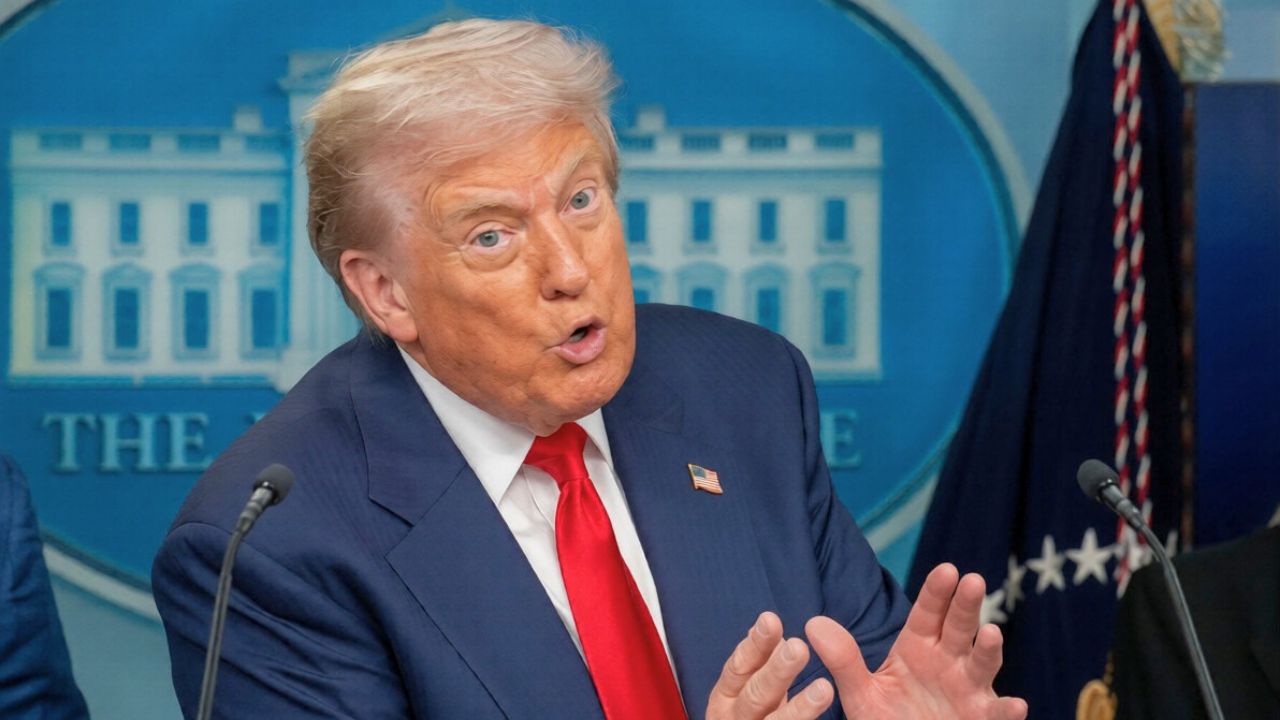
Donald Trump’s offhand remark that “I guess” Americans should be worried about attacks at home as tensions with Iran rise has ignited a fierce argument over how a president talks about national security. The comment, delivered in an interview about possible Iranian retaliation, instantly became a flashpoint for Democrats who say it signals dangerous indifference, and for allies who insist he is simply being blunt about the stakes of conflict.
The backlash now sits at the intersection of war messaging, homeland security warnings and the political fight over whether Trump is preparing the public or stoking fear without offering a clear plan.
From “I guess” to “some people will die”
Trump’s latest controversy grew out of a conversation with Time about the risk that Iran or Iran-linked groups might strike inside the United States in response to the current confrontation. Asked directly if Americans should be worried about retaliatory attacks at home, he replied, “I guess,” before adding that some people would die and that the country would “have casualties.” That fatalistic language, reported across multiple accounts of the Time interview, framed domestic attacks almost as an inevitability.
Video segments built on the same exchange show Trump again acknowledging that Americans should be concerned about retaliatory attacks, with one clip describing him as President Donald Trump as he discussed Iran and the prospect of violence on U.S. soil in front of a national audience. In another widely shared social media post, Trump is quoted saying that Americans should worry about potential attacks in the United States as tensions with Iran escalate, reinforcing the impression that he sees the threat as both real and likely.
In a separate account that amplified the uproar, Trump is quoted telling an interviewer that, as he had said before, “some people will die” and that the United States would “have casualties” if Iran chose to retaliate. That framing, presented as a kind of grim baseline expectation, helped transform a single “I guess” into a broader narrative about how he views acceptable risk in war.
Democrats call the remark “deranged and dangerous”
Democrats moved quickly to cast Trump’s “I guess” as more than a verbal slip. In a widely shared post on X, Sen. Chris Murphy of Conn quoted the phrase and accused Trump of treating the possibility of a deadly attack at home as almost casual. Murphy argued that the comment revealed a president who was willing to accept American deaths as the cost of a hawkish Iran policy.
Murphy’s criticism was echoed in progressive outlets that described the remark as “deranged and dangerous,” highlighting his warning that the United States has “totally unserious, completely incompetent people taking us into mindless, deadly war.” In another piece, he is cited as a Democratic US Sen, identified as Chris Murp, who believes that Trump’s posture is “madness” and that the country “will be hit very hard” if current policy continues.
Other Democratic senators joined in. Sen. Elizabeth Warren publicly rebuked Trump on X, arguing that a commander in chief should be working to prevent attacks, not speaking about them with resignation. Her criticism drew on her broader profile as a prominent progressive voice, which is reflected in biographical details available through a standard search for Elizabeth Warren.
Sen. Mark Kelly also weighed in, focusing on the responsibility of a president to reassure the public and coordinate defenses when threats rise. Kelly, whose background and role are documented in public profiles of Mark Kelly, criticized the “I guess” phrasing as an abdication of leadership at a time when Americans are already anxious about conflict with Iran.
Coverage of the backlash notes that Democrats did not just seize on the words themselves. They linked the comment to Trump’s broader Iran posture, painting a picture of a president who escalated tensions without a clear plan to protect Americans at home. One detailed report on Democrats blasting Trump’s remark about Americans being worried about attacks at home amid the Iran conflict pulled together these reactions and emphasized how quickly they spread across X and cable news.
The security backdrop: Iran, warnings and the White House
The uproar over Trump’s tone landed against a tense security backdrop. Federal officials drafted a bulletin warning of heightened threats from Iran-linked actors inside the United States, intended for local law enforcement agencies nationwide. According to one account, The White House halted that bulletin, at least for now, even as it described a heightened threat environment tied to the Iran conflict.
One detailed report described how the bulletin, which would have gone to police departments across the country, was blocked by senior officials. The story, reported by Taylor Delandro and Marcus Espinoza, noted that the White House decision effectively kept local agencies from receiving a formal written warning about Iran-related threats. The same account carried the unusual detail that listeners could hear an audio version at 1x speed and highlighted that the blocked bulletin was intended to reach law enforcement nationwide, while also referencing the figure 41 in a separate context.
Another national wire report similarly stated that The White House halted, at least for now, a federal security bulletin warning of a heightened threat from Iran-related actors. That report, datelined NEW YORK and clearly labeled as Reuters, underscored the tension between public messaging and internal assessments of risk.
Critics quickly connected the dots. If federal experts were worried enough to draft a warning about Iran-linked plots, they argued, then a president responding “I guess” when asked if Americans should be worried looked less like candor and more like a shrug in the face of his own government’s concerns.
Supporters say Trump is being blunt, not cavalier
Trump’s allies, however, present a different story. They argue that the president is leveling with the country about the costs of confronting Iran after years of proxy attacks and hostage-taking. In their view, acknowledging that “some people will die” is not indifference but a sober recognition that war carries real human costs.
Conservative commentators have echoed that defense. Pete Hegseth, whose background as a media personality and military veteran is outlined in public information about Pete Hegseth, has often praised Trump’s willingness to speak bluntly about national security. While the provided sources do not quote Hegseth directly on the “I guess” remark, his past support for Trump’s hawkish Iran stance helps explain why many on the right see the uproar as manufactured outrage.
Some pro-Trump commentators also argue that Democratic critics are selectively quoting a single phrase while ignoring the rest of the interview, where Trump described efforts to deter Iran and warned that any attack on the United States would be met with overwhelming force. They contend that his prediction that “some people will die” reflects a belief that Iran will suffer far greater losses if it strikes, not a willingness to sacrifice American lives casually.
How a two-word answer reframed the Iran debate
The political impact of Trump’s “I guess” goes beyond one interview. It has reshaped the debate over the Iran conflict into a test of presidential temperament and communication. For Democrats, the phrase has become shorthand for what they see as a pattern of inflammatory rhetoric paired with limited attention to the practical work of securing soft targets at home.
For Trump’s supporters, the backlash is proof that opponents are more focused on tone than on the strategic question of how to confront Iran and its proxies. They argue that the real scandal is not a two-word answer but the decision to halt a bulletin that would have warned local police about specific Iran-linked threats, a move they say reflects political sensitivity inside The White House.
Like Fix It Homestead’s content? Be sure to follow us.
Here’s more from us:
- I made Joanna Gaines’s Friendsgiving casserole and here is what I would keep
- Pump Shotguns That Jam the Moment You Actually Need Them
- The First 5 Things Guests Notice About Your Living Room at Christmas
- What Caliber Works Best for Groundhogs, Armadillos, and Other Digging Pests?
- Rifles worth keeping by the back door on any rural property
*This article was developed with AI-powered tools and has been carefully reviewed by our editors.