Protests erupt across U.S. over American strikes on Iran
Photo credit: John Gomez/Shutterstock.com
Across the United States, streets have filled with demonstrators after American strikes on Iran, part of a joint operation with Israel that targeted military and government sites in Tehran and Isfah. The attacks, which killed Iran’s supreme leader Ali Khamenei according to multiple reports, have triggered a volatile mix of anti-war marches, celebrations among some exiled communities, and a fresh battle over presidential war powers.
From the White House gates to college quads and downtown plazas, the protests are less a single movement than a clash of competing fears: of a broader regional war, of unchecked executive authority, and of leaving Iran’s population to face the fallout alone.
From Washington to New York, a capital on edge
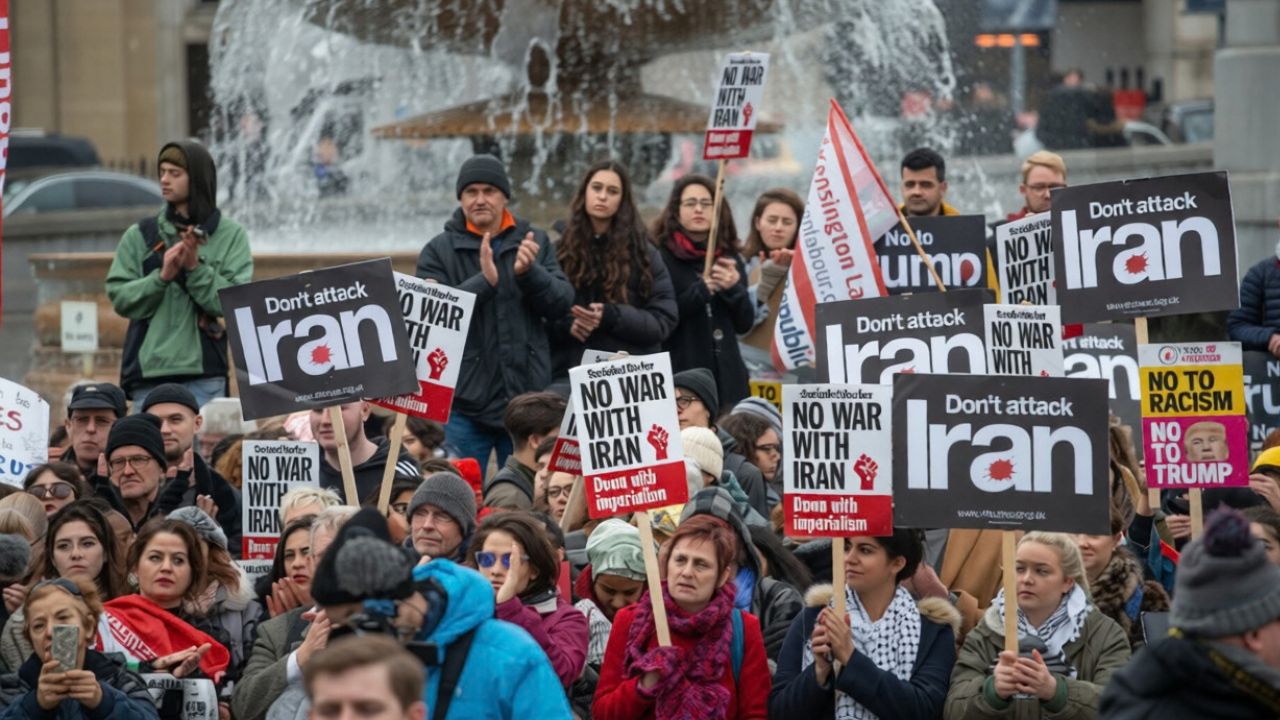
Outside the White House, hundreds of people gathered in Washington to denounce the strikes and demand an end to escalation with Iran. Many carried “No war with Iran” signs and chanted against what they described as a slide into another open-ended conflict in the Middle East.
At one demonstration near the executive mansion, speakers framed the issue as both a moral and strategic failure, warning that ordinary Iranians would bear the “biggest consequences from these attacks” even as the United States claims to target only military and political leaders.
In New York City, marches wound through Manhattan as demonstrators linked the Iran strikes to a wider crisis across the region. Protesters rallied under banners calling for a ceasefire and for de-escalation between the United States, Israel and Iran, while counterprotesters argued that removing Ali Khamenei weakened a government they view as oppressive.
Images from Washington and New York captured the same split visible nationwide: sizable crowds condemning the bombing campaign, alongside smaller groups who see the strikes as overdue justice for decades of repression inside Iran.
West Coast rallies and a divided Iranian diaspora
On the West Coast, anti-war organizers moved quickly after news of the joint operation that opened the 2026 Iran war with airstrikes on Tehran and Isfah. In Los Angeles, a city with one of the largest Iranian diasporas, large crowds gathered in neighborhoods like Westwood and spilled toward Hollywood.
Video from Southern California showed sharply divided reactions, from cheers and flag waving to protest signs and angry chants. Some Iranian Americans celebrated the blow against Iran’s leadership, while others warned that their relatives in Tehran and Isfah now face greater danger and economic hardship as the war widens.
Further north, demonstrators in Sacramento rallied against what they described as a march toward a broader regional war involving the United States, Israel and Iran and other actors across the Middle East. Speakers there linked the airstrikes to years of stalled nuclear diplomacy and proxy conflicts, arguing that more bombing would only entrench hardliners on all sides.
Houston, Dallas and the politics of celebration
In Texas, the reaction was especially fragmented. In Houston, dueling demonstrations formed outside shopping centers and community hubs. A group of Iranian Americans gathered to support the strikes and spoke of long years of repression inside Iran, while another group protested against U.S. involvement and warned that more violence would only deepen suffering.
One demonstrator described living under Iran’s rulers for 47 years and said she was now 36, a pointed reminder of how long Ali Khamenei and the Islamic Republic have shaped daily life for millions. Nearby, anti-war protesters carried signs that read “No more endless wars” and accused Washington of ignoring Iranian civilians.
In the wider DFW region, students and local residents turned out in Dallas after reports of the joint U.S. and Israel strikes. Campus organizers there linked the operation to previous Middle East wars and urged classmates to oppose what they called a pattern of military-first responses that sideline diplomacy.
Boston, Oakland and a new anti-war vocabulary
On the East Coast, hundreds of protesters gathered near Boston Common to condemn the attacks on Iran. Many marched behind banners from the National Iranian American Council and other advocacy groups, arguing that the killing of Ali Khamenei would not bring democracy to Iran and could instead trigger harsher crackdowns on dissent.
In the Bay Area, crowds in Oakland joined a wave of global demonstrations that followed the strikes on Iran. Local leaders such as Rep Lateefah Simon sharply criticized the decision to bomb Iranian targets, saying the attacks “demonstrate once again President Trump’s callous disregard” for both international law and the lives of Iranian people.
Images from these protests showed National Guard members watching over intersections as marchers chanted against war and carried portraits of relatives still living in Tehran and Isfah. For many, the Iran strikes have revived memories of earlier conflicts in Iraq and Afghanistan that began with promises of quick, targeted action and stretched into years of occupation.
White House protests and the constitutional fight
Back in the capital, the crowds outside the executive mansion have grown over several days. One large rally near Lafayette Square featured thousands of people shouting “Stop the bombs” and accusing Israel and the United States of dragging the Middle East into a new USIsraeli war that also touches Palestine.
These street scenes have fed directly into a legal and political fight in Congress and the courts. Lawmakers from both parties are debating whether the president’s Iran actions violate the 1973 War Powers Resolution, which requires congressional approval for prolonged military engagements.
Analysts point out that the Constitution gives Congress the authority to declare war, while presidents often argue that existing authorizations or self-defense rationales cover new operations. The Iran campaign has sharpened that dispute, with some legislators insisting that any extended bombing or deployment of ground forces requires explicit Congressional authorization.
Internal deliberations in Congress have already begun over whether to demand a vote on further military action against Iran. Both Democratic and Republican lawmakers have floated resolutions that would either endorse the strikes or seek to limit the president’s ability to expand them.
Public opinion, global protests and a nation split
Beyond the Capitol, polling referenced in recent coverage suggests a deeply divided public. Some surveys cited by analysts show Americans backing a limited operation against Iran’s leadership, especially after years of tension over nuclear ambitions and regional militias. Other data points to strong opposition to any conflict that risks another large-scale ground war.
That split is visible on the streets. Across major U.S. cities, protesters have marched against the war, while other demonstrators have rallied in support of the strikes and against Iran’s government. Crowds have appeared not only in Washington and New York but also in cities such as Boston, Oakland and smaller college towns.
Internationally, mass protests have broken out across multiple countries after the U.S. and Israeli strikes on Iran, with demonstrators warning of the risk of a broader regional war. Photo galleries from around the world show a similar pattern to the United States: large anti-war marches, counterdemonstrations by exiled Iranians who celebrate the fall of Ali Khamenei, and a heavy security presence in many capitals.
In some American cities, such as those around Washington Square Park in Manhattan and on campuses near Boston Common, organizers have tried to keep rallies peaceful and inclusive. Yet the presence of rival pro and anti-war groups has sometimes led to tense confrontations, echoing earlier eras when demonstrations over foreign policy split American streets.
Scholars of American politics see the Iran protests as part of a longer trend in which debates about foreign policy become stand-ins for deeper arguments about presidential power. Commentators such as Turley have warned that concentrating authority in the executive has turned many national security disputes into personalized fights over presidents rather than policy.
That dynamic is visible in interviews from the protests, where some Americans frame the Iran strikes primarily as a referendum on President Trump’s judgment, while others insist the focus should remain on the Iranian people and the risk of a larger Middle East war.
Like Fix It Homestead’s content? Be sure to follow us.
Here’s more from us:
- I made Joanna Gaines’s Friendsgiving casserole and here is what I would keep
- Pump Shotguns That Jam the Moment You Actually Need Them
- The First 5 Things Guests Notice About Your Living Room at Christmas
- What Caliber Works Best for Groundhogs, Armadillos, and Other Digging Pests?
- Rifles worth keeping by the back door on any rural property
*This article was developed with AI-powered tools and has been carefully reviewed by our editors.