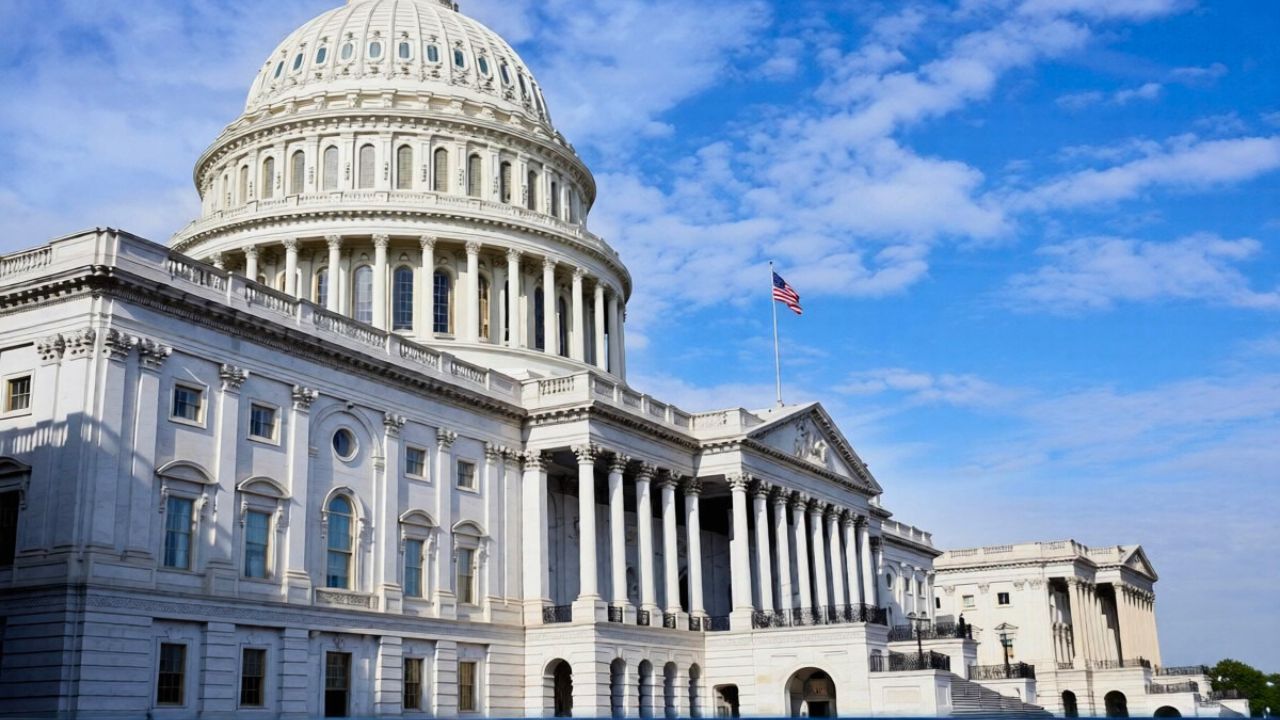
Congress debates limits of presidential war powers amid growing tensions
Photo credit: Lane V Erickson/Shutterstock.com
As fighting involving the United States and Iran intensifies, lawmakers are once again locked in a familiar argument over who controls the decision to go to war. The clash over presidential war powers has shifted from abstract constitutional theory to an immediate test of whether Congress will assert its authority while bombs are already falling.
The current debate centers on President Donald Trump’s military campaign against Iran and whether he can continue large-scale strikes without explicit approval from Capitol Hill. The outcome will shape not only this conflict but also how future presidents interpret the limits of their own power.
Long running fight meets a live conflict
The confrontation with Iran has given new urgency to a struggle that dates back to the founding era, when the Constitution split war authorities between Congress and the president. Article I gives lawmakers the power to declare war, raise and support armies, and regulate the armed forces, while Article II names the president commander in chief.
For decades, presidents of both parties have claimed broad authority to use force without a formal declaration of war, often citing the need for speed and secrecy. Many members of Congress now argue that the scale and duration of strikes on Iran have crossed the line from short-term self-defense into a sustained war that requires legislative consent.
At the center of the legal argument is the War Powers Resolution, the 1973 statute that tried to codify this balance. The law requires presidents to notify Congress within 48 hours of introducing forces into hostilities and to terminate those operations within 60 to 90 days unless lawmakers provide authorization.
Supporters say the War Powers Resolution is a necessary guardrail that reflects Congress’s Article I responsibilities. Critics in both parties argue that it is either unconstitutional or ineffective, since presidents often interpret its requirements loosely and courts have largely avoided refereeing the dispute.
The Iran conflict has revived a question that legal scholars at the Constitution Center have framed bluntly: whether the existing framework has any real bite once a shooting war is underway. Almost immediately after Trump’s early strikes, some members of Congress claimed that his actions violated the Constitution’s Article I, Section 8 limits on unilateral war making.
Those critics argue that the president cannot rely indefinitely on older authorizations or on vague notions of inherent executive power to justify new campaigns. They contend that bombing Iranian targets across the region amounts to starting a new war that Congress never approved.
Congressional votes reveal deep divisions
On Capitol Hill, that constitutional argument has translated into a series of high-stakes votes that have so far broken in the president’s favor. In the House of Representatives, lawmakers narrowly rejected a war powers resolution on Thursday that would have halted President Donald Trump’s attacks on Iran, a sign that even a chamber controlled by his opponents is hesitant to tie his hands in the middle of a conflict.
The failed House measure would have directed Trump to end offensive operations against Iranian targets and related militias unless Congress later granted specific authorization. Supporters described it as a basic reaffirmation of the legislature’s role, while opponents warned that passing it would embolden Tehran and undercut U.S. troops in the field.
A similar dynamic played out in the Senate, where a war powers resolution introduced by Virginia Democrat Tim Kaine was defeated in a 47 to 53 vote that fell largely along party lines. Senators such as John Fetterma backed the effort to force Trump to seek authorization, but Republican leaders argued that restricting the president in the middle of a confrontation would be irresponsible.
Some Republican senators went further and framed the debate as a test of resolve against Iran. One GOP lawmaker said that passing the resolution would send the wrong message to Iran and to U.S. troops, while others accused Democrats of preferring to obstruct Donald Trump rather than obliterate Iran’s national nuclear program.
Outside those leadership arguments, libertarian-leaning Republicans joined progressive Democrats in warning about the precedent being set. One prominent critic, Rand Paul, excoriated Congress for its failure to pass a war powers resolution and said lawmakers should be ashamed for allowing extended action against Iran without a clear vote.
In the House, that cross-ideological coalition has included Rep Ro Khanna and Rep Thomas Massie, who co-authored an Iran War Powers Resolution aimed at forcing a vote to stop Trump’s unauthorized strikes. Their effort reflects a small but vocal bloc that wants to claw back Congress’s role regardless of which party controls the White House.
Historical echoes from Vietnam to today
The current fight does not exist in isolation. It follows a long series of conflicts in which Congress has either delegated sweeping authority or tried belatedly to rein it in, from the Gulf of Tonkin Resolution that opened the way for full-scale war in Vietnam to the post-September 11 authorizations used to justify operations in Afghanistan, Iraq, and beyond.
Legal analysts at the Congressional Research Service have traced how those broad statutes became de facto blank checks for presidents, which is why some members now want to pair new limits on Iran operations with a broader overhaul of war authorizations.
Historical documents from figures such as George Washington and James Madison, preserved in the founders’ archives, show that early leaders expected Congress to play a central role in decisions about offensive war. Letters from Madison, including correspondence with James Monroe, stressed that the executive should not be able to drag the nation into prolonged hostilities without legislative consent.
That original understanding has become a touchstone for modern critics who argue that the United States has drifted into a model where presidents initiate conflict and Congress reacts after the fact with funding votes or symbolic resolutions.
Even within the existing legal framework, lawmakers still have tools they rarely use. Section 5(c) of the War Powers Resolution allows Congress to direct the removal of U.S. forces from hostilities through a concurrent resolution. A recent example, H. Con. Res. 61, titled “Directing the President” pursuant to section 5(c) of the War Powers Resolution to remove United States Armed Fo from certain operations in the Western Hemisphere, shows how that mechanism can be tailored to specific theaters.
Supporters of such measures argue that they could be applied to the Iran conflict if Congress musters the political will. Skeptics point out that presidents may ignore concurrent resolutions or veto related legislation, leaving Congress to find a two-thirds majority that has often proved elusive.
Senate maneuvering and the 60 day clock
Even as the House rejected its Iran measure, the Senate has seen its own procedural skirmishes over how aggressively to confront the White House. Earlier this year, the Senate voted 52 to 47 to discharge S. J. Res. 98 from committee, a step that would have directed the removal of United States Armed Forces from a separate theater, illustrating that a narrow bipartisan majority is sometimes willing to challenge executive war decisions.
That 52 to 47 vote on Res 98 did not translate into final passage, but it signaled that the upper chamber is not monolithic in its support for expansive presidential authority. The Iran-specific resolution from Virginia Democrat Tim Kaine, however, fell short of even that threshold, reflecting the heightened political stakes around confronting a declared adversary.
All of these maneuvers intersect with the War Powers Resolution’s 60-day clock. Once the president reports that U.S. forces have entered hostilities, the statute requires withdrawal within that period unless Congress acts. In practice, presidents often contest whether the clock has started or argue that existing authorizations cover the new campaign.
In the Iran case, Trump’s allies maintain that prior authorizations to use force in the Middle East, combined with his inherent powers as commander in chief, provide sufficient legal basis for ongoing strikes. Opponents counter that a conflict of this scale, involving direct exchanges with Iranian forces, cannot be shoehorned into older mandates aimed at different enemies and circumstances.
Like Fix It Homestead’s content? Be sure to follow us.
Here’s more from us:
- I made Joanna Gaines’s Friendsgiving casserole and here is what I would keep
- Pump Shotguns That Jam the Moment You Actually Need Them
- The First 5 Things Guests Notice About Your Living Room at Christmas
- What Caliber Works Best for Groundhogs, Armadillos, and Other Digging Pests?
- Rifles worth keeping by the back door on any rural property
*This article was developed with AI-powered tools and has been carefully reviewed by our editors.