Taiwan tensions expected to surface during upcoming U.S.–China summit discussions
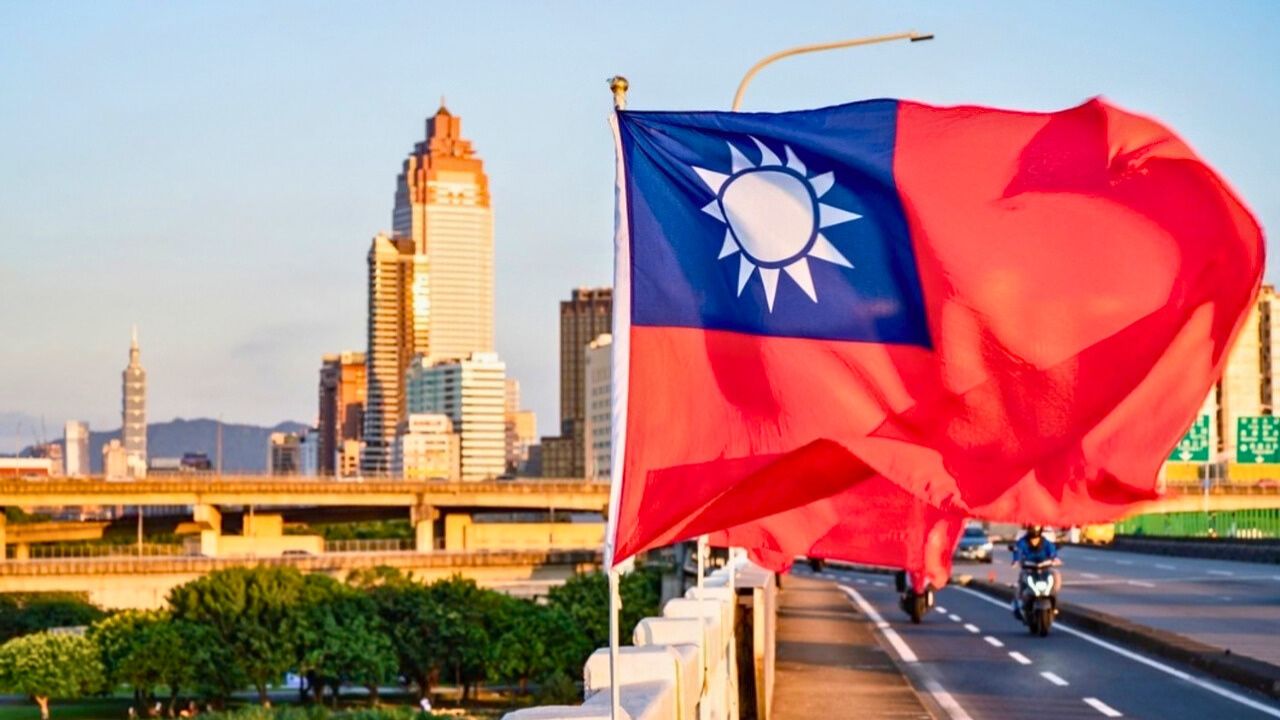
Photo credit: YAO23/Shutterstock.com
Taiwan is set to dominate the agenda when President Donald Trump meets Chinese President Xi Jinping in Beijing at the end of March, with both sides entering the summit convinced that the island represents the sharpest test of their relationship. The visit, scheduled for March 31 to April 2, comes after months of friction over United States arms sales to Taipei and increasingly explicit warnings from Beijing that the Taiwan issue is a red line.
For Washington, the meeting offers a chance to steady a tense security environment around the Taiwan Strait while preserving deterrence. For Beijing, it is an opportunity to press its demand that the United States curb military and political support for Taiwan, which China regards as part of its territory.
Summit framed by a high-stakes Taiwan “three body problem”
Analysts describe the current dynamic among the United States, China and Taiwan as a strategic “three body problem,” with each actor reacting to the others in ways that can quickly destabilize the status quo. A detailed assessment of the Taiwan Strait notes that U.S. President Donald Trump’s planned visit to Beijing in March comes at a time when the political temperature around the island is already running high, and warns that missteps by any of the three sides could trigger a rapid escalation of tensions, especially if military signaling collides with domestic politics in Taipei and Washington.
The same analysis argues that the summit will test whether Washington can reassure Taiwan while managing competition with Beijing, and whether Xi Jinping can pursue his long-term goal of unification without provoking a crisis that harms China’s broader interests.
Chinese strategists are increasingly explicit that they see Taiwan as the main external security variable shaping Beijing’s risk environment in 2026. A recent think tank report circulated in Beijing lists Taiwan tensions as No 1 in the capital’s top 10 geopolitical risks of the year, and links that assessment to concern about political uncertainty in the United States ahead of midterm elections and the possibility that domestic pressures in Washington could push policy in a more confrontational direction.
Beijing signals priorities and prepares the ground
Chinese officials have started to sketch out their expectations for the summit, with Foreign Minister Wang Yi stressing that China wants “thorough preparations” for the Trump-Xi meeting in Beijing later this month. In public remarks in the capital, Wang Yi argued that stable U.S.-China ties serve both countries’ interests and suggested that careful groundwork could help the leaders achieve “more positive” outcomes, a phrase that Chinese diplomats often use to signal a desire for concrete concessions on sensitive issues such as Taiwan.
Those comments were echoed in a separate briefing in which China’s top diplomat in Beijing again called for thorough preparations and highlighted the “benefits of interaction” between the leaders. Behind the diplomatic language, Chinese officials have been clear that they expect Trump to address arms sales and political contacts with Taipei, which Beijing has repeatedly condemned as interference in China’s internal affairs.
At the same time, a separate assessment of Beijing’s risk outlook for 2026 again ranks Taiwan tensions as Beijing’s top geopolitical concern, and frames the island as a test of China’s ability to integrate economic security planning with its foreign policy agenda. That framing suggests that Xi Jinping will arrive at the summit with a clear hierarchy of issues, and that Taiwan will sit above trade or climate cooperation in his list of priorities.
Washington’s agenda: deterrence, arms sales and domestic politics
On the U.S. side, the Trump administration has been sending mixed signals, combining record arms sales to Taiwan with hints that some deliveries could be slowed as Trump prepares to travel to Beijing. One report describes how a Taiwan arms sale approved by Congress is delayed as Trump plans his visit, and notes that the package is in an advanced stage but has not yet moved forward, prompting concern in Taipei that the White House might use timing as leverage in talks with Xi Jinping.
Those worries deepened after Trump remarked in an interview that he was open to discussing Taiwan arms sales with China, a comment that experts warned could set a dangerous precedent by inviting Beijing into what had previously been a unilateral U.S. decision about how to support Taiwan’s defense. A detailed explainer on the issue notes that China has already condemned record U.S. arms sales to Taiwan and that the Chinese foreign ministry has framed the packages as a direct challenge to China’s sovereignty.
Think tank analysts tracking the region say the United States is reportedly hesitating over whether to fulfill its next arms sales to Taiwan out of concern that it might derail the summit or trigger a sharp reaction from Beijing. Their assessment argues that any delay would weaken Taiwan’s integrated air and missile defense network and could be read in Beijing as a sign that pressure on Washington is working.
Xi’s red line and military signaling around the Strait
Chinese messaging around the summit has included both diplomatic charm and hard red lines. In a widely circulated warning, Xi Jinping sent a message to Trump that “the US must handle the issue of arms sales to Taiwan with prudence,” and Chinese state-linked voices amplified the phrase “This is a red line” to describe Beijing’s position. The same message highlighted China’s reaction to a U.S. sale of fighter jets worth 330 million dollars to Taiwan and insisted that the Taiwan issue is the first red line that must not be crossed in U.S.-China relations.
Military activity around Taiwan has reflected that sharpened rhetoric. A recent briefing on regional security quoted an official who suggested that a slight easing of Chinese military pressure on Taiwan could be linked to the upcoming meeting between Chinese President Xi Jinping and U.S. President Donald Trump, and described how adjustments in sortie patterns might be calibrated to create a more favorable atmosphere without weakening Beijing’s broader claims.
Earlier this year, Trump and Xi used a phone call to discuss Taiwan and soybeans in an attempt to stabilize ties after a series of tensions. One expert quoted in that account said that “both sides are signalling that they want to preserve stability in the U.S.-China relationship,” but warned that the way they manage Taiwan will have lasting implications for Chinese foreign policy and for perceptions of American reliability in Asia.
Trade track and the broader relationship
Even as Taiwan dominates the security conversation, the two governments are also working on a parallel economic track. Trade chiefs from the United States and China are expected to meet in mid March before the Trump-Xi summit, according to a report that cites Bloomberg News. That meeting is designed to prepare ground on tariffs and market access issues so that the leaders can focus their limited time on strategic questions such as Taiwan, maritime disputes and technology controls.
A separate briefing notes that US President Donald Trump and Scott Bessent, US treasury secretary, have already discussed the possibility of multiple leader-level contacts with Xi Jinping this year. In comments captured by photographer Yuri Gripas of CNP and reported by Bloomberg, Bessent suggested that frequent talks could support trade and reduce the risk of miscalculation, including on sensitive issues such as Taiwan that intersect with supply chains and financial flows.
That idea was reinforced in another forecast in which Treasury Secretary Scott Bessent said Tuesday that President Donald Trump and Chinese President Xi Jinping may meet as many as four times in 2026, including a possible visit to Beijing in April and another encounter hosted at Trump’s Doral resort. The logic behind that schedule is that regular contact can help manage crises, although critics argue that it could also create more moments where Taiwan becomes a bargaining chip.
How experts expect the Taiwan debate to unfold in Beijing
Like Fix It Homestead’s content? Be sure to follow us.
Here’s more from us:
- I made Joanna Gaines’s Friendsgiving casserole and here is what I would keep
- Pump Shotguns That Jam the Moment You Actually Need Them
- The First 5 Things Guests Notice About Your Living Room at Christmas
- What Caliber Works Best for Groundhogs, Armadillos, and Other Digging Pests?
- Rifles worth keeping by the back door on any rural property
*This article was developed with AI-powered tools and has been carefully reviewed by our editors.