Justice Department faces scrutiny over increasing political tensions in Washington
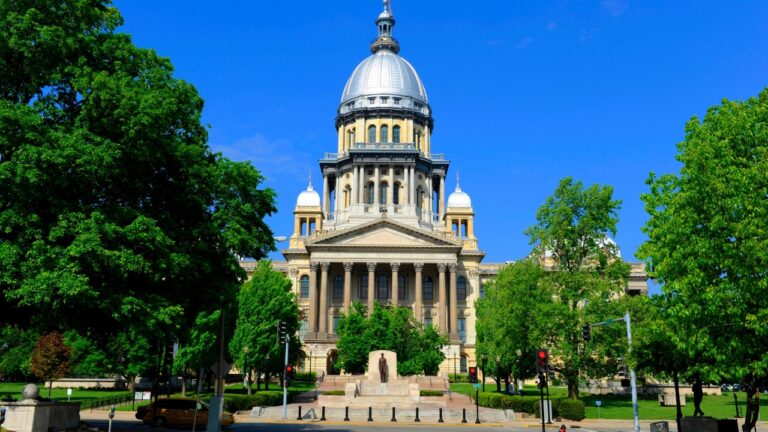
Photo credit: Felix Lipov/Shutterstock.com
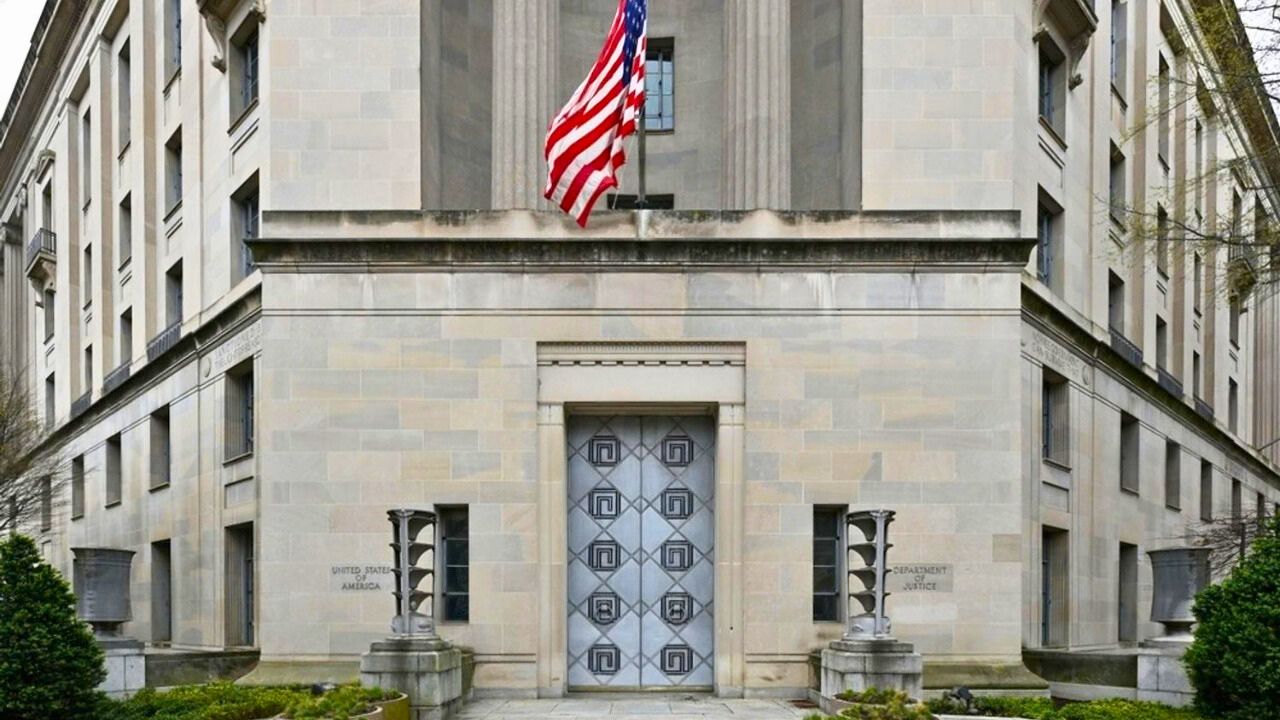
The Justice Department is under growing pressure as political fights in Washington increasingly revolve around its decisions. Supporters argue that aggressive enforcement is needed, while critics in both parties warn that law enforcement is being bent toward partisan ends.
The result is a department caught between its traditional claim of independence and a series of moves that opponents describe as a test of how far a President can push federal prosecutors into the political arena.
From Trump’s orbit to internal rule changes
Outside critics say the current President has treated the Justice Department as an extension of his own political operation, with one former official describing a shift into the President’s “political wing” as criminal investigations involving his opponents accelerate, according to reporting on the department’s politicization. Veterans of past Republican administrations have warned that this approach risks turning prosecutions into tools of personal retribution rather than neutral law enforcement.
Those concerns have been sharpened by personnel choices that critics see as overtly political, including the prominence of figures such as Pam Bondi, who has been closely associated with the President’s political and legal defense in the past. For skeptics, the presence of loyalists in and around the department reinforces the impression that prosecutorial decisions are being filtered through a campaign lens.
At the same time, the department is quietly rewriting internal rules in ways that critics say tilt the playing field. Earlier this month the Justice Department proposed a regulation that would require ethics complaints against its own lawyers to be reviewed in house before state bar associations can act, according to a detailed account of the new ethics rule by Hussin Alameedi. The draft would give department leadership a gatekeeping role over professional discipline that has traditionally been handled by independent state bodies.
Supporters of the change argue that national security and sensitive litigation require special handling of complaints against federal prosecutors. Civil liberties advocates counter that letting the same institution accused of misconduct decide whether outside regulators can even investigate invites conflicts of interest and shields politically motivated lawyering from meaningful oversight.
Political probes, election fights and Congress pushes back
Concerns about politicization are not confined to internal rulebooks. On Capitol Hill, lawmakers are zeroing in on specific investigations that they say blur the line between law enforcement and partisan warfare.
The North Carolina Republican Senator Thom Tillis has been particularly vocal about a Justice Department probe that has become entangled with the Fed. He recently criticized an inquiry into Fed chair nominee Kevin Warsh, arguing that the nominee “possesses impeccable credentials and a clear vision” for monetary policy and that the probe is “reaching the point of the absurd,” according to coverage of the Warsh probe. For Tillis and other Republicans, the episode fits a pattern in which legal tools are used to derail nominees who do not align with the administration’s preferences.
The fight comes on the heels of a separate Justice Department effort to pursue Democratic lawmakers, where US prosecutors were unsuccessful in an attempt to secure indictments, according to a detailed account by Kanishka Singh and Andrew Goudsward of the failed effort to charge Democratic lawmakers. Democrats seized on that episode as proof that prosecutors were stretching legal theories to target political opponents.
Tillis, who has also condemned what he calls “political lawfare” after a grand jury declined to indict Democratic legislators, argues that the pattern on both sides shows how criminal law is being weaponized. In his view, the failed indictments and the Warsh investigation both reflect a Justice Department that is too willing to open high profile cases that track partisan talking points.
Outside the Washington bubble, state level clashes are adding to the perception of a department at war with its critics. In Washington state, the Department of Justice has sued the Washington Secretary of State over access to voter information, accusing the Secretary of State of withholding data that federal officials say they need to enforce voting laws, according to a video segment describing the voter data lawsuit. The Secretary of State has publicly defied the DOJ, framing the dispute as a stand for voter privacy and state authority.
A separate video shows the Secretary of State reacting in real time to the lawsuit and vowing not to hand over what he calls sensitive voter records, highlighting the depth of the standoff with the DOJ lawsuit. Supporters of the federal case say it is a straightforward effort to enforce national voting rights laws, while critics in Utah and elsewhere argue that similar lawsuits undermine the Constitution and election integrity by centralizing power in Washington, as described in a commentary that warns America’s polarized politics are pressuring public officials to pursue partisan interests at the expense of neutral enforcement.
Inside Congress, institutional concerns are starting to translate into legislative proposals. The Prohibiting Political Prosecutions Act, introduced by Representative Dan Goldman and Senator Richard Blumenthal, promises reforms designed to prevent any administration, Democrat or Republican, from using the Justice Department to target political rivals, according to a summary of the Prohibiting Political Prosecutions. The proposal reflects a growing view on Capitol Hill that norms alone are no longer enough to insulate federal law enforcement from partisan pressure.
The House Judiciary Committee is also flexing its oversight powers. The committee has scheduled a hearing in WASHINGTON, D.C., on an oversight of the US Department of Justice, with the Attorney General expected to testify, according to the official notice describing how The House Judiciary Committee will convene on a Wednesday in Feb for a broad oversight hearing. Lawmakers are preparing to press the Attorney General on everything from ethics rules to politically sensitive prosecutions.
Outside experts have started to sketch out more sweeping reforms. Commentators such as Richard Davis argue that the Attorney General needs greater structural independence from the White House, warning that the department risks becoming the President’s personal law firm if current trends continue, as he lays out in a detailed reform proposal. Other specialists, described collectively as Experts in one analysis of how to restore DOJ independence after Trump, have floated ideas such as court appointed independent legal advisers to review politically sensitive cases before indictments are filed.
Inside the department, changes to long standing political activity rules are also raising alarms. A recent shift that would allow more DOJ appointees to attend campaign and fundraising events has been criticized by ethics lawyers who say the possibility of more DOJ officials participating in overtly partisan settings risks undermining the legitimacy of the department’s work, according to an analysis of the political activity rules. Former government ethics officials argue that even if such conduct is technically permissible, it erodes public confidence in the department’s neutrality.
Critics see a pattern connecting these developments. The new ethics complaint rule, the more permissive political activity guidelines and the high profile probes of Democratic lawmakers and figures tied to the Fed all point, in their view, to a Justice Department that is more willing to align itself with the President’s political objectives.
Defenders of the department counter that aggressive enforcement will inevitably collide with political interests in a capital as polarized as Washington. They argue that accusations of “lawfare” are often leveled by politicians who dislike the targets of investigations rather than by neutral observers of the underlying facts.
Yet even some who support the substance of the department’s cases worry about the optics. When the DOJ sues a Washington Secretary of State over voter data, seeks to discipline its own attorneys under new internal rules, and allows senior appointees to appear at campaign events, it becomes harder to persuade skeptical voters that decisions are driven solely by law and evidence.
Like Fix It Homestead’s content? Be sure to follow us.
Here’s more from us:
- I made Joanna Gaines’s Friendsgiving casserole and here is what I would keep
- Pump Shotguns That Jam the Moment You Actually Need Them
- The First 5 Things Guests Notice About Your Living Room at Christmas
- What Caliber Works Best for Groundhogs, Armadillos, and Other Digging Pests?
- Rifles worth keeping by the back door on any rural property
*This article was developed with AI-powered tools and has been carefully reviewed by our editors.