Immigration crackdown sparks new wave of demonstrations across U.S. cities
Photo credit: Rudy Salgado/Shutterstock.com
Across the United States, a fresh round of immigration enforcement has collided with a protest movement that is broader, younger, and more geographically dispersed than earlier waves. From major downtowns to small exurban towns, demonstrators are treating the latest crackdown not as an isolated policy dispute but as a test of how far federal power can reach into daily life.
The protests have grown out of workplace raids, aggressive deportation campaigns, and high profile deaths linked to immigration operations, and they now intersect with a wider “No Kings” message aimed at President Donald Trump’s approach to executive authority. Organizers describe the current moment as a rolling confrontation between a hardening enforcement machine and a public increasingly willing to shut down schools, streets, and businesses in response.
From Minneapolis shooting to nationwide unrest
The immediate spark for the current escalation was the fatal shooting of Renee Nicole Good during an immigration operation in Minneapolis. Video and eyewitness accounts circulated quickly, and within hours crowds gathered outside federal buildings and city offices across the United States to denounce both the killing and ICE’s use of force.
Coverage of those first days highlighted how the outrage over Renee Nicole Good’s death merged with anger at a broader immigration crackdown and at ICE’s tactics, turning local grief into nationwide protests that framed the killing as part of a pattern rather than a tragic anomaly.
Those demonstrations did not arise in a vacuum. Since his inauguration, President Donald Trump has paired harsh rhetoric with a series of immigration enforcement initiatives that, according to one issue brief, have pushed the limits of both domestic and international law and helped drive a steady rise in immigration related demonstrations.
Earlier efforts, including aggressive workplace raids in Los Angeles and other hubs, had already triggered what immigration lawyers described as a wave of fear that reached far beyond those directly targeted. One legal analysis traced how those operations in Los Angeles helped spark coast to coast protests that linked deportation policy to workplace rights and racial profiling.
Student walkouts and a “national shutdown”
By early 2026, students had moved to the center of the resistance. A conflict monitoring update on the United States reported that students were taking the forefront of anti ICE protests and that many of the most visible walkouts were organized by high schoolers who framed their actions as a defense of classmates at risk of deportation.
The trend accelerated as watchdogs tracked 323 protests tied to immigration enforcement in a matter of weeks, with thousands of students leaving class to join anti ICE demonstrations. One media segment, which criticized what it called “Failing US schools allowing students to skip class to protest ICE,” underscored how politicized even the act of walking out had become, and how much of that protest energy was directed squarely at ICE rather than at more abstract immigration debates.
Organizers then pushed for a broader show of force through a coordinated “national shutdown.” A viral call to action urged “no school, no work, no shopping,” and video from planning meetings described the effort as a way to convert scattered protests into synchronized economic pressure. A separate report on the shutdown framed it the same way, with Jan organizers presenting the strike as leverage against both immigration policy and what they saw as creeping authoritarianism.
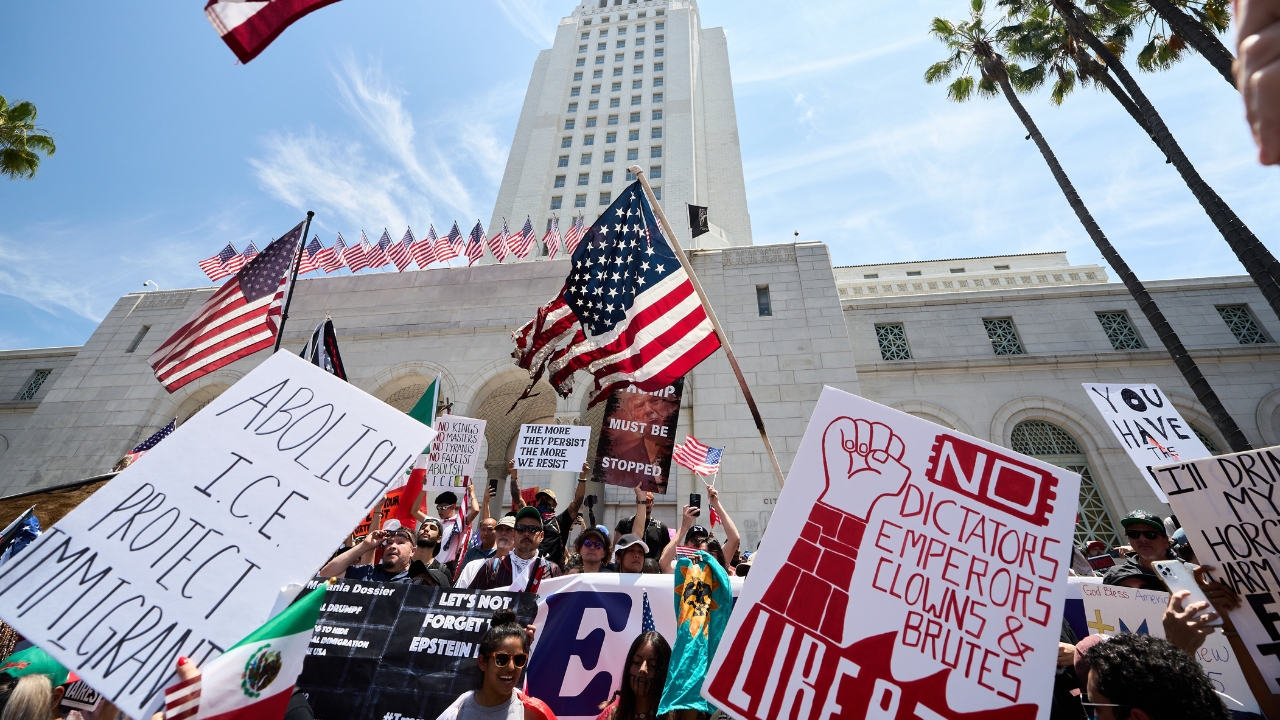
On the ground, that strategy translated into thousands of workers and students rallying across the United States on the first anniversary of President Donald Trump’s second term. Social media footage captured marches that mixed labor unions, immigrant families, and citizen allies, and one widely shared post described “Thousands of” people converging on civic centers in dozens of cities to call for an end to mass deportations.
Big city marches and small town fear
Major metropolitan areas have supplied the most visible images. In Minneapolis streets, protesters have confronted ICE agents and blocked access to federal buildings, while legal observers and volunteer medics trail the marches.
Across Los Angeles neighborhoods, demonstrators have rallied outside workplaces that were hit by earlier raids, turning loading docks and factory gates into stages for speeches about family separation and due process.
Other large cities have seen similar scenes. Marchers in Chicago and New York City have tied immigration enforcement to broader concerns about policing and executive overreach, echoing the “No Kings” slogan that has become a unifying chant.
Yet some of the most jarring impacts of the crackdown are playing out far from those urban cores. A detailed account of life beyond the big cities described how ICE is rattling small town and exurban America, with communities like Cornelius in Oregon and Coon Rapids in Minnesota confronting sudden raids, empty school seats, and underground safe houses.
Residents in those places describe a climate where routine drives to work or school can be interrupted by checkpoints, and where the sight of unmarked SUVs is enough to clear a grocery store aisle. That environment has pushed some local leaders in Minnesota and other states to quietly coordinate with church networks and advocacy groups that run informal safe houses and rapid response hotlines.
“No Kings” and the politics of resistance
The immigration protests are now intertwined with a broader anti authoritarian current captured by the slogan “No Kings.” The March 2026 No Kings protests are a planned coordination of peaceful demonstrations that will take place across the country, and organizers have explicitly linked their message to both immigration enforcement and concerns about presidential power.
Reporting on a third round of No Kings protests scheduled for March 28 described plans for the largest demonstrations yet, driven in part by the death of two people during earlier enforcement operations. One organizer predicted that the coming actions would be the most ambitious so far and quoted President Donald Trump’s own line, “I am not a king,” back at him as a rallying cry.
Those plans sit on top of a protest calendar already crowded with immigration related actions. An overview of the 2026 U.S. immigration enforcement protests noted that in January protests began throughout the United States in response to the shooting in Minneapolis and to a broader ICE surge that critics say has produced deaths, protests, and political backlash.
The backlash has reached Washington. A video report on the fallout from the ICE surge described how the Department of Homeland Security was barreling toward a shutdown after Democrats refused to budge on a funding bill, with lawmakers demanding changes to enforcement tactics as a condition for keeping the agency fully financed.
At the same time, another account of immigration enforcement described how deportation campaigns were intensifying nationwide while popular resistance grew on both legal and grassroots levels, including direct confrontations with agents during protests in Minneapolis and other cities.
What comes next
For now, the protests show no sign of fading. Conflict trackers say that while some early anti ICE actions have waned, new student led demonstrations continue to appear, and the planned No Kings marches suggest that organizers are shifting from reactive vigils to scheduled, coordinated events.
The Trump administration, for its part, has framed the crackdown as a necessary response to unlawful immigration and has shown little sign of retreat. One legal blog that examined Trump’s immigration crackdown described how aggressive workplace raids in Los Angele and other cities triggered both legal challenges and a surge of public protest, but also noted that federal agencies continued to expand their enforcement reach.
The standoff is likely to deepen if Congress and the Department of Homeland Security remain locked in a funding fight. If Democrats hold their line on conditioning money on changes to ICE operations, the country could see the unusual spectacle of a partially shuttered enforcement apparatus at the same time that protests against that apparatus peak.
In the streets, the movement is evolving. Early vigils focused on individual tragedies like the death of Renee Nicole Good. Today’s marches mix those personal stories with structural demands, from abolishing ICE to rewriting immigration statutes and curbing executive authority.
Like Fix It Homestead’s content? Be sure to follow us.
Here’s more from us:
- I made Joanna Gaines’s Friendsgiving casserole and here is what I would keep
- Pump Shotguns That Jam the Moment You Actually Need Them
- The First 5 Things Guests Notice About Your Living Room at Christmas
- What Caliber Works Best for Groundhogs, Armadillos, and Other Digging Pests?
- Rifles worth keeping by the back door on any rural property
*This article was developed with AI-powered tools and has been carefully reviewed by our editors.