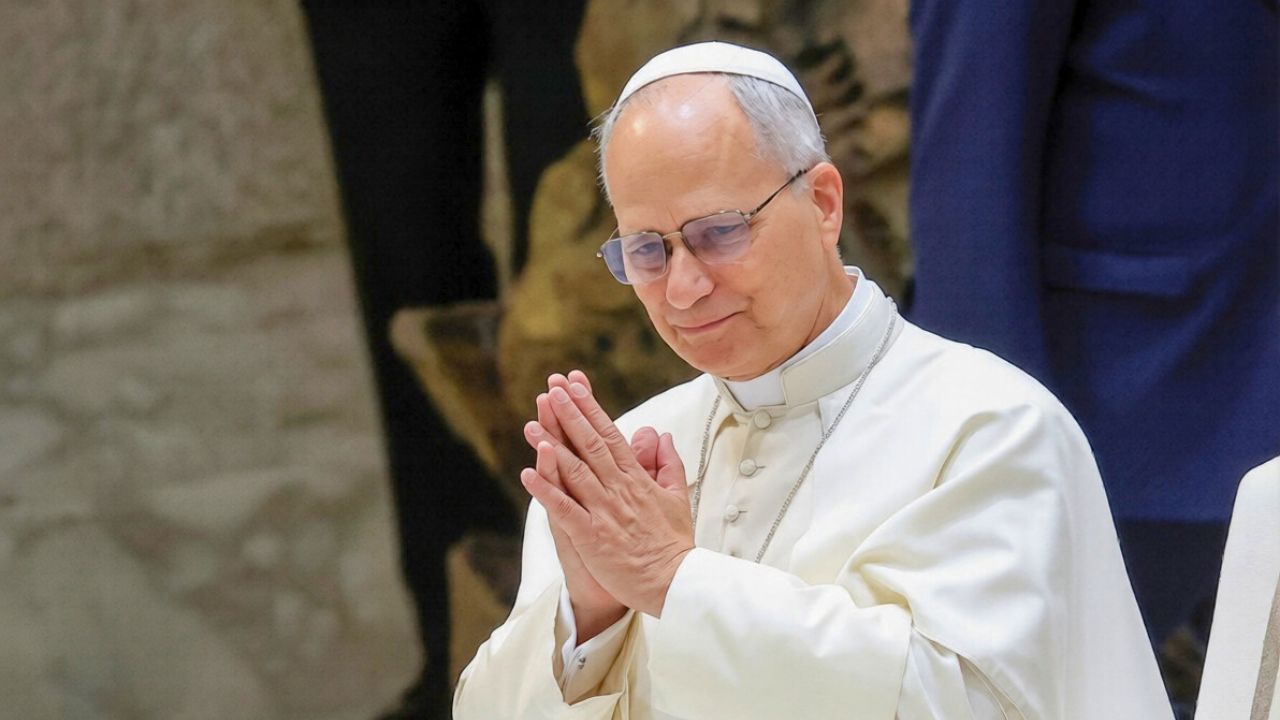
Cuba agrees to release 51 prisoners after talks with Pope Leo
Photo credit: Riccardo De Luca Update/Shutterstock.com
Cuba has agreed to free 51 prisoners after direct talks with Pope Leo, a rare gesture in the middle of a grinding economic crisis and a bitter standoff with the United States. The move offers a modest humanitarian opening while leaving unresolved deeper disputes over political freedoms, sanctions, and the island’s future.
The announcement also thrusts Pope Leo XIV into a delicate role as mediator, testing whether the first American pontiff can coax small but concrete concessions from Havana and Washington at a moment of escalating pressure on Cuba’s government.
Vatican-brokered deal amid oil blockade
Cuban authorities said they would release 51 inmates in the coming days under an agreement reached with the Vatican, describing the step as part of a broader pattern of periodic amnesties and sentence reductions. Officials presented the decision as a sovereign act, not a capitulation to foreign demands, even as they acknowledged the talks with the Holy See.
The commitment to free 51 people comes as Cuba struggles with fuel shortages and blackouts linked to an oil blockade that has deepened an already severe economic slump. Reporting on the oil standoff describes a country where long queues, rising prices, and emigration are eroding public patience and complicating the leadership’s grip.
According to official statements cited in wire reports, the list of beneficiaries includes people convicted of both common crimes and offenses tied to protests and dissent, although authorities did not provide a full breakdown. Human rights organizations have long argued that Cuba holds a significant number of political prisoners, a claim the government disputes.
In a statement carried by state media and echoed in international coverage, the Cuban government insisted that the release of the 51 prisoners was a “sovereign decision” and described such measures as a “common practice in our criminal policy.” That framing appeared in a report on the 51-person release, which also noted that authorities continued to reject the label of political detainees.
Pope Leo XIV’s quiet diplomacy
The prisoner pledge follows a series of contacts between Cuban officials and Pope Leo XIV, who was born Robert Francis Prevost and previously known as Cardinal Robert Francis Prevost. Biographical records identify Robert Prevost as the first American to ascend to the papacy, choosing the name Leo XIV, a detail highlighted in profiles of Pope Leo XIV.
Earlier this year, Pope Leo met Cuba’s foreign minister, Bruno Rodriguez, at the Vatican, where both sides discussed the humanitarian impact of sanctions and the island’s internal tensions. Coverage of that encounter, including a detailed account by By Nora Gámez Torres, described how Pope Leo pressed for gestures that could ease human suffering and open space for dialogue.
Vatican officials have not released a full transcript of those talks, but several reports agree that the Holy See urged Havana to consider prisoner releases as a confidence-building step. In that sense, the current announcement fits a long tradition of papal diplomacy in Cuba, from earlier visits by previous popes to behind-the-scenes mediation in past prisoner swaps.
One report on the agreement, citing a government note, said Cuba would free 51 prisoners in coordination with the Vatican and that authorities would work with the Holy See to explore possible destinations for those who might seek exile. A dispatch on the Vatican-brokered deal described it as the latest in a series of such arrangements, some of which have involved transfers to Spain or other countries.
The Holy See has not publicly claimed credit, but the pattern of meetings and the timing of the announcement point to Pope Leo’s personal investment in the Cuban file. His background in Latin America and his formation at institutions such as the Catholic Theological Union in Chicago, as described in an overview of his, help explain his interest in a region where Catholic leaders have often navigated between state power and dissident voices.
Havana’s message and domestic stakes
Inside Cuba, the announcement landed in a charged political moment. Leader Miguel Díaz-Canel, referred to in some coverage as Miguel Diaz Canel, recently signaled that he is open to speaking with President Trump about the future of the nation, while warning that Cuba would not negotiate “under threats.” That posture appeared in a televised segment that introduced Miguel Diaz Canel as Cuba’s leader and framed his comments as a response to tightening U.S. pressure.
State media have portrayed the prisoner move as an act of clemency by a government under siege rather than a concession extracted by Washington. In a national appearance flagged in an Australian broadcast report, Miguel Díaz-Canel was expected to address both domestic hardships and the external oil blockade that has choked off key supplies to the Caribbean island.
Human rights advocates, including Spain-based groups, have argued that hundreds of detainees remain behind bars for protest-related offenses, far beyond the 51 slated for release. One summary of their claims, carried in a report on Cuba’s pledge, stressed that organizations such as Prisoners Defenders continue to document extensive lists of alleged political prisoners.
For families of detainees, the partial amnesty offers a flicker of hope but also a reminder of how opaque the system remains. It was unclear from early reports how many of the 51 were jailed for protest activity, how many faced common criminal charges, and whether any high-profile activists would be among those freed.
Washington’s pressure and limited gains
The prisoner decision unfolds against a backdrop of sharp rhetoric from Washington and a tightening of sanctions. President Trump has threatened harsher measures unless Havana makes significant reforms, including changes to its political system and economic model. Coverage of the standoff in a feature on Cuba’s pledge to noted that U.S. officials see the current step as welcome but insufficient.
According to that reporting, American negotiators have signaled that any broader deal would require far more significant reforms. But Cubans will be watching for that on T, a phrase that captured both the public’s anxiety and the uncertainty around what, if anything, might follow the current gesture.
In Florida, exiles and politicians reacted with guarded skepticism. Some welcomed any release as positive, while others argued that Havana had used similar gestures in the past to deflect criticism without changing underlying policies. A separate account of the agreement, published through a partner station and accessible via a regional outlet, quoted U.S. based figures calling for verification of who exactly would be freed.
For the Biden administration’s successor, the policy dilemma remains familiar. Easing sanctions without clear concessions risks domestic backlash, especially in South Florida. Maintaining or tightening them, on the other hand, deepens Cuba’s economic misery and fuels migration, which carries its own political costs.
What the 51 releases can and cannot change
Viewed strictly on humanitarian grounds, the decision to free 51 people from prison is significant for the individuals and families involved. Some may gain a chance to rebuild their lives on the island, while others could seek to leave if third countries agree to accept them, a pattern seen in earlier Vatican-facilitated releases.
Yet the scale of the gesture is modest compared with the scope of Cuba’s crisis. The island faces chronic shortages of fuel, food, and medicine, a collapsing peso, and a wave of emigration that has sent hundreds of thousands abroad in recent years. The oil blockade, detailed in coverage that described how shipments are intercepted or deterred, has magnified those strains.
Diplomatically, the agreement underscores the Vatican’s unique position as a trusted, if limited, intermediary. By engaging both Havana and Washington, Pope Leo XIV has managed to extract a concrete concession at a moment when direct talks between Cuba and the United States are stalled. At the same time, the episode highlights the ceiling on what outside actors can achieve without broader political will on both sides.
Like Fix It Homestead’s content? Be sure to follow us.
Here’s more from us:
- I made Joanna Gaines’s Friendsgiving casserole and here is what I would keep
- Pump Shotguns That Jam the Moment You Actually Need Them
- The First 5 Things Guests Notice About Your Living Room at Christmas
- What Caliber Works Best for Groundhogs, Armadillos, and Other Digging Pests?
- Rifles worth keeping by the back door on any rural property
*This article was developed with AI-powered tools and has been carefully reviewed by our editors.