Scientists rethink long-held assumptions about primate behavior
Photo credit: Wirestock Creators/Shutterstock.com
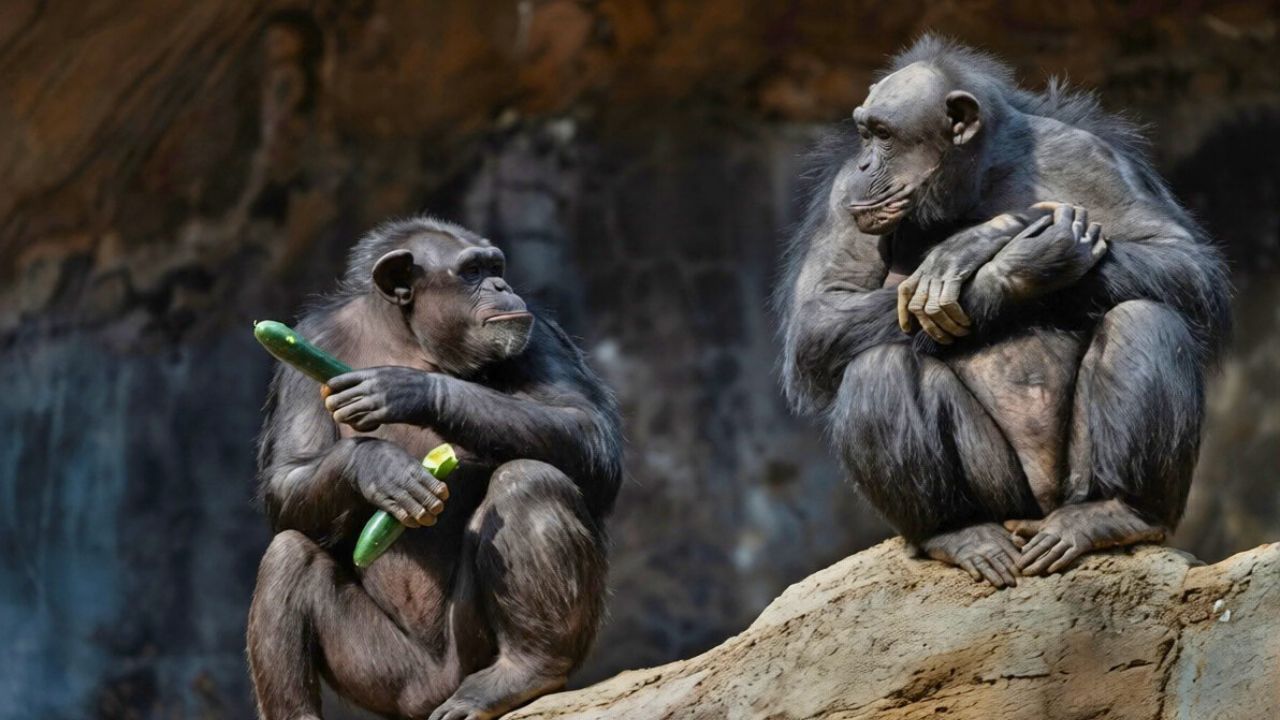
For more than a century, primates have been cast as emotional, impulsive and driven by instinct, with humans set apart as uniquely rational and moral. A wave of new research is now challenging that story, revealing complex minds, flexible reasoning and social lives that do not fit old stereotypes. Taken together, these findings are forcing scientists to revisit what it really means to be a primate, and how far back the roots of humanlike behavior go.
From the icy origins of early primates to chimpanzees that revise their beliefs and bonobos that track what others know, the field is shifting from simple comparisons to a richer view of shared capacities. The result is a more unsettling, and more interesting, picture of where humans sit in the animal world.
From tropical myth to cold reality
Generations of textbooks have placed the first primate ancestors in lush, warm forests, as if complex brains could only emerge under gentle tropical skies. New fossil work suggests that story is wrong.
Researchers using teeth and jaw fragments argue that early primates evolved in seasonally cold environments, with some species living in what is now described as North America. A study in PNAS links these animals to habitats that swung between hot summers and freezing winters.
Accounts of the same work note that some early species even colonized Arctic regions, which would have demanded strong seasonal planning and flexible diets. That picture clashes with the older idea that primate intelligence grew up in stable tropical forests.
One analysis explains that Most people still picture early primates as warm-climate specialists. The new data instead point to ancestors that coped with scarcity, darkness and ice, conditions that would reward memory, foresight and social cooperation.
Rational minds behind the eyes
If early primates faced harsh winters, modern apes may reveal the cognitive tools that made survival possible. Several groups now argue that chimpanzees engage in a kind of everyday rationality once reserved for humans.
Experiments described by researchers at a college of letters and science show that chimpanzees weigh competing clues and update their choices when better information appears. In one task, apes heard sounds from boxes that might contain food, then changed their selections when new evidence conflicted with their first impression, a pattern that looked like belief revision rather than habit.
One detailed report from the same institution explains that New psychology study protocols used tight controls to separate impulse from reasoning. The animals did not just chase the last hint they saw; they integrated earlier evidence and sometimes stuck with a quieter box when the statistics favored it.
Coverage of the work notes that the study appeared on a campus site labeled Home, and that some trials involved pointing to the other box when a new sound undermined the first clue. Those small gestures hint at a mind that can treat its own belief as a hypothesis that might be wrong.
Other accounts of the same research describe how Most impressive trials showed chimpanzees discounting earlier evidence when a new cue was clearly more reliable. Separate coverage reports that Chimpanzees used a variant of the scientific method, setting aside prior expectations when the data shifted.
Social media summaries of the work describe how Chimps rethink their choices and how Chimps Can Revise. Together with coverage that notes Nov as a key moment for the release, these reports suggest that rational evaluation of evidence is not uniquely human.
Such findings fit a broader shift described in a review of primate research, which notes that the study of primatology has uncovered coalitions and alliances that rival human politics. One overview explains that the field of primatology has repeatedly overturned assumptions about what animals can plan or negotiate.
Emotion, expression and pretend play
While cognition studies challenge the line between human and ape reasoning, other work is rethinking how primates express and even imagine emotions. A widely cited paper titled Abstract on primate facial expression argues that old emotion frameworks miss the predictive, social nature of these signals.
The authors propose a model in which facial movements are not simple readouts of inner feelings, but tools that help coordinate group behavior. The keywords attached to the work explicitly link this to behaviour, Primates and Social cognition, a trio that pushes researchers to see expressions as part of a broader communication system rather than as basic reflexes.
Other studies are reaching into even more abstract territory. Reports on apes interacting with screens and toys describe how individuals can distinguish between real juice and a picture of juice, and still treat the pretend scenario as meaningful.
One account focuses on When Kanzi, a well known bonobo, was asked what he wanted in a pretend game. The report notes that When Kanzi was offered both a real drink and an image, he pointed to the actual juice almost every time, yet still engaged with the imaginary scenario.
Another report on the same Science paper explains that the findings, published in the journal Science, suggest that the capacity to understand pretend objects stretches back at least 13 million years. That pushes the origins of imagination deep into shared ancestry, rather than treating it as a late human invention.
Commentary from Christopher Krupenye of Christopher Krupenye at Johns Hopkins University in Baltimore describes these pretend games as evidence that ape mental lives go beyond the here and now. If apes can imagine alternatives, then their play and conflict may involve counterfactual thinking that looks surprisingly familiar.
Social lives that defy simple stories
As cognition and expression are reinterpreted, primate social behavior is also under review. Longstanding narratives often framed nonhuman groups as rigid hierarchies, with aggression at the center. Fieldwork and comparative surveys now present a more varied picture.
In one interview, veteran baboon researcher Shirley Strum reflects on decades of watching wild troops. She notes that There are still biases in how scientists and the public connect nonhuman primate behavior to human life, and that some early assumptions about dominance and violence are now known to be wrong.
Another large comparative study has added sexuality to the list of behaviors that do not fit old molds. A survey of wild and captive groups reported that Humans are far from the only primates engaging in same sex sexual activity, documenting instances in which 59 nonhuman primate species showed such behavior, with detailed data for 23 species.
Researchers involved in that work argue that same sex contact may serve social functions, from alliance building to conflict resolution, rather than existing as a simple byproduct. That view aligns with older observations that grooming, play and coalition formation often blur the lines between friendship and mating.
Studies of other great apes add still more layers. A first of its kind project on bonobos reports that some individuals can track what others know and adjust their own behavior accordingly, a skill related to theory of mind. A social media summary of the work highlights that it was shared in late Aug, underscoring how quickly such findings now circulate.
Across species, one synthesis of animal culture research notes that New research has shown that behaviors once labeled uniquely human, from fashion like preferences to tool traditions, appear in other animals too. Many of these examples come from primate groups that pass down specific techniques and styles.
Even the institutions behind these studies reflect a changing research culture. The work on chimpanzee rationality emerged from a campus that presents itself through sites such as Discovered and advising hubs like Discovered, while updates reach the public through channels including Discovered. Behind the scenes, support pages such as Discovered and technical resources like Discovered and a review at Discovered help knit together the citation trails that bring individual findings into a broader picture.
Like Fix It Homestead’s content? Be sure to follow us.
Here’s more from us:
- I made Joanna Gaines’s Friendsgiving casserole and here is what I would keep
- Pump Shotguns That Jam the Moment You Actually Need Them
- The First 5 Things Guests Notice About Your Living Room at Christmas
- What Caliber Works Best for Groundhogs, Armadillos, and Other Digging Pests?
- Rifles worth keeping by the back door on any rural property
*This article was developed with AI-powered tools and has been carefully reviewed by our editors.