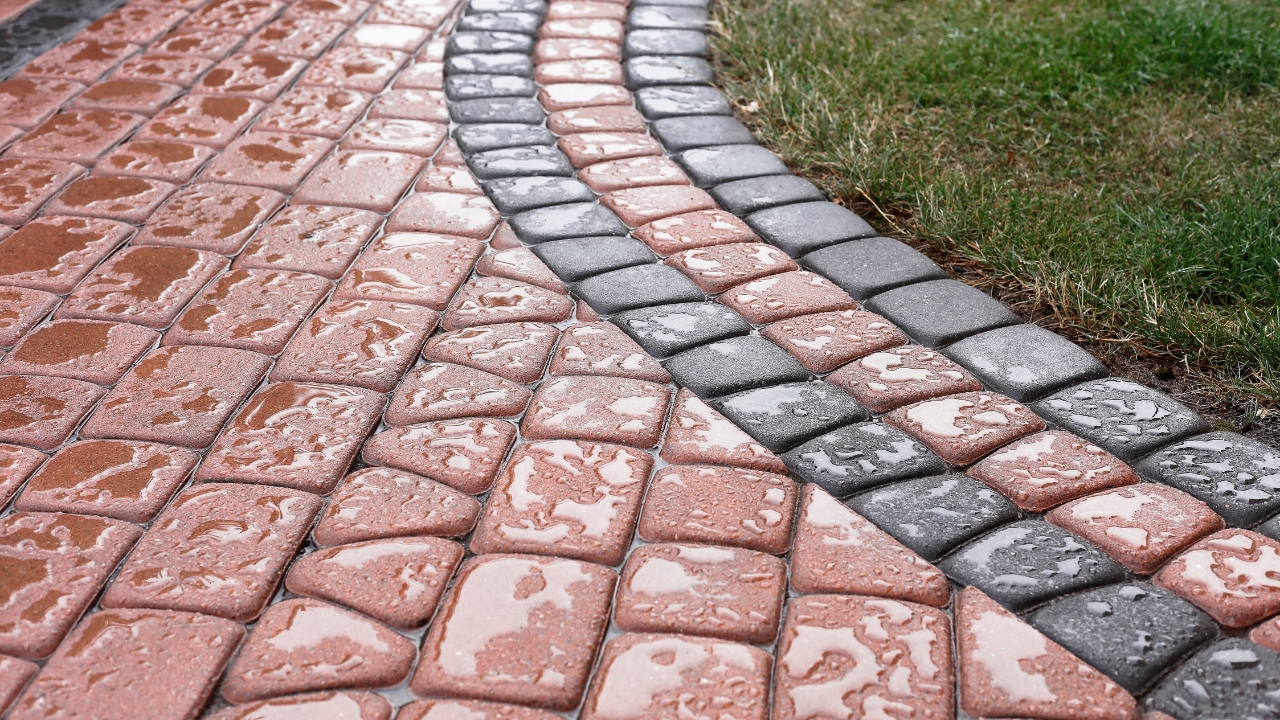
What helped when the path to the garden kept turning slick after rain
Photo credit: Wojmac/Shutterstock.com
After a night of steady rain, a garden path can turn from welcoming to treacherous in just a few hours. When the route to the beds stays slick long after the clouds clear, the problem is rarely just bad luck, and the solutions are usually practical rather than dramatic.
Across materials, the same pattern shows up: water sits where it should drain, organic grime builds on top, and the surface itself offers too little grip. Tackling each layer in turn is what finally helped when the walk to the garden kept turning slick after every shower.
Where the water is coming from
Persistent slipperiness usually starts with poor drainage. When water collects beside or under a path, it seeps up through joints or sits in shallow depressions, feeding algae and moss.
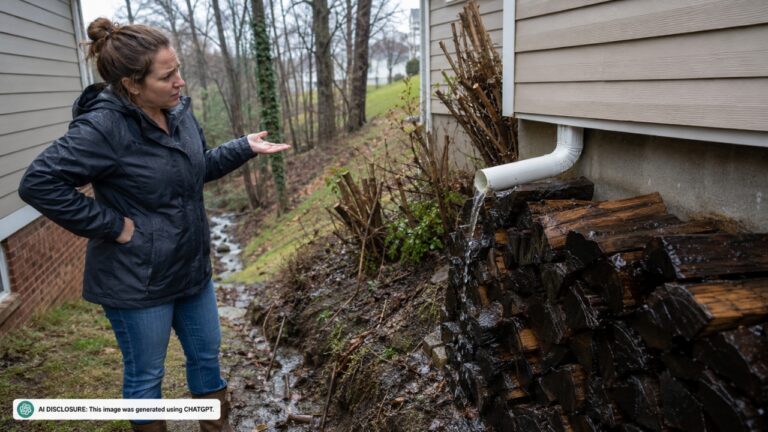
Yard specialists describe several recurring culprits: compacted soil that sheds runoff, low spots where pooling forms, and downspouts that dump water directly toward walkways. Practical fixes range from core aeration that opens soil pores to redirecting runoff with shallow swales or French drains, all of which reduce pooling water before it ever reaches the path.
In tight spaces near beds, gardeners sometimes dig narrow trenches or install perforated pipe to move excess moisture away. Another common tactic is to raise the path slightly on a compacted gravel base so the walkway itself becomes the high, dry line through the yard.
When the surface itself is the hazard
Even with better drainage, certain materials stay slick once they are wet. Smooth troweled concrete, polished stone and dense clay pavers are common offenders because their surfaces offer little texture.
Concrete specialists point out that a glossy sealer can turn an ordinary slab into a skating rink. Their solution is not to rip it out but to recoat with a traction additive, often a fine grit mixed into a new sealer that increases friction on the slippery walkway without changing its basic look.
For stone and tile, chemical treatments can microscopically etch the surface so it grips better underfoot. Products in this category, such as commercial non slip tile treatments, are designed to react with minerals in the stone and increase traction without leaving a visible film, although they require careful application and periodic reapplication.
Where the path is still being built or is due for replacement, material choice becomes the most powerful lever. Hardscape guides consistently highlight flagstone as a dependable option for garden paths, especially when it is installed with a slightly rough finish and set on a compacted base. Rounded river rock, by contrast, tends to roll underfoot and is often better used as a border or base layer under other materials than as the walking surface itself.
Gravel paths, especially those built with angular stone like crushed granite, naturally interlock and shed water. They still need edging and occasional top ups, but they rarely become as slick as smooth concrete or tile because the individual stones move slightly underfoot and provide micro edges for shoe soles to catch.
Decking and timber steps introduce their own risks. Softwood boards wear smooth over time, and shaded runs accumulate algae quickly. In these spots, mechanical solutions help most. Preformed anti slip strips, often made from fiberglass or aluminum with a gritty top surface, can be screwed directly into the leading edge of each tread to create a permanent grip zone on otherwise slick wood.
For gardeners who need a rapid, low commitment fix in a high traffic area, flexible matting has become a quiet workhorse. One example is the Rubber Cal S Grip runner, a PVC product sold as a safety surface for wet floors. Retailers describe its ribbed pattern and drainage channels as a way to keep feet above standing water, and the PVC runner format lets homeowners cut it to length for short bridge sections across persistently damp ground.
On stone and tile, chemical traction treatments sit alongside these physical add ons. One widely promoted example is SlipDoctors Stone Grip, a liquid treatment sold specifically for tile and stone that are slippery when wet. The manufacturer markets Stone Grip as a way to “dramatically increase traction” on surfaces that cannot easily be resurfaced or replaced, which makes it a candidate for older patios that already match the rest of a garden’s design.
Temporary measures still have a place, especially in winter. Horticultural sand, which is clean and sharp, can be broadcast over icy or algae slicked paths to create instant bite underfoot. Garden advice columns stress that the effect is short lived and needs renewal after heavy rain, but they also note that sand avoids the plant damage associated with rock salt in beds that sit close to the path.
Maintenance is the thread that ties all of these fixes together. Even the best material will become hazardous if it is allowed to host a layer of decomposing leaves and pollen. Walkway specialists recommend a regular routine: weekly sweeping or blowing to remove debris before it breaks down, followed by periodic pressure washing or scrubbing to strip away biofilm that makes surfaces slippery when wet.
In shaded areas, some homeowners add a mild outdoor cleaner formulated to target algae and mold. These products are often applied with a garden sprayer and left to work before rinsing, which slows regrowth between deeper cleanings.
Where the soil itself is chronically saturated, the path is often only a symptom. Garden bed systems that sit directly on heavy clay can trap water around their edges, and repeated storms leave both plants and paths sitting in a shallow bathtub. Raised bed manufacturers advise a sequence of emergency measures for waterlogged plots, starting with a pause in irrigation, then removing standing water with buckets or shallow trenches and improving drainage with organic matter and, in extreme cases, perforated pipe.
Those same interventions help nearby walkways. By giving water a clear way to leave the area, they reduce the constant damp that encourages slime on pavers and timbers.
Design tweaks can also make a surprising difference. Subtle cross slopes of one to two percent, barely visible to the eye, encourage water to move off the walking surface rather than sit in the center. Staggered stepping stones with generous gaps of gravel or groundcover between them allow rain to infiltrate instead of pooling on a continuous slab.
Lighting, while not a traction fix, sits alongside these measures as a safety upgrade. Low voltage path lights or downlights mounted on nearby structures help people see slick patches, raised edges and temporary mats before they step on them, especially in the early morning or evening when dew and shade combine.
Some gardeners combine several of these strategies in the same corridor. A typical sequence might start with redirecting a downspout away from the path, then adding a compacted gravel shoulder on the low side, resurfacing smooth concrete with a grit infused sealer and finishing with anti slip strips on any adjacent wooden steps.
Others opt for a more radical reset, lifting a failing path entirely and rebuilding it as a dry laid stone or gravel route on a properly graded base. Tutorials that follow projects like Julia’s natural stepping stone path show how a modest slope, a stable substrate and careful stone selection can turn a chronically slick run into a firm, forgiving walkway that still looks informal.
The pattern that emerges across expert advice is simple. When the way to the garden keeps turning slick after rain, the lasting answers come from changing how water moves, how surfaces grip and how often they are cleaned, not from a single miracle coating. The most reliable paths are the ones that treat safety as a design choice from the ground up, then back it with steady, unglamorous upkeep.
Like Fix It Homestead’s content? Be sure to follow us.
Here’s more from us:
- I made Joanna Gaines’s Friendsgiving casserole and here is what I would keep
- Pump Shotguns That Jam the Moment You Actually Need Them
- The First 5 Things Guests Notice About Your Living Room at Christmas
- What Caliber Works Best for Groundhogs, Armadillos, and Other Digging Pests?
- Rifles worth keeping by the back door on any rural property
*This article was developed with AI-powered tools and has been carefully reviewed by our editors.