I used black mulch around the mailbox and regretted it all summer
Photo credit: Ozgurcoskun/istock.com
Black mulch looks sharp in photos, especially against a white mailbox post and bright annuals. Over one long summer, that sleek choice turned into a maintenance headache, a heat trap, and a magnet for problems that could have been avoided with a different material and color.
What happened around a single mailbox bed shows how a visually trendy product can clash with plant health, daily use, and even basic curb appeal once the weather heats up and the novelty fades.
Why black mulch seemed like a smart upgrade
On paper, the decision made sense. Black mulch promises bold contrast, especially when paired with a light-colored house, crisp edging, and structured plantings. Design examples that feature black mulch around clean-lined beds and modern hardscape show how dark groundcover can make foliage and flowers pop, a look that many homeowners discover through curated galleries and social feeds linked from sites such as black mulch ideas.
For a small mailbox bed, the homeowner wanted exactly that effect: a defined, modern frame around a basic post, with compact shrubs and a ring of bright annuals. A deep black mulch promised instant polish without the cost of new stonework or a custom post.
There was also an assumption that any mulch would help with moisture and weeds. Like other organic mulches, dyed products can still act as a barrier that slows evaporation and shades the soil surface. The gamble was that color was just an aesthetic layer on top of those functional benefits.
Heat, plants, and a mailbox that baked all day
The first hint of trouble arrived with the heat. Dark colors absorb more sunlight, and black or deep brown mulch in particular pulls in more energy than lighter shades. As reported in guidance on mulch color, black mulch can cause the soil underneath to warm faster during the day, especially in full sun, because the surface absorbs and radiates heat into the root zone of nearby plants, a pattern explained in detail in coverage of how mulch color affects.
That warming effect can benefit some flowering plants that enjoy cozy soil temperatures, but it can also stress shallow roots in a tight space like a mailbox bed. The area around the post often sits next to asphalt, which already reflects and stores heat, so the dark mulch compounded the problem.
By midseason, the annuals closest to the post wilted faster than those in a nearby bed with lighter mulch. The soil felt hot to the touch in late afternoon, and even generous watering did not fully compensate. Instead of a lush ring of color, the planting looked patchy and tired, with some blooms stunted while others stretched and flopped.
The mailbox itself did not escape. The dark surface around the base seemed to radiate heat upward, making the metal box uncomfortably warm during mail delivery. While that did not cause structural damage, it added to the sense that the entire corner of the yard had become a small heat island.
Mulch depth, tree roots, and the science of a small bed
The problems were not just about color. The way the mulch was installed around the mailbox post and nearby shrubs broke several basic rules of good practice. Extension guidance on how to mulch trees and shrubs recommends a relatively thin, even layer, typically in the range of 2 to 4 inches, spread over a broad area rather than piled against trunks or stems, as explained in detail in instructions on how to mulch.
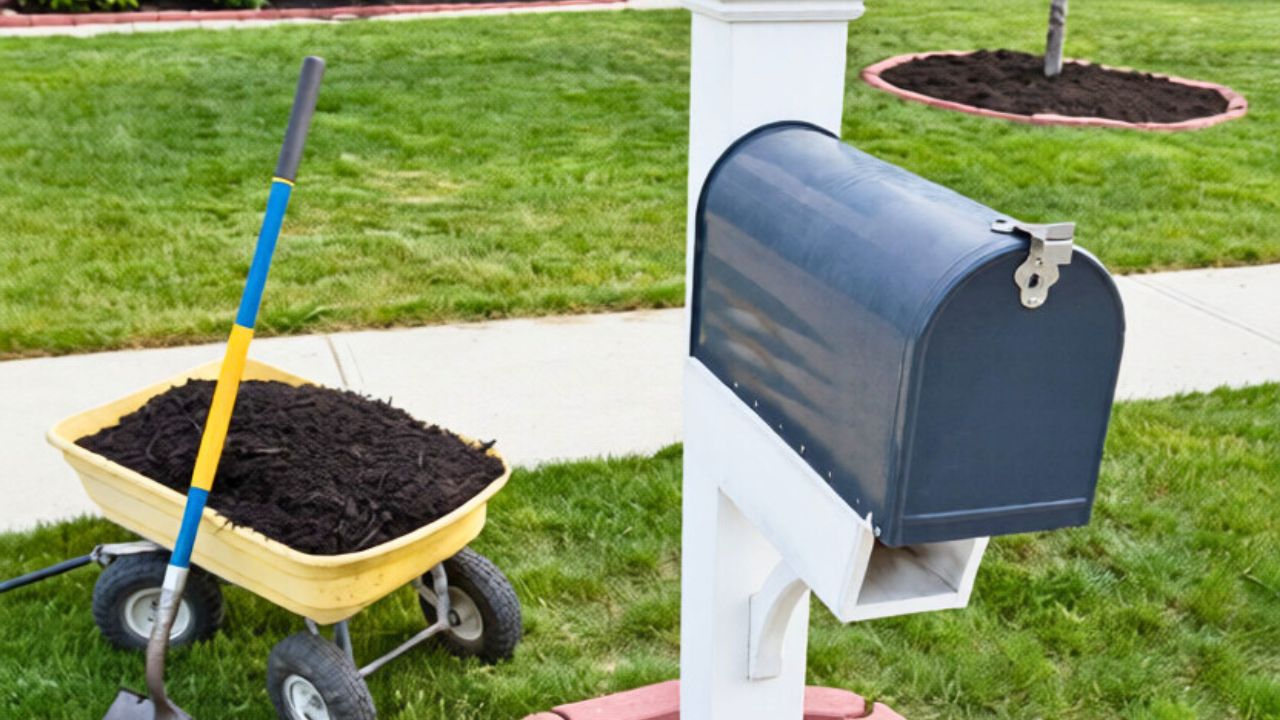
In the mailbox bed, the homeowner created a steep cone of black mulch that climbed right up against the wooden post and the crowns of small shrubs. That volcano shape trapped moisture against the wood, encouraged insects, and reduced air flow to the root flare of the plants.
Over the summer, the base of the post stayed damp for long stretches after rain, and the lower stems of nearby shrubs began to show signs of rot. The mulch layer also settled unevenly, leaving some roots exposed while others remained buried too deeply.
Because the bed was small, there was little room for roots to escape the hottest zone. The combination of excess depth, dark color, and tight spacing created a stressful environment that would have challenged even tougher species.
Weeds, fading color, and constant cleanup
The visual appeal of black mulch depends on a clean surface and a strong contrast with surrounding plants or hardscape. In practice, that standard proved hard to maintain around a mailbox that sat under a street tree and next to a busy sidewalk.
Fallen leaves, grass clippings, and blown trash showed up immediately against the dark background. Instead of disappearing into a neutral brown, every stray bit of debris looked like clutter. The homeowner found that the space needed frequent raking and hand-picking just to stay presentable.
Weeds still found a way through, especially along the edge where the mulch met the curb. While mulch can suppress many weed seeds by blocking light, it does not function as a complete barrier, and any thin or disturbed areas quickly became entry points. The deep black color even made some weeds more noticeable, since bright green seedlings stood out sharply.
As the season wore on, the dyed mulch began to fade. Exposure to sun and rain gradually shifted the color from rich black to a dull gray-brown, a pattern that has been documented with many colored wood mulches that rely on surface pigments rather than naturally dark material, as described in comparisons of natural and colored.
The fading created a patchwork effect, with some areas still dark where the mulch was thicker and other spots washed out. Instead of a unified frame around the mailbox, the bed looked uneven and tired by late summer, and refreshing the color would have required another round of hauling and spreading.
Material questions and long-term soil health
Another concern emerged once the novelty wore off: what the black mulch was actually made of. Many dyed mulches use ground wood from pallets or other recycled lumber, then add colorants to achieve the desired shade. When the source material is not clearly labeled, there is a risk that the wood could include treated pieces or contaminants, an issue that has been raised in discussions of mulch ingredients.
In a small mailbox bed, the stakes may seem low compared with a vegetable garden, but soil health still matters. Repeated applications of low quality wood mulch can tie up nitrogen as it decomposes, especially if the pieces are fine and heavily processed. Over time, that can leave ornamental plants struggling unless the homeowner compensates with careful fertilization.
Professional crews often steer clients toward higher quality products or alternative groundcovers in tight, high-visibility areas. Some firms, such as Winfield Landscapes, highlight design solutions that rely on plant massing, stone, or lighter organic mulches instead of defaulting to heavily dyed options in every bed.
For a mailbox, where space is limited and plants are exposed to road salt, foot traffic, and reflected heat, those alternatives can be more forgiving. A simple gravel strip, a ring of low groundcover, or a natural shredded bark can all provide a finished look without the same level of color fade or material uncertainty.
Cost, timing, and smarter alternatives
The black mulch around the mailbox also carried a hidden cost in timing and replacement. Dyed products often command a premium over plain wood chips or natural bark, and their color performance tends to be most impressive early in the season. Some gardeners time their purchases for mid spring, when retailers adjust prices and stock, a strategy discussed in advice on why gardeners wait to.
In this case, the homeowner paid extra for a product that delivered peak curb appeal for only a few weeks. By late summer, the fading, weed pressure, and plant stress meant that the bed looked worse than it had with a simple, cheaper brown mulch the year before.
What the mailbox experiment shows other homeowners
Like Fix It Homestead’s content? Be sure to follow us.
Here’s more from us:
- I made Joanna Gaines’s Friendsgiving casserole and here is what I would keep
- Pump Shotguns That Jam the Moment You Actually Need Them
- The First 5 Things Guests Notice About Your Living Room at Christmas
- What Caliber Works Best for Groundhogs, Armadillos, and Other Digging Pests?
- Rifles worth keeping by the back door on any rural property
*This article was developed with AI-powered tools and has been carefully reviewed by our editors.