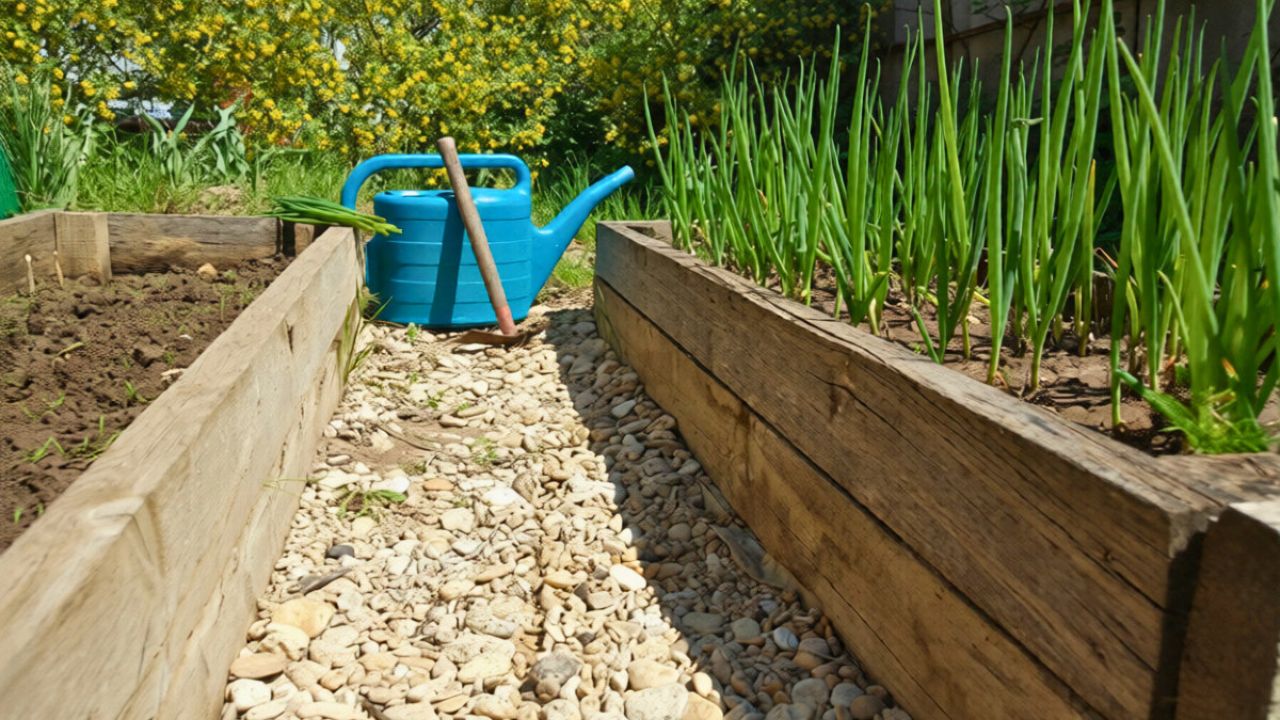
I tried gravel between the garden beds and hated it by the second weed pull
Photo credit: Malinka333/Shutterstock.com
Gravel between raised beds promises a clean, permanent finish and almost no upkeep. For many home gardeners, reality sets in by the second weed pull, when those tidy stones start to feel like a permanent chore instead of a shortcut.
Across online gardening groups and advice threads, a clear pattern emerges. Gravel paths can work, but only with steady maintenance, careful prep, and a willingness to accept that weeds will still find a way through.
Why gravel paths keep turning into weed beds
Gravel has a reputation as a low maintenance surface, yet experienced gardeners repeatedly describe it as a weed magnet. One viral video on gravel care explains that windblown seeds land in the gaps, organic debris builds up, and the stones slowly turn into a thin layer of soil that invites germination.
In one discussion, a gardener with a gravel back garden admitted a “love hate relationship” and described how dirt collects in the stones until they need to be refreshed and hand weeded again, a cycle that plays out in many gravel back gardens.
Gravel around raised beds also concentrates foot traffic, which compacts any fine material that settles between stones. Once that mix of dust, leaves, and spilled soil firms up, even shallow rooted weeds grip tightly. Pulling them often brings up a fistful of rock along with the root.
Some gardeners try to solve this with landscape fabric under the stones, but practical advice from weed control threads warns that roots can grow down through fabric and then anchor under it. One popular pea gravel guide flatly advises against fabric because it turns simple hand pulling into a long term headache once roots thread through the barrier.
The split verdict on pea gravel between beds
Not everyone regrets putting gravel between raised beds. In one detailed comparison, a gardener who had both mulch and pea gravel in different areas said they “love” the pea gravel more than mulch or grass, while still acknowledging that each surface has its own strengths and failures.
That same conversation highlighted how some gardeners are happy with grass paths they can mow, while others prefer mulch for easier weeding and the ability to move or add beds without relocating stone. Several contributors praised pea gravel for staying put and looking neat for four years with minimal weeds, although even fans admitted that they still need periodic spot control in their pea gravel paths.
Comfort is another dividing line. One gardener in a weed control thread bluntly said they would pull up the rocks around edible beds because “nobody likes walking on them anyway,” then suggested replacing them with a heavy tarp barrier or other materials that are easier underfoot.
In practice, gravel performs best where gardeners are ready to treat it as a living surface that needs sweeping, raking, and an occasional top up, not as a static, maintenance free floor.
The chemical temptation and its limits
Once weeds start poking through gravel, many gardeners reach for sprays. In one gravel and mulch group, a participant argued that weed killer “does wonders” and backed that up with a recipe of white vinegar, dish soap, and salt for those who want to avoid commercial products.
Another gravel pathway discussion around edible beds showed the same divide. Some contributors recommended salt instead of herbicides, while others warned that salt and strong vinegar can linger in the soil and complicate planting at a later time, especially in tight spaces near vegetables, as described in a weed removal thread.
Some gardeners opt for commercial pre emergent products in rock beds, timing applications in fall and early spring to catch germinating seeds. Others prefer to avoid chemicals entirely near food crops and accept that pulling by hand, or occasionally torching, is safer around raised beds that grow vegetables and herbs.
Even chemical advocates concede that any spray is a recurring task. Seeds will keep arriving, and the gravel will keep catching organic debris, so sprays can only reduce the workload, not erase it.
Why many gardeners pivot to mulch and cardboard
Against that backdrop, wood chip paths start to look less romantic and more practical. Several gardeners describe a simple system of laying down cardboard and covering it with a thick layer of chips that suppresses weeds while remaining soft underfoot.
One gardener in a weed reduction discussion between beds explained that they use cardboard and wood chips, thank ChipDrop, and simply reapply the chips every year or two. That combination of recycled cardboard and free arborist chips has become a popular way to build weed suppressing paths.
ChipDrop itself connects gardeners with local arborists who need to unload chipped branches. The service promotes free loads of wood chips that can be used for paths, bed edges, and large garden areas, giving home growers access to bulk mulch through ChipDrop deliveries.
Other gardeners echo the same formula when clearing new garden areas. They recommend laying down cardboard, then adding a four to six inch layer of wood chips to smother existing vegetation and create a soft, walkable surface that breaks down slowly and feeds the soil over time.
For those who dislike gravel underfoot, this approach offers a middle path between grass and stone. It still requires topping up, but the maintenance is predictable and does not involve prying roots out from under sharp rocks.
Designing paths for the way gardeners actually work
Some of the strongest advice on path surfaces has nothing to do with materials and everything to do with layout. A permaculture discussion on hugelkultur mounds argued that leaving enough room to mow between beds can be a compelling reason to skip gravel entirely.
In that thread, the writer suggested planting low herbs like thyme to compete with weeds, but the key point was that a mower can do the heavy lifting in wide aisles. The comment concluded that this is a compelling reason to leave room to mow between beds if gardeners prefer to use machines to get the weeds out, and that beds can be edged with thyme and similar plants, as described in the hugelkultur weed control.
Other gardeners split the difference by using pavers or flagstones set into gravel or mulch. One raised bed grower used pea gravel in walkways, then laid flagstone stepping stones on top so the rain could pass through while feet land on flat rock instead of loose stone.
Garden coaches who specialize in raised bed layouts often advise clearing all vegetation before installation, then using a two step process to manage weeds in paths. That typically means a thorough initial kill of existing plants, followed by a path surface that is deep enough and dense enough to block light, whether that is gravel, chips, or a combination of both, as described in a two step pathway.
Movement patterns matter too. Advice from path maintenance guides notes that the more a gardener walks on paths, the fewer weeds tend to survive, since foot traffic constantly disturbs seedlings. That effect can help both gravel and mulch paths stay cleaner between more intensive weeding sessions.
How to avoid hating the next weed pull
For gardeners who already regret their gravel, the most realistic options are incremental. Some landscaping advice threads lay out three main choices: keep pulling or torching weeds in place, switch to herbicides, or remove the gravel and install a better barrier or new surface.
Those who are planning new beds have more flexibility. They can choose wider, mowable grass aisles, deep chip paths over cardboard, or hybrid designs that combine stepping stones with mulch. They can also factor in where hoses, wheelbarrows, and children will move, then choose surfaces that are comfortable enough to invite regular traffic.
The lesson that runs through all of these conversations is simple. Gravel between garden beds is not a mistake for everyone, but it is a commitment. Anyone who expects a permanent, weed free fix is likely to feel the same frustration as the gardener who regretted their choice by the second weed pull.
Like Fix It Homestead’s content? Be sure to follow us.
Here’s more from us:
- I made Joanna Gaines’s Friendsgiving casserole and here is what I would keep
- Pump Shotguns That Jam the Moment You Actually Need Them
- The First 5 Things Guests Notice About Your Living Room at Christmas
- What Caliber Works Best for Groundhogs, Armadillos, and Other Digging Pests?
- Rifles worth keeping by the back door on any rural property
*This article was developed with AI-powered tools and has been carefully reviewed by our editors.