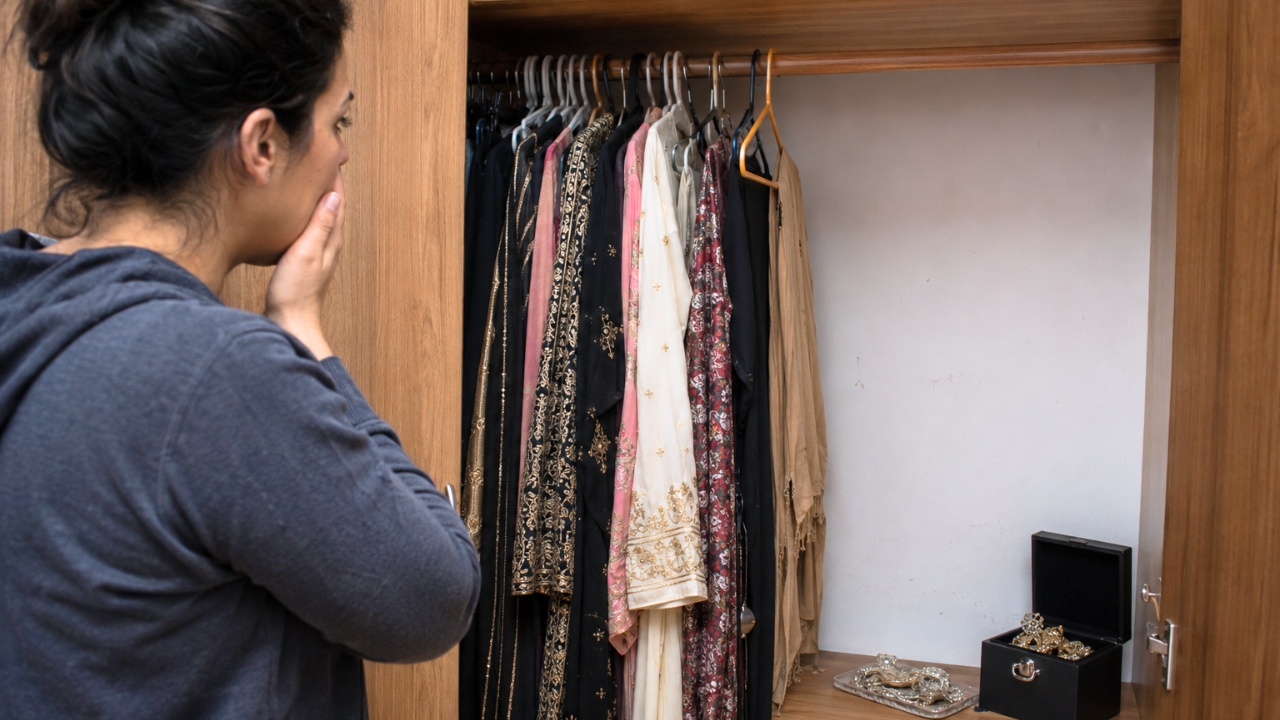
Woman Says Her Ex-MIL Took a Traditional Dress From Her Closet — Then Claimed the Gift Was Supposed to “Stay in the Family”
Photo credit: Fix It Homestead
A 35-year-old woman says she came home from a short trip abroad and discovered that her ex-fiancé had cleared out more than his own belongings.
Her traditional dress was gone.
So was the silver jewelry that went with it.
She explained in a Reddit post that she and her 34-year-old ex-fiancé had broken up about two to three months earlier. Over Christmas, she traveled back to her home country for a few days. While she was gone, he stayed in the house they were in the middle of selling.
When she returned, he had already packed and removed all of his own things.
That part was fine.
What was not fine, in her view, was that he had also divided shared belongings without talking to her first. He had apparently decided what belonged to whom, packed things up, and moved on. She was still angry about that, but then she opened her closet.
The traditional dress was missing.
The dress had been part of a gift from her ex’s mother years earlier. The woman had moved to her current country about eight years earlier because of her ex, who was from there. During her first year, she became interested in buying one of the traditional dresses commonly worn there. Her then-MIL suggested she wait so the family could help her choose the right one, because there were specific traditions around them.
Then the MIL offered to gift it to her instead.
The woman accepted, and she had the dress for about seven years. The silver jewelry that went with it was given gradually over time as holiday and birthday gifts.
So when she saw the dress was gone, she immediately checked the jewelry drawer.
The jewelry was gone too.
She texted her ex and asked where the dress and jewelry were. That was when he told her his mother had come over while the woman was out of the country to “help” him pack.
According to the woman, her ex said his mother wanted the dress and jewelry. He claimed he told his mother to wait and talk to the woman first, but then added that it was “too late.”
That line seemed to enrage her.
He knew his mother should not take the items without asking. He apparently said so himself. But the items were still taken from her closet while she was away, and he allowed it to happen.
The woman saw it as theft.
Her ex and his mother did not frame it that way. They said she was being “conflictive” and only wanted the items back out of revenge because of past problems she had with the ex-MIL.
Then, according to the woman, they rewrote the history of the gift.
They claimed the dress had always been meant to “stay in the family.”
The woman said that had never been mentioned before. Not once. And even if that had somehow been the expectation, she wanted to know why no one simply texted her before taking it. Why did the story about it being a family item only come up after she had been asking for it back for more than a month? Why had the ex-MIL never contacted her directly, even though she knew the woman was requesting the items?
The irony was that the woman said she had not even planned to keep the dress long-term.
It reminded her of her ex-MIL and the painful conflicts they had. She likely would have gotten rid of it eventually. But having it taken from her closet while she was out of the country changed how it felt. Now the issue was no longer whether she wanted the dress emotionally.
It was that someone entered her private space and removed her property without permission.
That is why the situation bothered her so much. It was not only about fabric and jewelry. It was about boundaries after a breakup, access to a shared house, and her ex letting his mother make decisions about things that did not belong to her.
The breakup was already complicated by the house sale. They still had practical matters to settle. But instead of communicating, he and his mother acted first, then expected her to accept their version afterward.
In the comments, the woman eventually said she would no longer try to reclaim the dress because she did not think it was a battle worth fighting. But she also made clear that letting it go did not erase the feeling of violation.
That is the part that stuck. She could decide the dress was not worth a legal fight and still be right that the way it was taken was wrong.
A gift given seven years earlier does not quietly become “family property” again because the relationship ends.
And if someone thinks it does, they should at least have the decency to ask before going into a closet and taking it.
Commenters were split on what she should do next, but most agreed she was not overreacting for feeling violated.
Many said the dress and jewelry were gifts, and once something is gifted, it belongs to the recipient. Several commenters told her to file a police report, make a list of everything taken, and speak with a lawyer or handle it through the house-sale process if possible.
Others thought she should let the dress go, not because the ex-MIL was right, but because the fight would keep her tied to a family she was better off escaping. Some said the ex and his mother clearly wanted to hurt her, and reacting strongly might give them the satisfaction they wanted.
A few commenters said if the items had been connected to a wedding that never happened, there might be some gray area depending on local law and custom. But the woman clarified that the dress was not a wedding dress and that she had owned it for seven years.
The strongest practical advice was to separate the emotional win from the legal one. If she truly wanted the items back, she should document everything and pursue it formally. If not, she could cut contact, settle the house, and treat the stolen dress as one last sign that she was right to leave.