Neighbor Drove Through the Yard and Dumped Garbage — Then the Cameras Turned a Property Fight Into Evidence
Photo credit: Fix It Homestead
A homeowner who lived on a rural property said the first problem was irritating enough on its own: a neighbor kept driving across his yard.
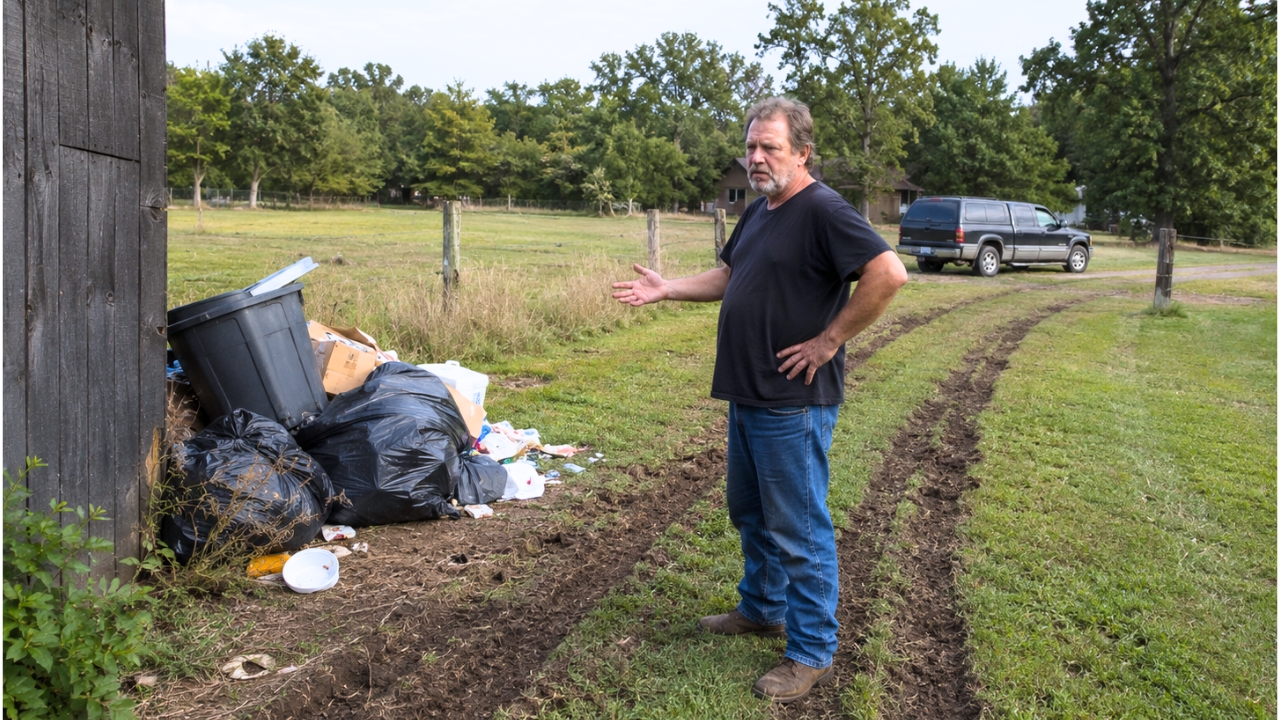
It was not a one-time mistake from someone who missed a driveway or misjudged a turn. According to the homeowner, the neighbor was cutting across his land and leaving tire tracks where vehicles did not belong. That alone would have been frustrating. Rural property owners often spend time maintaining ground, grass, drainage, fences, and access points. A neighbor treating the yard like a shortcut can create damage fast.
Then the garbage started showing up.
The homeowner said trash was being dumped on his property. At that point, the situation became more than rude. It looked deliberate. Driving through someone’s yard is one level of disrespect. Dumping garbage there suggests someone believes the land is available for their convenience.
According to the Reddit post, the homeowner began documenting what was happening. That mattered because neighbor disputes often turn into “he said, she said” situations unless someone has proof. Tire tracks can be blamed on delivery drivers, guests, bad maps, or misunderstandings. Trash can be denied. Without cameras or photos, the person causing the problem can act confused and offended.
So the homeowner gathered evidence.
The conflict escalated as the neighbor continued treating the property like something they could use. The homeowner did not want to start a war, but he also could not ignore repeated trespassing and dumping. Every incident made the boundary clearer: this was private land, not a public road, not a dumping spot, and not a shared convenience lane.
Commenters pushed him to treat it as both a property issue and a documentation issue. Photos of tire tracks, video of vehicles crossing the yard, images of the garbage, dates, times, and any identifying information all mattered. They also warned him not to get pulled into a face-to-face confrontation that could spiral. With neighbors, especially rural ones, people can carry grudges for a long time.
The homeowner’s frustration made sense because the behavior had a certain nerve to it. A person can accidentally cross a property line once. They can misunderstand a boundary once. But repeatedly driving across someone’s land and leaving garbage behind starts to look like contempt.
The updates showed the homeowner moving toward firmer action. Once the cameras and evidence were in place, the situation was no longer just an annoyance he had to describe. It became something he could show.
That changed the power dynamic.
Instead of begging the neighbor to respect the property, the homeowner could point to proof. Instead of arguing over whether it happened, he could focus on what needed to stop. And if law enforcement, local code enforcement, or a civil process became necessary, he had a clearer record.
The property itself was also part of the point. People sometimes treat rural land like empty space, as if a yard or field is less private because it is larger, less fenced, or not manicured like a suburban lawn. But private property does not stop being private because there is room to drive through it. And trash does not become less of a problem because it is dumped somewhere the dumper thinks nobody will notice right away.
By the end, the homeowner’s approach was less about revenge and more about building a paper trail strong enough that the neighbor could not keep pretending. The cameras did not create the conflict. They only captured what had already been happening.
And once the evidence existed, the neighbor’s convenient shortcut and illegal dumping no longer looked like a misunderstanding. It looked like exactly what the homeowner had been saying all along.
Commenters were firmly on the homeowner’s side. Many said repeated driving across someone’s yard is trespassing, and dumping garbage makes it even worse.
A lot of readers urged him to keep documenting everything and avoid direct confrontation when possible. They suggested cameras, photos, dates, and saved communication so the issue could be handled through proper channels if it continued.
Several commenters also said rural property owners need clear barriers when neighbors refuse to respect boundaries. Depending on the property layout, they suggested gates, rocks, posts, fencing, or other physical markers to make it harder for vehicles to cut through.
The strongest reaction was that the neighbor’s behavior looked intentional once it kept happening. One mistake can be forgiven. Repeated tire tracks and dumped trash need evidence, consequences, and a firm boundary.