HOA Homeowner Says a Neighbor Keeps Parking on the Grass — Then the Lawn Turns Into Mud and the HOA Drags Its Feet
Photo credit: Fix It Homestead
Parking problems can sound petty until they start affecting daily life. A car on the grass may not seem like a major issue from the street, but when it blocks access, tears up the yard, creates mud pits, and breaks the rules everyone else is expected to follow, it becomes a lot harder to ignore.
That is what one townhouse owner described after new neighbors moved in and repeatedly parked vehicles on the grass between their driveways. The homeowner shared the situation in a Reddit post on r/HOA, explaining that the neighbor’s parking made it difficult to load children into car seats and was destroying the grass in the process. The original Reddit post is here: https://www.reddit.com/r/HOA/comments/16ctrh7/neighbor_keeps_parking_on_grass/
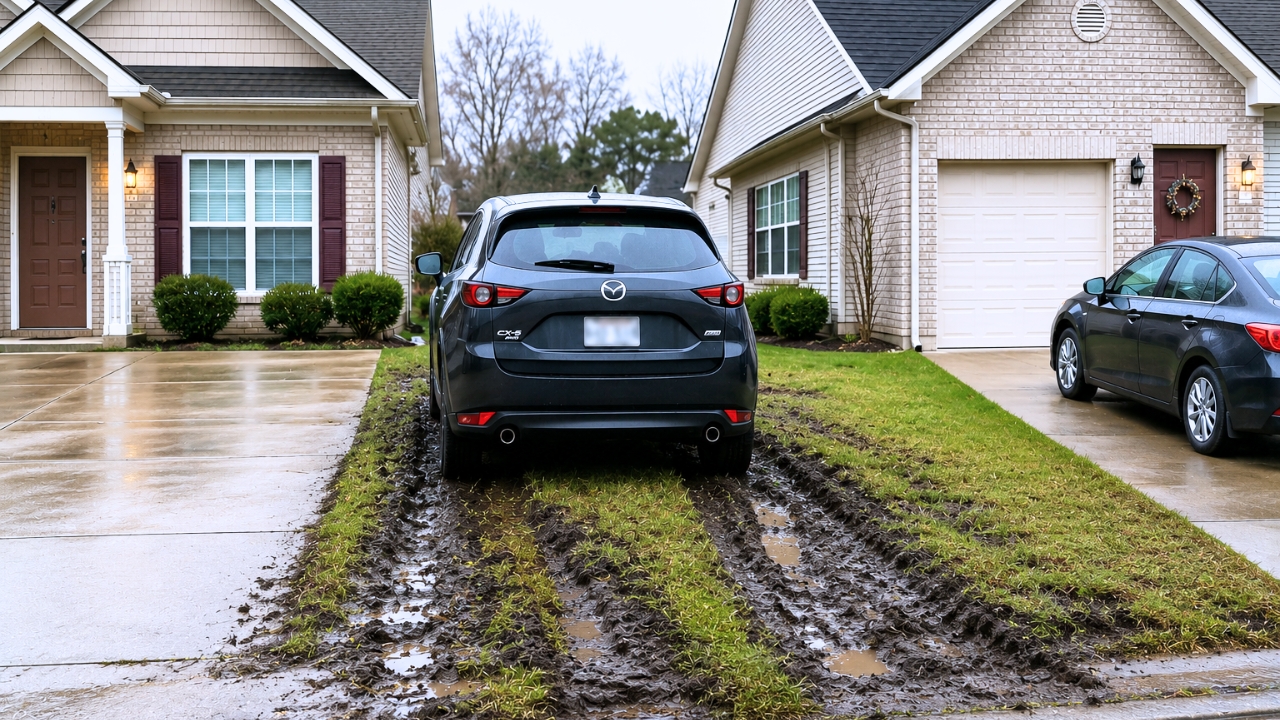
According to the homeowner, the new neighbors had moved in about three months earlier. The homes were single-story townhouses, and the homeowner lived in the end unit. Between the driveways was a strip of grass, and the neighbor kept parking a vehicle there.
That might not sound like a huge deal until the homeowner explained the practical problem. When the neighbor parked on the grass strip, the homeowner could not easily access the passenger side of their own vehicle. That meant they could not properly get their kids into their car seats. For a parent, that changes the whole issue. This was not only about lawn appearance. It was about being able to safely load small children into the car without squeezing, climbing, or working around someone else’s vehicle.
The grass was also taking a beating. The homeowner said the repeated parking was killing the grass and creating small mud pits. Anyone who has watched tires chew through a soft yard knows how quickly that can turn ugly. Once the grass is gone, the area does not simply look bad. It tracks mud, holds water, compacts soil, and can become harder to repair if the same behavior continues every day.
The frustrating part was that the homeowner believed the rules were clear. When they were approved for the HOA, they were told there was no parking on the grass. The new neighbors reportedly had four vehicles. One was being parked on the grass strip between the driveways, and another was parked across the street on grass as well.
The homeowner suspected the neighbors may have converted their garage into a room, because they believed there were too many people living in the house to fit comfortably. That part was not the main issue, but it added to the homeowner’s frustration. If a garage was no longer being used for parking, the extra vehicles had to go somewhere, and the grass seemed to be taking the hit.
The homeowner said they had emailed the HOA three different times over about two months. Early on, the HOA or management responded and said the owners had been notified. But the parking continued every day. That is where HOA life gets especially aggravating. The rules exist. The violation is visible. The homeowner reports it. And still, nothing actually changes.
They also tried speaking to the neighbors first, but that was difficult because of a language barrier. The homeowner said the neighbors did not speak English, and they did not speak enough Spanish to have a full conversation. That left them stuck between wanting to handle it directly and needing the HOA to enforce the rules everyone had agreed to follow.
Eventually, the property manager responded and said the homeowner could not have the vehicle towed because it was on private property. That answer only confused the homeowner more. They did not own the grass, and it was part of the townhouse community. The manager also said the neighbors had already received multiple violations.
To the homeowner, that raised another question. If the grass was considered private property, and the neighbor’s vehicle crossed the property line, did that mean the vehicle was partly on the homeowner’s private property? Could they tow it then? The homeowner still planned to attend the next board meeting, but they were clearly fed up.
The situation shows how small property issues can become daily stress in a shared community. It is easy for a board or property manager to treat grass parking as a minor rule violation. But for the person living next to it, the problem shows up every time they leave the house. It affects their car access. It damages the shared lawn. It makes the neighborhood look worse. And if nobody enforces the rule, it teaches everyone else that the rules are optional.
There is also a practical homeowner lesson buried in the mud. Parking on grass can damage more than the surface. Depending on where utilities run, repeated vehicle weight can compact soil and possibly affect shallow lines, irrigation, drainage, or landscaping. At the very least, it turns a maintained green space into ruts and mud, which someone eventually has to fix.
For this homeowner, the next step was not calling a tow truck in anger. It was getting in front of the HOA board, documenting the parking, and forcing management to explain what the violation process actually does after repeated notices fail.
Commenters gave the homeowner several options, but most agreed the HOA board needed to be involved if the management company was not solving the problem. One commenter suggested attending a board meeting if management kept failing to respond, since the board may be able to push enforcement further than the property manager had.
Several users recommended trying communication again with help from Google Translate or a written note in Spanish. Others warned against writing threats about fines or towing if the homeowner did not personally have the authority to issue them. A few said the note should focus on the practical problem instead, such as explaining that the parking made it hard to get children into car seats.
A number of commenters suggested checking city or county code enforcement, since many places have rules against parking on grass, soil, sidewalks, or near driveway access points. Some said code enforcement may move faster than an HOA if the parking violates local ordinances.
Others suggested practical barriers, like cones, rocks, planters, or approved landscaping changes, though the homeowner noted that HOA rules might make that difficult. The strongest advice was to document the parking with photos, keep emailing the HOA, attend the board meeting, and find out what enforcement actually happens after repeated violations.