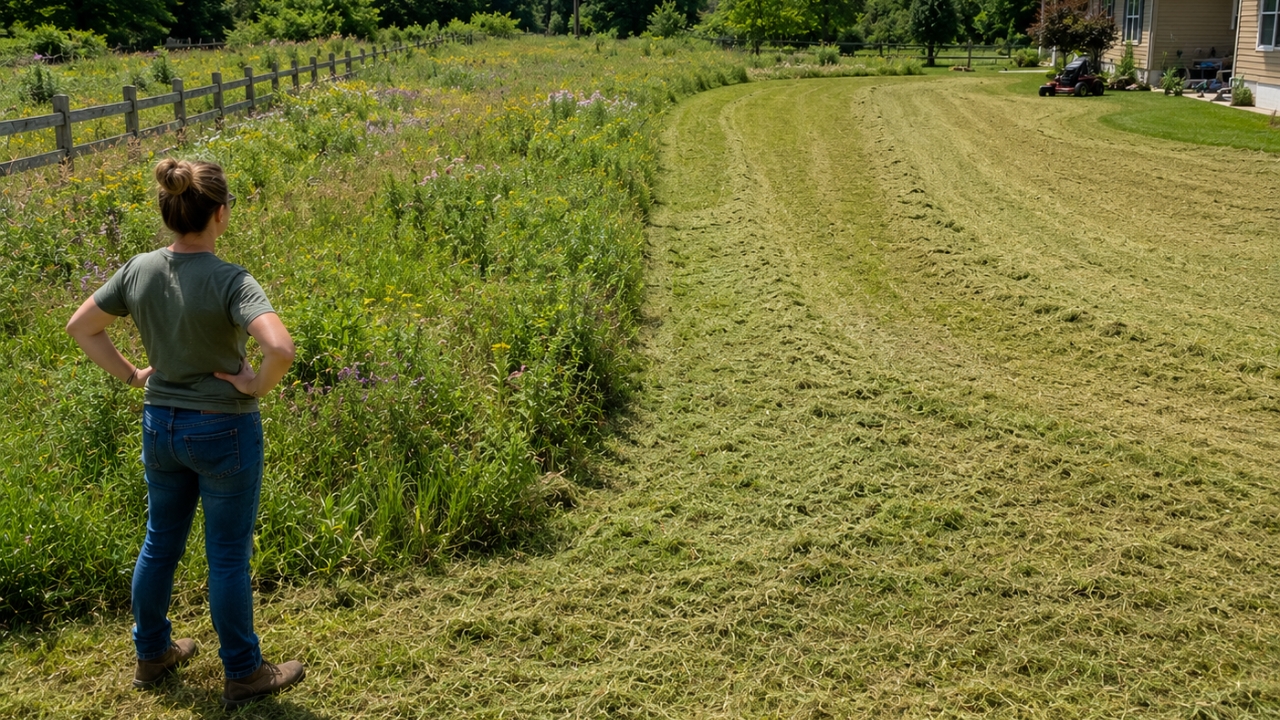
Neighbor Mows Down Four Years of Native Meadow Growth — Then the Property-Line Lesson Hits Hard
Photo credit: Fix It Homestead
A mowed yard can grow back in a few weeks. A native meadow is different. When someone spends years building up native plants, flowers, grasses, and habitat, one careless pass with a mower can wipe out far more than tall grass.
That is what one property owner said happened after a neighbor crossed onto their land and mowed down a native meadow they had spent four years growing. They shared the situation in a Reddit post on r/legaladvice, explaining that the neighbor had trespassed and cut the meadow without permission. The original Reddit post is here: https://www.reddit.com/r/legaladvice/comments/1cmaob8/trespassing_neighbor_mowed_my_native_meadow/
According to the property owner, the meadow had not been neglected or forgotten. It was intentional. They had spent several years letting native growth establish, which is not the same as simply refusing to mow. Native meadows take patience. Many plants need time to root deeply, reseed, spread naturally, and build enough strength to come back season after season.
That is why the mowing felt so upsetting. To someone who prefers a short lawn, a meadow can look messy or overgrown. But to the person who planted or protected it, that growth may represent years of work, money, planning, and ecological purpose. Native meadows can support pollinators, birds, insects, and wildlife while reducing the need for watering, fertilizing, and constant mowing.
The property owner said the neighbor came onto their land and mowed it anyway.
That detail matters. This was not a shared ditch or an unclear strip between two driveways. The owner described it as trespassing. The neighbor did not have permission to mow the area, and the damage was already done by the time the owner posted. That left them trying to figure out what recourse they might have and how to prevent it from happening again.
The emotional side of the situation was obvious. Four years is a long time to build anything on land, especially something natural that does not appear overnight. A meadow can look empty or patchy in the early years, then slowly become fuller and more balanced. When it is cut at the wrong time, it can interrupt seed production, destroy flowers before they reseed, damage young plants, and set back the whole process.
The financial side can be harder to calculate. If someone cuts down ornamental trees, the value may be easier to estimate. If someone damages a fence, there is a repair bill. But how do you value four years of meadow growth? Replacement seed, labor, professional restoration advice, lost plants, lost habitat, and time all matter, but they are not always simple to put on an invoice.
That is part of what made the situation difficult. The owner needed more than anger. They needed documentation. Photos from before and after the mowing could help show the scale of the damage. Receipts for seed, plants, or professional help could show investment. If they had records of the meadow’s purpose or a plan for the land, that could help make clear that this was not an abandoned patch of weeds.
The property-line piece was just as important. Neighbor mowing disputes often start with one person assuming they are helping. They may think they are cleaning up an eyesore, controlling weeds, reducing pests, or maintaining what they wrongly believe is shared space. But good intentions do not give someone the right to cross onto another property and alter it.
If the boundary was unclear, a survey could become important. Even if the owner already knew where the line was, visible markers, signs, fencing, posts, or cameras might be needed to prevent another incident. It is frustrating to have to add those things on your own land, but once a neighbor has already crossed the line, clear physical reminders can prevent the “I didn’t know” excuse later.
The situation also brought up a larger problem for homeowners trying to move away from traditional lawns. Not every neighbor understands native landscaping. Some people see taller growth and immediately assume neglect. Others think every yard should look like short turf from edge to edge. That can create tension in neighborhoods where one homeowner is intentionally building habitat and another sees only an unmowed field.
For homesteaders, rural homeowners, or anyone restoring land, the lesson is simple but annoying: document the project before there is a problem. Take photos each season. Save receipts. Know the property lines. Check local rules about meadow plantings, no-mow areas, and nuisance vegetation. If neighbors are nearby, it can also help to explain what you are doing before someone decides to “fix” it for you.
The owner in this case had already lost a major part of their meadow for the season. The next step was figuring out whether the neighbor could be held responsible and how to keep them from doing it again. Because once a neighbor proves they are willing to mow beyond their own boundary, a polite assumption may not be enough anymore.
Commenters told the property owner to document everything immediately. Several suggested taking clear photos of the mowed area, the remaining meadow, property markers, tire tracks, mower lines, and any evidence showing where the neighbor crossed onto the land.
A number of users recommended getting a survey if there was any chance the boundary could be disputed. Even if the owner felt certain, a current survey and visible markers would make it harder for the neighbor to claim confusion later.
Others suggested sending a written notice to the neighbor telling them not to enter or mow the property again. Some commenters said the owner should consider a no-trespassing sign, cameras, or a simple fence or posts along the line if the area was vulnerable to repeat mowing.
Several commenters also discussed damages. They said the owner could look into the cost of reseeding, restoration, or professional meadow repair, but warned that the value of lost native growth might be difficult to prove without records. The practical advice was to gather proof, put the neighbor on notice, and make the boundary unmistakable before another mower pass turns the same lesson into a repeat problem.