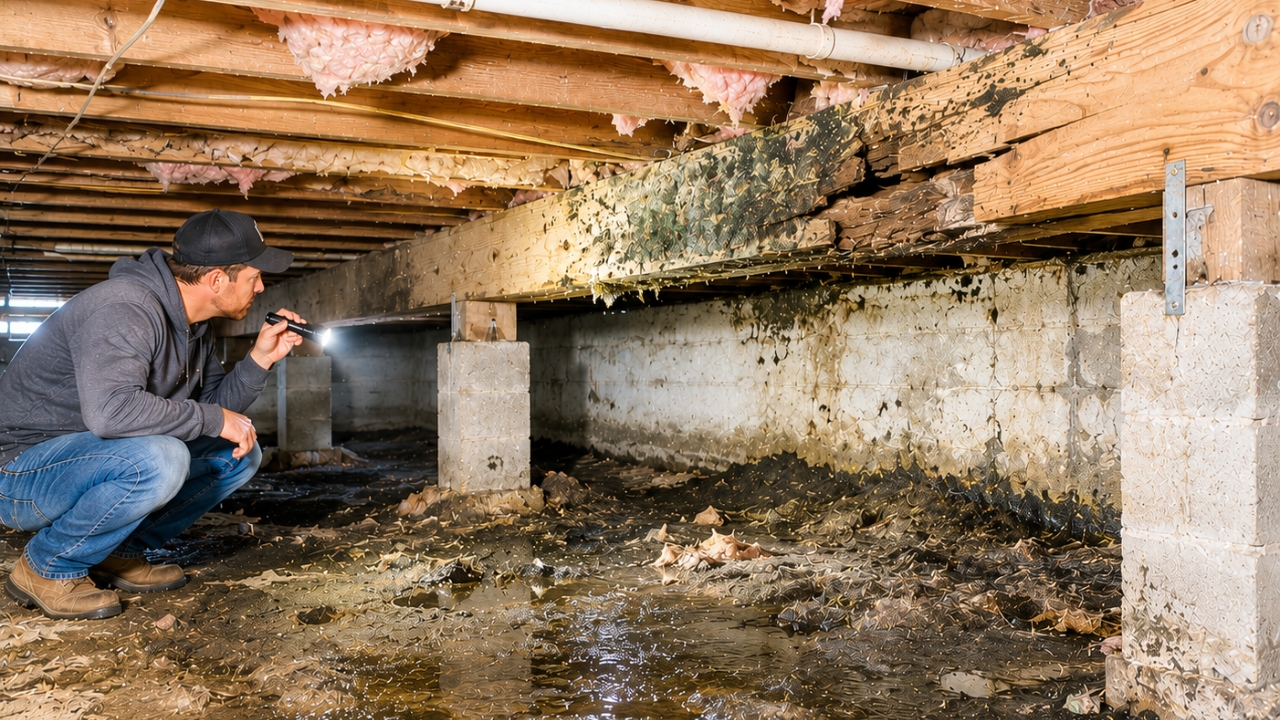
Buyer Finds a Crawlspace the Inspector Couldn’t Reach — Then Mold, Sludge, and Cracked Joists Turn Into a $14,000 Repair
Photo credit: Fix It Homestead
A home inspection is supposed to give buyers a clearer picture of what they are walking into. It may not catch every hidden problem, but most buyers expect the big areas to be checked before closing. Roof, attic, foundation, plumbing, electrical, crawlspace — those are the places where expensive surprises like to hide.
That is why one homeowner said they learned a hard lesson after buying a house and later discovering that the crawlspace had not truly been inspected. They shared the warning in a Reddit post on r/HomeImprovement, telling other buyers to make sure their inspector checks both the attic and crawlspace before they sign anything. The original Reddit post is here: https://www.reddit.com/r/HomeImprovement/comments/9k6fz4/always_make_your_home_inspector_check_the_attic/
According to the homeowner, the inspector did not access the crawlspace during the inspection because the opening was too small. That may have sounded like a minor limitation at the time. Plenty of buyers see a note like that in an inspection report and assume it means the inspector could not check one small spot. But in this case, that inaccessible crawlspace ended up hiding serious problems.
After closing, the homeowner found out what had been sitting under the house. There was mold. There was sludge. There were cracked joists. The crawlspace had gone unchecked, and the problems down there were not little weekend fixes.
The repair estimate came in around $14,000.
That number is the kind of thing that changes how you look at a house. A crawlspace is easy to ignore because it is not part of daily living space. You do not walk through it. Guests do not see it. It does not have the obvious urgency of a leaking ceiling or a broken furnace. But the crawlspace can affect the entire structure above it. If moisture, rot, damaged joists, mold, standing water, or poor ventilation are hiding down there, the house can be quietly developing problems from the bottom up.
The homeowner’s frustration came from realizing the issue may have been discovered before closing if the crawlspace had been accessed properly. Instead, they had already bought the home and inherited everything underneath it. They were left with the bill and the regret of not pushing harder when the inspector could not get inside.
The story is especially useful because it shows how inspection limitations can become buyer risks. Home inspectors usually document areas they cannot access, and that language matters. If an inspector cannot reach the crawlspace, that does not mean the crawlspace is fine. It means the buyer does not know what is inside it. That should be a red flag, not a footnote to skim past during closing week.
In a perfect world, the next step would have been simple: do not move forward until the crawlspace can be opened and checked. That might mean asking the seller to enlarge the access, hiring a different inspector, bringing in a crawlspace contractor, or making inspection access a condition before closing. It may feel awkward or inconvenient, especially in a competitive market, but it is much easier to negotiate before buying than after the keys are in your hand.
The cracked joists were probably the scariest part. Mold and sludge are bad enough, but joist damage points toward structural concerns. Floor joists support the house above the crawlspace. If they are cracked, rotted, weakened, or compromised by moisture, the repair can become much more involved than simply cleaning up a dirty space.
The moisture conditions mattered too. Mold and sludge do not usually appear in a healthy, dry crawlspace. They point to water intrusion, drainage problems, plumbing leaks, poor vapor barriers, bad grading, open vents, or some other source of dampness. If the source is not fixed, cleanup alone may not solve the problem. The homeowner could spend thousands repairing damage only to have moisture come back.
That is one reason crawlspace repairs can get expensive fast. The job may involve mold remediation, joist repair or sistering, drainage work, vapor barrier installation, insulation replacement, dehumidification, sealing, or even foundation-related work. What starts as “check under the house” can turn into a whole system repair.
For buyers, this is one of those unglamorous lessons that matters more than paint color or kitchen finishes. If an inspector cannot access a major area, the buyer needs to treat that as unfinished information. A house with an unchecked crawlspace is not fully inspected. It might be fine, but it might also be hiding exactly the kind of damage this homeowner found later.
The outcome for this homeowner was a painful repair estimate and a warning to everyone else: do not assume inaccessible areas are harmless. If the attic or crawlspace cannot be inspected, stop and figure out why before closing. Those hidden spaces can hold some of the most expensive problems in the whole house.
Commenters largely agreed with the homeowner’s warning. Several said that if a home inspector cannot access the crawlspace or attic, buyers should not treat the inspection as complete. Instead, they should require access, request repairs to the access opening, or bring in a specialist before moving forward.
A number of users pointed out that inspectors usually include limitations in their reports, and buyers need to read those carefully. If the report says an area was not inspected, that is not reassurance. It is a gap in knowledge.
Others said crawlspaces are especially important because they can reveal moisture issues, plumbing leaks, structural damage, pest activity, insulation problems, and foundation concerns. A buyer may not care about the crawlspace on move-in day, but the house absolutely depends on what is happening underneath it.
Several commenters also encouraged future buyers to attend inspections in person and ask direct questions when an area cannot be accessed. The strongest advice was simple: if the inspector cannot get into the crawlspace, do not just move on. Find a way to see it before the house becomes your problem.