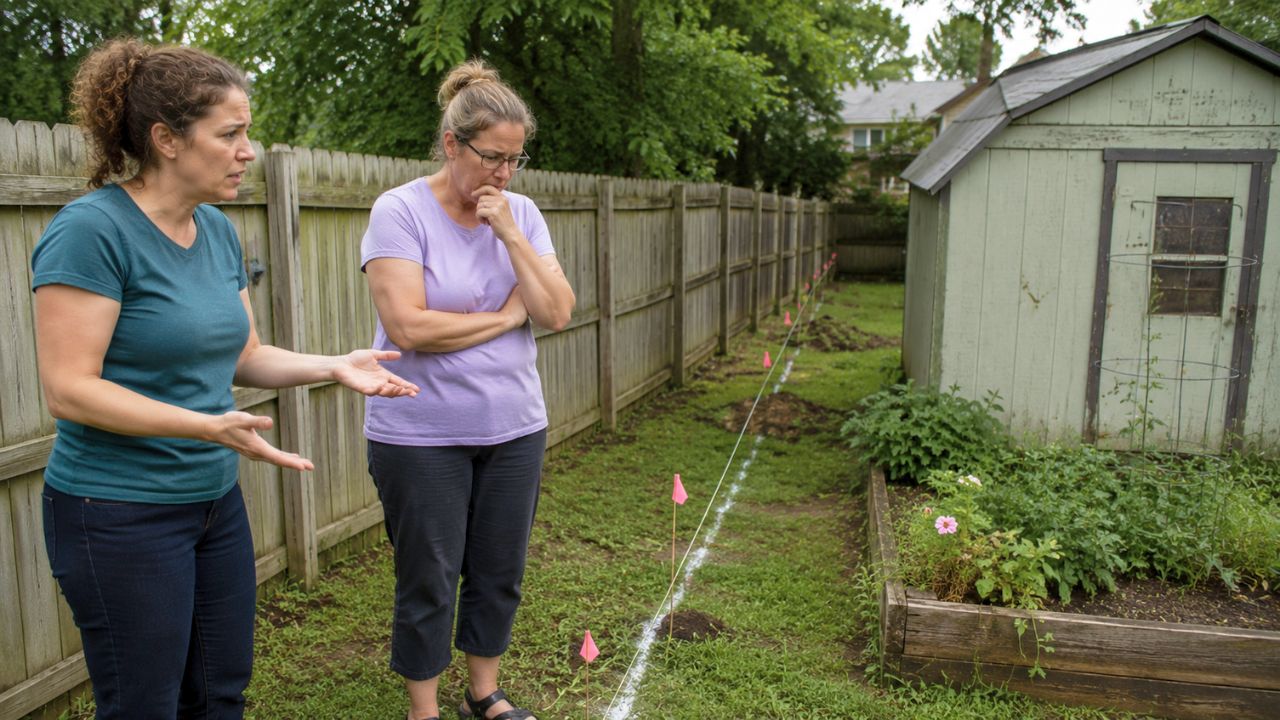
Homeowner Finds the Fence, Shed, and Garden Are All on the Wrong Side of the Survey Line
Photo credit: Fix It Homestead
A property survey can be reassuring until it shows the exact thing a homeowner did not want to see.
For one homeowner, the problem started as a boundary question. Maybe they were preparing for a fence project. Maybe they wanted to plant, build, or finally understand where their yard ended. Whatever prompted the survey, the result was not just a small surprise.
The survey showed that several things were on the wrong side of the line.
Not just a fence.
Not just one little corner.
The fence, a shed, and even part of the garden appeared to be sitting where they did not belong.
That turned what could have been a simple property check into a much bigger problem with the neighbor.
The fence line had been trusted for years
Many homeowners assume the fence is the property line.
It is easy to see why. A fence feels official. It creates a visual boundary. People mow up to it, plant along it, store things near it, and build their routines around it.
Over time, everyone starts treating it as the real line.
But fences are not always placed correctly.
Sometimes they were installed by a previous owner who guessed. Sometimes the contractor followed an old tree row or mowing pattern. Sometimes a neighbor agreed to a convenient location without recording anything. Sometimes the fence was built before anyone had a current survey.
That is why a survey can be so disruptive.
It does not care where people assumed the line was.
It shows where the property legally sits.
The shed made the problem harder to ignore
A misplaced fence is already frustrating, but a shed adds another level.
A shed is not just a boundary marker. It is a structure. It may have a foundation, utilities, storage, tools, lawn equipment, or years of use attached to it.
If a shed is on the wrong side of the survey line, the homeowner has to figure out whether it needs to be moved, removed, sold, permitted, or legally addressed in some other way.
That can get expensive quickly.
Moving a shed is not always simple, especially if it is large, old, damaged, wired, anchored, or tucked into a tight spot. Removing it may cost money too. Leaving it alone could create problems when either property is sold.
And if the shed belongs to the neighbor but sits on the homeowner’s land, the homeowner may feel like part of their yard has been quietly taken over.
Even the garden became part of the dispute
The garden may seem like the smallest piece of the issue, but it still mattered.
Gardens are personal. People spend time, money, and effort building beds, improving soil, planting vegetables, installing edging, running irrigation, or setting up fencing. If part of the garden crosses the line, the person who planted it may feel attached to it.
But attachment does not decide ownership.
For the homeowner, the garden showed how normalized the boundary mistake had become. Someone was not just mowing a little too far. They were using the land as if it belonged to them.
That can feel especially frustrating when the actual owner only discovers it after paying for a survey.
The survey created an uncomfortable neighbor conversation
Once the homeowner had the survey in hand, they had to decide how to handle it.
Ignoring the problem might keep things peaceful in the short term, but it could make everything messier later. If the fence, shed, and garden stayed where they were, future buyers might assume the arrangement was legitimate. The neighbor might keep using the space. The owner’s ability to build, fence, sell, or improve the property could be affected.
But raising the issue could also start a fight.
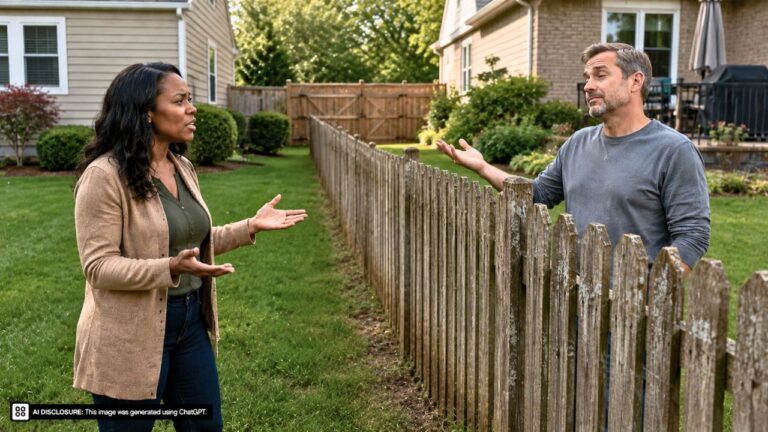
The neighbor might insist the fence had always been there. They might argue that the shed was too difficult to move. They might say the garden was harmless. They might accuse the homeowner of being petty over a few feet.
That is why these disputes become so draining.
The owner is not only dealing with physical objects in the wrong place. They are dealing with a neighbor who may see the correction as an attack.
Commenters focused on acting before the mistake becomes permanent
When survey surprises like this come up, people often warn homeowners not to sit on the information too long.
The longer an encroachment remains unaddressed, the more complicated it can become. Even if the homeowner wants to be friendly, they usually need to make it clear in writing that they are not giving permission for the fence, shed, or garden to remain as-is.
That does not mean marching over and demanding everything be ripped out by sunset.
It means documenting the survey, taking photos, checking local rules, and calmly asking the neighbor to resolve the encroachments.
Commenters also tend to recommend getting legal advice if structures are involved, especially if the neighbor refuses to cooperate or if the survey affects a significant amount of land.
A garden bed might be easy to move.
A shed and fence can become a bigger legal and financial issue.
The homeowner had to decide what outcome they wanted
Not every boundary mistake has to end the same way.
Sometimes a neighbor moves the fence and shed. Sometimes the owners negotiate a written agreement. Sometimes land is sold or exchanged. Sometimes a temporary license is created. Sometimes an attorney has to get involved.
But the worst option is usually doing nothing while everyone continues pretending the survey does not exist.
The homeowner needed to think about the future.
What happens when they sell? What happens if the neighbor sells? What happens if the shed falls apart, damages something, or someone gets hurt? What happens if the neighbor expands the garden or replaces the fence in the same wrong spot?
A boundary problem that feels awkward today can become a bigger mess years later.
The real shock was how much was wrong
The homeowner may have expected the survey to answer a simple question.
Instead, it revealed a chain of problems.
The fence was wrong. The shed was wrong. The garden was wrong. And all of it had likely been treated as normal for some time.
That is what made the discovery so frustrating.
It was not just one misplaced post or a few inches of confusion. It was an entire section of property that had been used according to a line that did not match the survey.
For the homeowner, the question became painfully simple:
If the survey says this land is theirs, how much of someone else’s setup are they supposed to keep living around?
Like Fix It Homestead’s content? Be sure to follow us.