Rural Landowner Finds a Locked Gate Blocking Their Recorded Easement — Then the Neighbor Says Access Is “By Permission Only”
Photo credit: Fix it homestead
A recorded easement is supposed to make access clear.
It is the kind of thing a rural buyer wants to see in writing before buying land that depends on crossing someone else’s property. If the deed or title documents show an easement, the owner expects to have a legal way in and out without needing a neighbor’s mood to line up just right.
But one rural landowner ran into a problem that made the paperwork feel a lot less comforting.
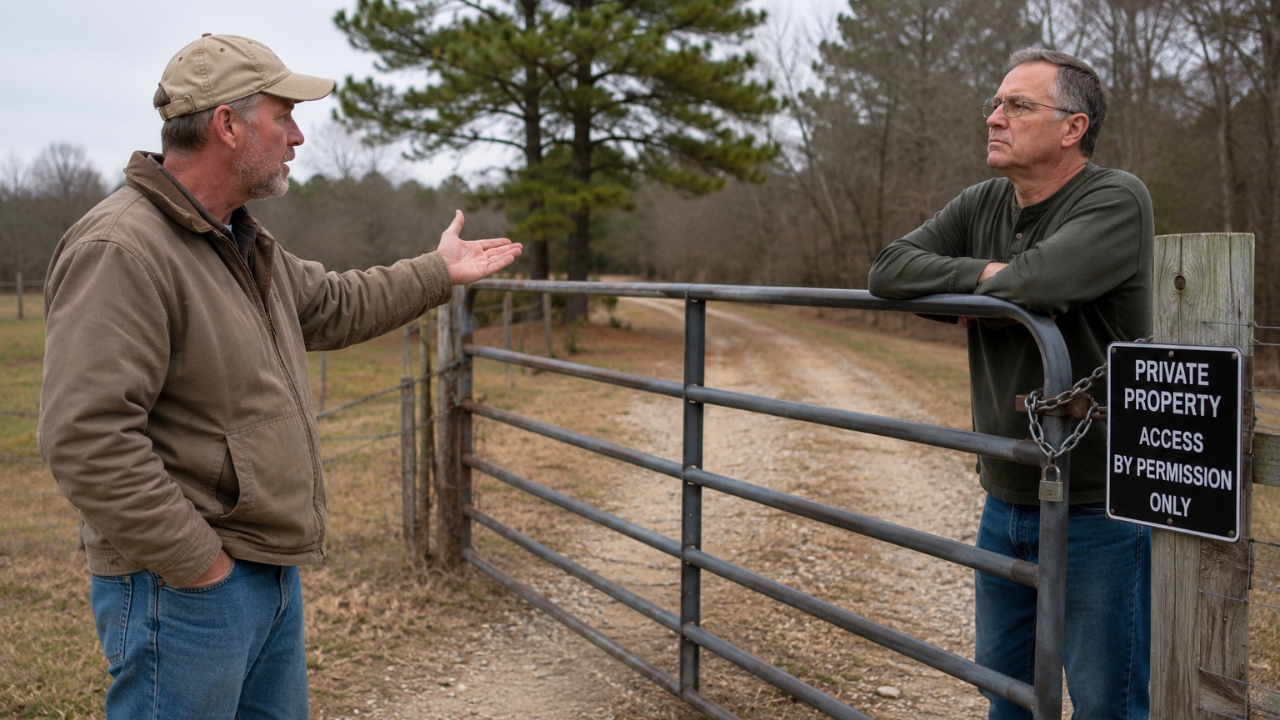
They found a locked gate blocking the access route.
And when they questioned it, the neighbor reportedly said access was “by permission only.”
That was a very different message from what the landowner believed they had purchased.
The easement was supposed to solve the access problem
Rural land often comes with complicated access.
A parcel may sit behind another property, connect to a road by a narrow lane, or depend on a route that has been used for decades. In those situations, an easement can be one of the most important documents in the whole purchase.
It tells the owner they have a right to cross a certain area.
That right matters for daily use, deliveries, contractors, emergency vehicles, maintenance, hunting, livestock, equipment, and future resale.
So when this landowner had a recorded easement, they likely believed the issue was settled.
Then the locked gate appeared.
Suddenly, the access route was not just a line in a document. It was a physical barrier.
The neighbor treated the route like they controlled it
The neighbor’s “permission only” claim changed the tone of the dispute.
If someone truly has a recorded easement, their access generally should not depend on the neighbor deciding whether to allow it that day. The whole point of recording the easement is to prevent that kind of uncertainty.
But the neighbor seemed to view the route as something they could control.
Maybe they owned the land the easement crossed. Maybe they worried about security, livestock, trespassers, damage, or people leaving the gate open. Maybe they believed the easement did not allow unlimited use.
Those concerns might be real.
But a locked gate that blocks the landowner from using their recorded access can quickly become more than a neighbor preference.
It can interfere with the landowner’s rights.
A gate is not always illegal, but blocking access is a problem
This kind of dispute can get tricky because gates are not automatically wrong.
In some rural areas, gates across easements are common, especially when livestock, privacy, or security is involved. The question is whether the gate unreasonably interferes with the easement holder’s ability to use the access.
If the landowner has a key or code and can pass freely, the gate may be manageable.
If the neighbor keeps the gate locked and decides when access is allowed, that is a very different situation.
For this landowner, the problem was not simply that a gate existed.
It was that the neighbor appeared to be treating the easement like a favor instead of a right.
The landowner’s use of the property was at stake
Access is not a minor detail.
If a landowner cannot reliably reach their property, the land becomes harder to use and less valuable. They may not be able to bring in equipment, haul materials, check fences, maintain pasture, build, camp, hunt, farm, or respond to emergencies.
A locked gate can also create timing problems.
What happens if a contractor arrives and cannot get in? What if an ambulance, fire truck, or utility crew needs access? What if the owner drives hours to reach the land and finds the gate locked?
Those are not small inconveniences when the easement is the main route to the property.
The neighbor may see the gate as control over their own land. The landowner may see it as being cut off from land they legally own.
The documents needed to be read carefully
Once the dispute started, the easement language became critical.
The landowner needed to know exactly what the recorded easement allowed.
Was it for ingress and egress? Was it limited to residential use, agricultural use, or certain vehicles? Did it allow gates? Did it require shared maintenance? Did it specify width, location, keys, locks, or improvements? Was the access route clearly described?
Those details matter.
A vague easement can lead to years of conflict because each side reads it differently. A clear easement can make the neighbor’s “permission only” position much harder to defend.
The landowner would also need to keep copies of the deed, survey, title documents, and any recorded agreements ready before pushing the issue further.
Commenters focused on written notice and legal help
When easement disputes come up, people usually warn landowners not to rely on verbal conversations.
If the neighbor is blocking a recorded access route, the landowner needs a paper trail.
Photos of the locked gate, dates when access was denied, messages with the neighbor, copies of the easement, and written requests for access could all matter. If the neighbor refuses to provide a key or code, that should be documented too.
Commenters also tend to recommend speaking with a real estate attorney sooner rather than later. Easement disputes can escalate quickly, and a formal letter may be enough to make a neighbor take the recorded access seriously.
At the same time, the landowner should avoid damaging the gate or cutting locks without legal guidance. Even when the neighbor is wrong, the wrong response can create a separate problem.
The real issue was whether the easement meant anything
What made the situation so frustrating was the gap between the documents and the neighbor’s behavior.
On paper, the landowner had access.
On the ground, a locked gate said otherwise.
And when the neighbor described access as “by permission only,” the landowner was left wondering whether their recorded easement was being ignored entirely.
That is the heart of the conflict.
A rural property can be beautiful, useful, and valuable, but only if the owner can actually reach it.
And when a neighbor locks the gate across a recorded easement, the question becomes painfully simple:
Is the access a legal right, or is the neighbor trying to turn it into a favor?
Like Fix It Homestead’s content? Be sure to follow us.