Buyer Finds Out After Closing That the Neighbor’s Retaining Wall Was Built Onto the Property — Then the Neighbor Says the Previous Owner Approved It Verbally
Photo credit: AI-generated image created using ChatGPT. Illustrative only.
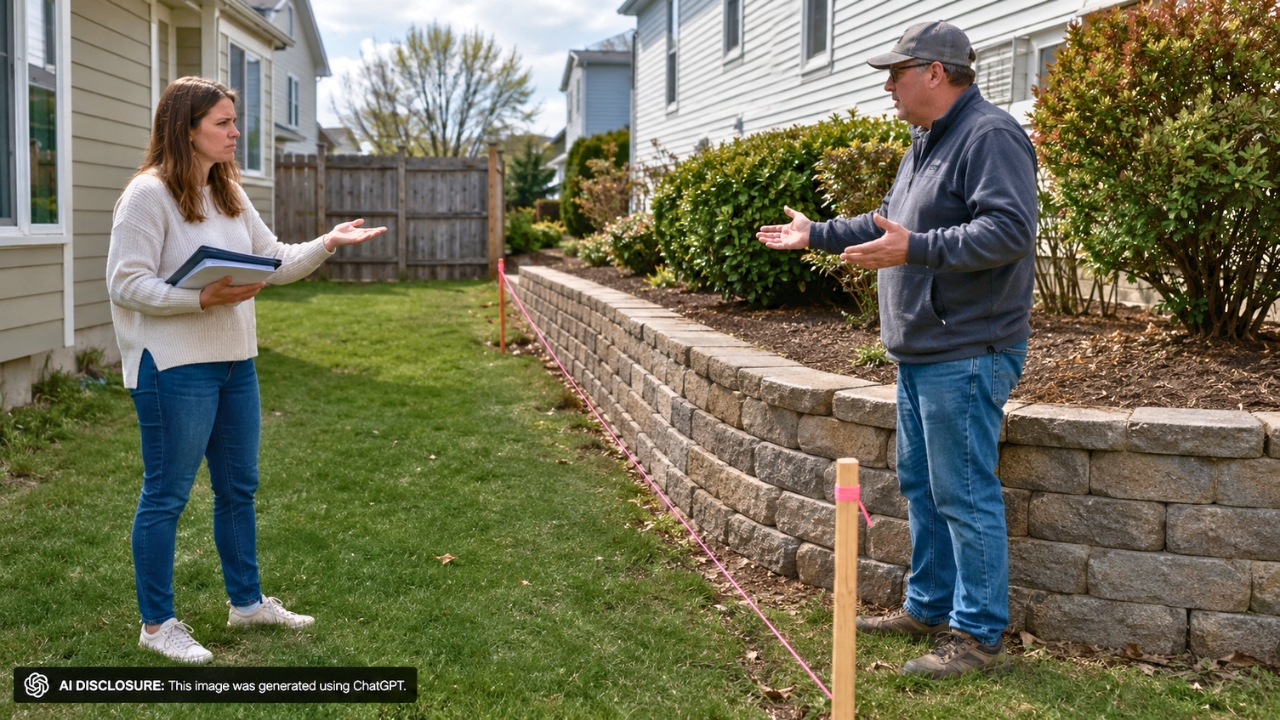
It started as one of those “we’ll deal with it later” details you only notice after the boxes are unpacked. A new homeowner in Northeast Ohio realized the neighbor’s retaining wall wasn’t just close to the line—it was actually on their lot by about a foot.
They’d had a survey done during the purchase, and the encroachment was right there on paper. But they didn’t understand what it meant at the time, and nobody slowed down to explain it before closing. Now the wall is in rough shape and getting worse, and the new owner is staring down the kind of question that can turn neighbors into enemies: who’s responsible for a failing wall that technically sits on the wrong property? Details came from the original post.
The survey showed the problem, but the meaning didn’t land
During the buying process, the homeowner did what people are told to do: get a survey. That survey showed the retaining wall encroached one foot onto the property they were purchasing.
At the time, the buyer admits they were “too naive” to ask what an encroachment really involved or what it might trigger later. That’s the tricky part about closing documents—everything feels technical until it becomes urgent. A retaining wall isn’t a decorative edging stone. It’s a structure that holds back soil, and when it fails it can cause real damage.
Now that the wall’s condition is sliding downhill, that survey line feels less like a note on a drawing and more like a flashing warning sign.
A three-foot wall doesn’t fail quietly
The wall is described as a 3-foot block/stone retaining wall, and it’s in poor condition. Over the course of a year, the homeowner says it has gotten “noticeably worse.” That’s the kind of detail that makes people’s stomach drop, because retaining walls rarely improve on their own.
Even at three feet, a wall like that can shift, bow, crack, or start losing blocks as freeze-thaw cycles and water pressure do their work. And because it sits right along a neighbor relationship, the stress isn’t only on the wall—it’s on every future conversation about it.
The buyer’s big fear is straightforward: they don’t want to be on the hook for maintaining or rebuilding a structure that appears to exist for the neighbor’s yard but physically sits on their own land.
The fence rule made the encroachment feel even more unfair
What really sharpened the frustration was a local rule the homeowner had already complied with. They were required by the township to build their fence 30 inches off the property line, and they went even farther—36 inches—just to be safe.
So from their perspective, the standards feel lopsided. They can’t even place a fence on the line, but a solid wall is sitting a foot over it. That kind of contrast is exactly how property-line resentment starts: one owner feels like they’re following the rules to the letter, while the other is benefiting from something that never should have been allowed.
Whether that retaining wall was built years ago or recently, the effect is the same now—the new owner is inheriting the physical reality, and the cost risk is showing up at their doorstep.
Calling zoning felt like the only move, but answers aren’t instant
The homeowner reached out to the zoning office with questions and hasn’t heard back yet. They also don’t have time off to go in person for a couple of weeks, so they’re trying to figure out what to expect before they’re stuck in a reactive, expensive scramble.
Zoning and code offices can help with setbacks, permits, and whether a wall like this should have required approvals. But homeowners quickly learn that “someone at the township” doesn’t automatically solve a boundary encroachment. Sometimes the best you get is confirmation of what rule applies—then it’s still on the property owners to sort it out.
In the meantime, the wall continues to age. That’s the part that makes these disputes so tense: time doesn’t pause while you wait for a returned call.
The question nobody wants to ask: can you make them move it?
The homeowner’s most direct question is also the one that can detonate a neighbor relationship: is it possible to have the neighbor remove the wall and rebuild it so it’s no longer on the buyer’s property?
On paper, that sounds clean—put the wall where it belongs. In real life, it can turn into a standoff. A retaining wall can be expensive to rebuild properly, and rebuilding it might change drainage patterns, grading, and landscaping on both sides. The neighbor may not want construction tearing up their yard, and they may not want the bill.
And then there’s the human wildcard the headline hints at: the neighbor claiming the previous owner “approved it verbally.” Even if a past owner said, “Sure, go ahead,” that doesn’t automatically translate into a written, recorded right to keep a structure on someone else’s land. But verbal permission is exactly the kind of thing people lean on when they’re trying to make an encroachment feel normal and permanent.
The buyer is left trying to sort out what was agreed to before they owned the home—without having been part of that conversation, and without having anything in writing in hand.
Homeowners pushed for documentation before emotions
In discussions like this, the practical voices tend to circle the same themes: document everything, don’t rely on handshake history, and don’t let urgency force a bad agreement. When you’re dealing with a structure that’s deteriorating, it’s tempting to accept the quickest fix just to stop the damage.
But a quick fix can turn into an implied acceptance of responsibility, especially if one party pays for repairs on a structure sitting over the line. The survey becomes the homeowner’s anchor point—proof of where the boundary is and what’s crossing it.
Even without a full-blown confrontation, many homeowners in this spot start thinking about next steps: getting clarity from the local building department on permitting, checking whether title paperwork flagged the encroachment, and keeping conversations with the neighbor calm and traceable. Not because they want a fight, but because a crumbling wall can force decisions fast.
The uncomfortable truth is that this isn’t just about a foot of land. It’s about who carries the risk if the wall fails, who pays to rebuild, and whether an old “verbal okay” is going to be used as a shield against moving it.
For now, the wall is still there, still worsening, and the homeowner is waiting on zoning for guidance—stuck between wanting to be reasonable and not wanting to inherit a neighbor’s problem as their own.
Like Fix It Homestead’s content? Be sure to follow us.