New Homeowner Finds the Neighbor’s Retaining Wall Is Starting to Fail and Sending Soil Onto the Property — Then the Neighbor Refuses to Make Any Repairs
Photo credit: AI-generated image created using ChatGPT. Illustrative only
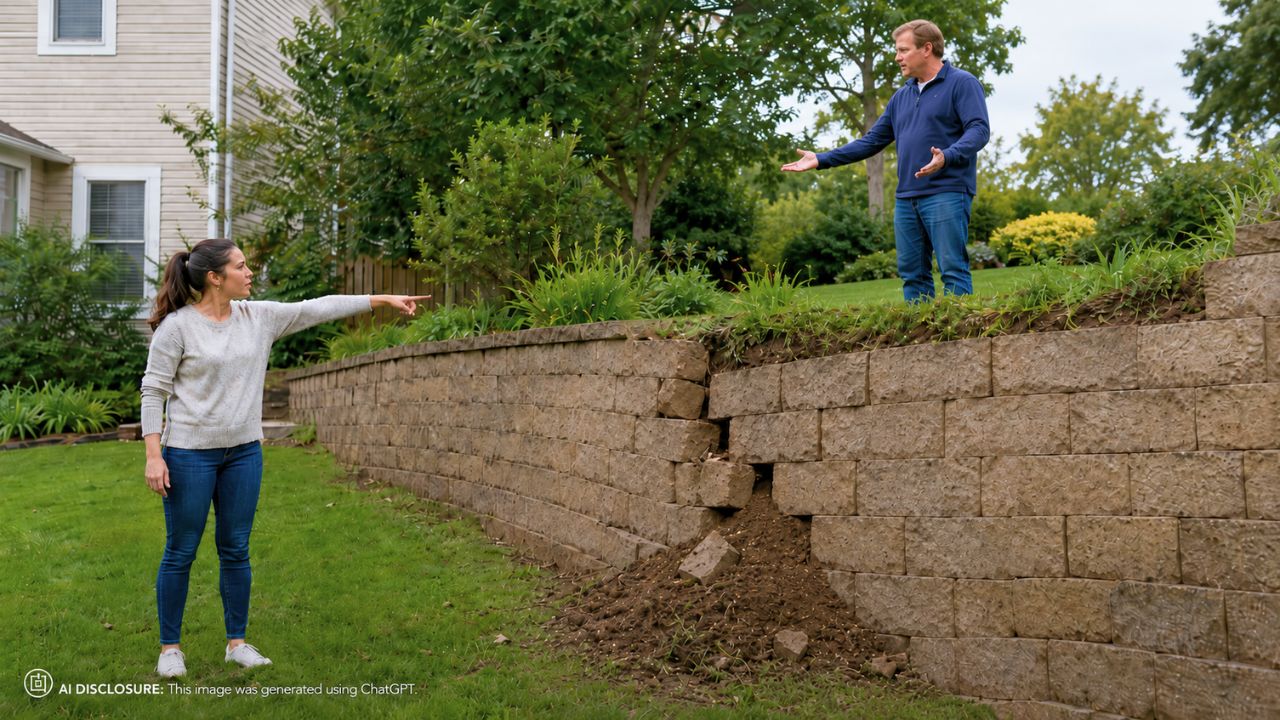
It starts with something you can’t unsee once you notice it: a retaining wall that used to look “fine” now has a belly to it. Not a crack you can ignore for another season, but a visible bulge pushing toward the property line. For one homeowner, that bulge is now paired with a bigger worry—soil shifting and the nagging feeling that when it finally gives way, it won’t do it politely.
In the original post, a Plano-area resident asked if there’s any recourse under local rules after seeing their neighbor’s retaining wall bulging onto their property. Their concern isn’t just cosmetic. They’re worried the wall could “burst” and damage their land or even their house, but they say the neighbor refuses to address it.
The wall wasn’t just ugly—it was moving into their yard
A failing retaining wall has a special way of turning a calm backyard into a slow-motion emergency. At first it’s subtle—maybe the top edge doesn’t look straight anymore, or the face of the wall seems slightly bowed. Then you realize it’s not just deforming on the neighbor’s side. It’s bulging toward you.
That’s what made this homeowner’s post feel urgent. They weren’t describing an old wall that needs a refresh; they were describing a structure physically encroaching. When something heavy and structural starts leaning into your space, it stops being a “them problem” in a hurry.
Retaining walls fail in the most inconvenient way possible
Retaining walls don’t usually fail with a clean, dramatic snap that gives you a clear moment to point to. They tend to fail the way wet cardboard fails—slowly, then all at once. A bulge can mean the wall is no longer resisting the pressure of saturated soil behind it, especially after heavy rains or recurring drainage issues.
And when a retaining wall finally lets go, it isn’t just the wall that moves. The dirt behind it can shift, slide, or slump. That can reshape the grade, bury landscaping, clog drains, push water where it shouldn’t go, and create a mess that’s expensive even when nobody gets hurt.
This homeowner’s fear was straightforward: if it “bursts,” it could damage their property and possibly their home. That’s the kind of worry that keeps you checking the backyard after every storm, or staring at the wall like you’re waiting for it to blink.
The part that makes neighbors dig in: responsibility
Homeownership has a way of turning shared boundaries into stress tests. Once you believe a neighbor’s structure is threatening your property, you naturally assume the next step is simple: they fix it. But that assumes the neighbor agrees it’s a problem—or agrees it’s their problem.
In this case, the homeowner says the neighbor “refuses to do anything about it.” That single line is the fuel for almost every property-line dispute. Because even if the issue seems obvious from one side of the fence, the other side may see inconvenience, cost, or hassle—and decide denial is cheaper.
And once someone refuses outright, it’s no longer just about concrete blocks and soil. It becomes about time, leverage, documentation, and what happens if the wall collapses before anybody acts.
What the homeowner actually needs: a path that doesn’t rely on goodwill
The homeowner wasn’t asking how to repair the wall. They were asking if there’s a way to handle it within Plano’s laws—basically, what options exist when the friendly route is dead. That’s a different kind of homeowner question: not “how do I fix this,” but “how do I make sure I’m not left holding the bill when something I didn’t build fails onto my land?”
Even without more details about the wall’s height, materials, or exact location, you can feel the bind. If the homeowner touches anything that sits on the neighbor’s side, they risk escalating the dispute or being blamed for worsening it. If they do nothing, they risk waking up to a slide of soil or a shifted grade that’s suddenly pressing against their side of the yard.
It’s also the kind of problem where waiting rarely improves the math. Soil movement can undermine fence posts, distort landscaping, and change how water travels during storms. The longer it goes, the more likely it becomes a “bigger than the wall” repair.
How neighbors tend to respond when a wall starts creeping
The post is brief, but the dynamic is familiar: one homeowner sees imminent damage, the other doesn’t want to spend money. In neighborhood disputes like this, people typically focus on creating a record early—because once dirt moves, the story changes.
The practical reactions in these scenarios tend to cluster around a few themes: figure out where the property line actually is, document the current condition before it changes, and find out which local channels handle unsafe structures or grading issues. A bulging retaining wall is not just “a bad look”; depending on how it’s built and where it sits, it can become a safety hazard.
There’s also the reality that “refuses to fix it” sometimes means something more specific: refuses to admit it’s failing, refuses to talk, refuses to let anyone access their yard, or refuses to spend on an engineer. Any one of those can stall a resolution long enough for gravity to make the decision for everyone.
The tension that lingers when the wall stays put—but keeps bending
What makes these disputes so draining is the in-between period. The wall hasn’t collapsed, so nothing forces immediate action. But it’s visibly bulging, so the homeowner can’t relax. Every rainfall becomes a question mark. Every new inch of movement feels personal, because it’s literally moving toward them.
It also changes how you use your own space. People stop letting kids play near the area. They hesitate to plant anything or invest in improvements. They start thinking in contingency plans: “If it falls, where does the soil go? Does it hit the fence? Will it block drainage? Will it reach the foundation area?”
For a new homeowner especially, it’s a brutal welcome: you expect to spend your first year learning your house, not learning how to navigate a neighbor’s refusal while a structural wall leans into your yard. And until there’s either a repair—or a failure—the backyard stays in that uncomfortable state where you’re living next to a problem that hasn’t happened yet, but looks like it’s getting ready.