New Homeowner Finds a Drainage Pipe the Neighbor Installed in the Backyard Without Asking — Then the County Says the Work Was Never Permitted
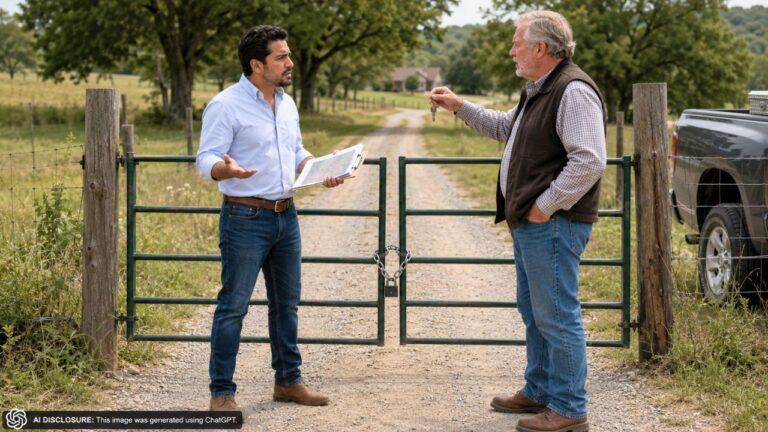
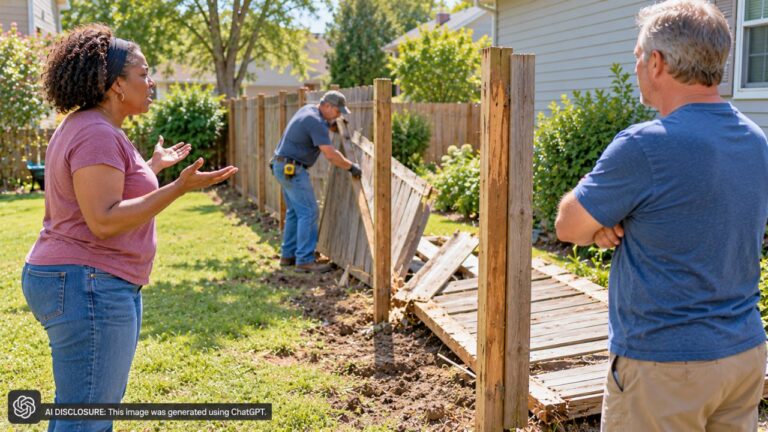
Photo credit: AI-generated image created using ChatGPT. Illustrative only.
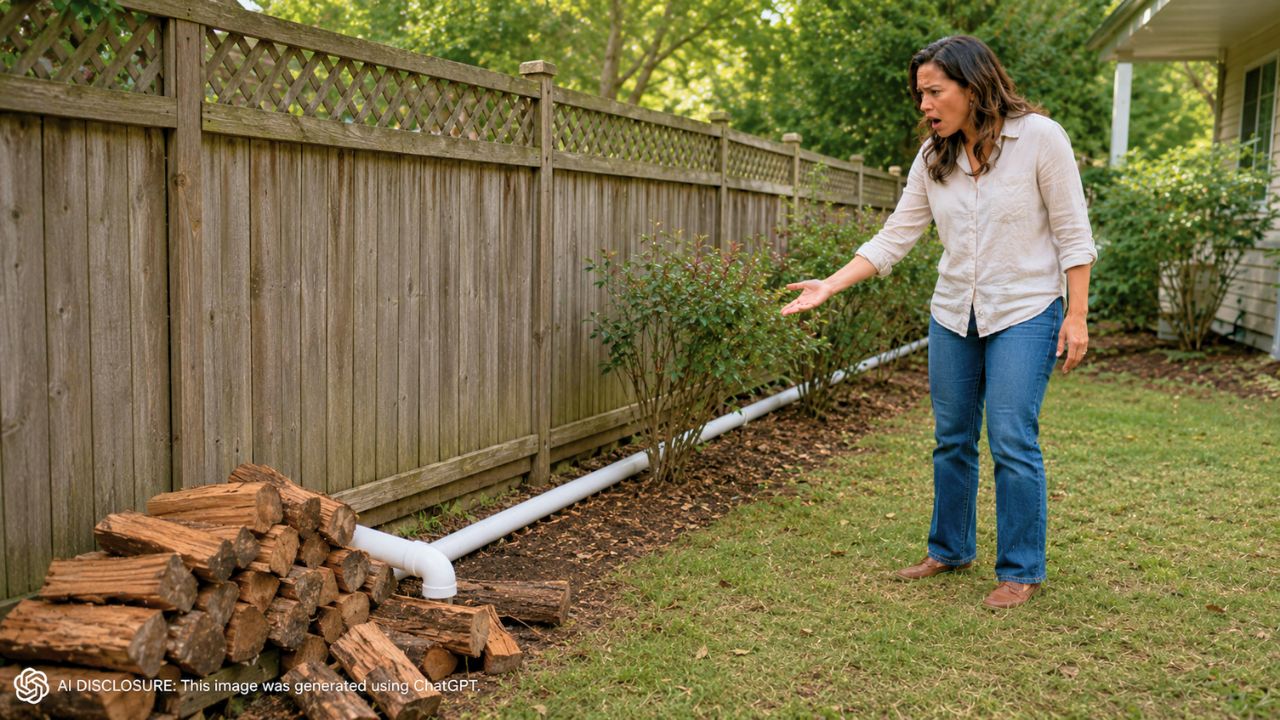
It started with a piece of PVC that didn’t belong—sticking out near the back edge of a new homeowner’s yard and aimed straight at something they actually use: stacked firewood meant for an indoor wood-burning stove. The pipe was positioned about an inch from the property line and discharged rainwater right into the woodpile.
In the original post, the homeowner explained they’d only recently moved in. The property had previously belonged to their mother, and they weren’t even sure how long the pipe had been there—except it looked “recent,” and the overgrown bushes on their side had been visibly hacked away to make room for it.
A brand-new home problem hiding in plain sight
This wasn’t a slow, subtle drainage issue that takes years to notice. The homeowner described a pipe placed so close to the boundary it might as well have been on it, sending stormwater onto their side. The water didn’t just soak into a patch of grass—it hit stacked firewood directly.
If you heat with wood, you already know what happens next. Wet wood turns into a hassle fast: it can rot, grow mold, attract insects, and burn poorly. For someone who planned to use that wood indoors, the damage wasn’t cosmetic. It undermined a practical part of living in the house.
The homeowner also made it clear the frustrating part wasn’t just that it happened—it was how avoidable it seemed. They believed the neighbors could have redirected the pipe with an elbow joint and a few extra feet of PVC so it ran downhill instead, where a small ditch could help carry water away.
The detail that made it feel deliberate
What pushed this from “annoying” into “are you kidding me?” was the backstory from the homeowner’s mother. She reportedly heard the neighbors talking while installing it, including a plan to “just hide it under the wood pile.”
That line—whether it was said casually or not—made the placement feel less like a mistake and more like a choice. The homeowner also believed the neighbors “made sure it stopped on their property,” even though the discharge point effectively sent the water right across the line and into the wood.
Even the landscaping told a story. The homeowner said a line of overgrown bushes on their side had been chopped out around the pipe, suggesting someone didn’t just set something down—they cleared space for it. That kind of physical evidence can be hard to ignore once you see it, especially when you didn’t authorize any of it.
Where the drainage should have gone
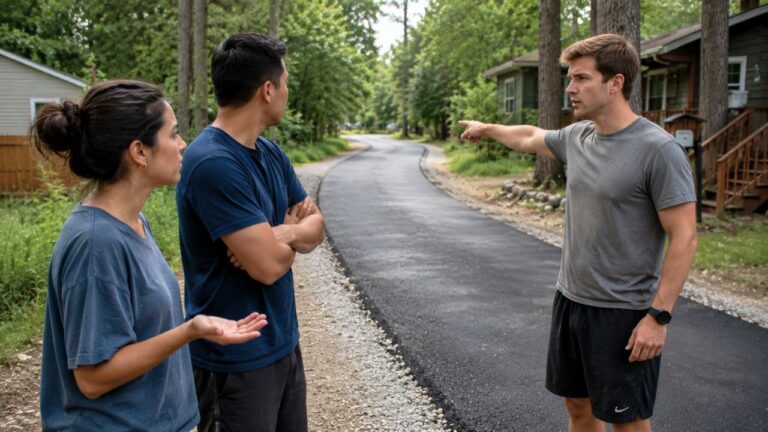
The neighborhood’s layout mattered here. The homeowner described a dead-end street up a significant hill, with woods leading down to a creek. In other words: gravity already provides a path for runoff, and other neighbors reportedly route drainage downhill using small ditches.
That’s what made the pipe’s direction feel so strange. Instead of guiding water down the slope, it was pushed toward the adjacent yard—into a woodpile—creating a concentrated stream where there didn’t need to be one.
It’s the kind of shortcut that might feel “fine” to the person doing it, especially if they’re focused on keeping their own yard dry. But on the receiving end, it turns into soggy materials, mud, erosion, and a constant question: what else will this water affect over time?
Then the permitting question entered the chat
The homeowner said their mother had already tried raising the issue and was told by the Borough that they “can’t do anything.” That response, vague as it is, is often where homeowners hit a wall: the work is done, the damage is real, and the first call for help doesn’t lead anywhere.
That’s when the permitting angle becomes a pressure point. If a drainage discharge was installed without approval, it’s not just a neighbor squabble—it becomes a question of whether the work should exist in the first place, and whether the local rules even allow directing runoff onto someone else’s property.
The homeowner’s post centered on what they could do if the neighbors refuse to redirect the drain. When you’re new to a house, that’s a brutal spot to be in: you don’t want to start a long-term feud, but you also can’t keep sacrificing your own property every time it rains.
What other homeowners zero in on: proof and paper trails
In disputes like this, people tend to focus less on arguing and more on documenting. When a pipe sits right by the line and the damage is visible, the “before and after” matters—photos of the pipe location, the disturbed bushes, and the condition of the woodpile after rainfall.
Homeowners who’ve been through boundary headaches often push for verifying the property line, too, because an inch can turn into a mile once everyone starts insisting they’re “pretty sure” where the boundary is. Even if the pipe technically ends on the neighbor’s side, the discharge pattern is what’s causing harm.
Another common thread in reactions to drainage conflicts is the idea that water problems rarely stay contained. Today it’s firewood. Next season, it could be a saturated fence line, a muddy strip that won’t grow grass, or runoff carving a channel that creeps toward a foundation. That’s why people get serious about it quickly, even when the immediate damage seems “minor.”
A small pipe that could become a long-term backyard problem
The homeowner wasn’t asking for a grand redesign—just a redirect. The maddening part is that, by their description, the fix might be as simple as re-aiming the pipe downhill the way other properties do. But simple fixes aren’t simple when the person who needs to do it insists it’s not their problem.
Meanwhile, the wood remains compromised. And because the homeowner doesn’t know exactly how long the pipe has been there—only that it looks recent—there’s also that uneasy feeling that this could be the start of a pattern: “What else will they decide to install right up against the line?”
New homeowners expect surprises—old wiring, sticky doors, a mystery shutoff valve. They don’t expect a neighbor’s drainage line aimed at their firewood, paired with the sinking realization that the work may never have been approved in the first place. When the next heavy rain hits, the question isn’t theoretical anymore. It’s whether the backyard will keep taking on someone else’s water, one storm at a time.
Like Fix It Homestead’s content? Be sure to follow us.