New Landowner Asks the Neighbor to Move a Fence Off the Property — Then the Neighbor Threatens to File for Adverse Possession Instead of Negotiating
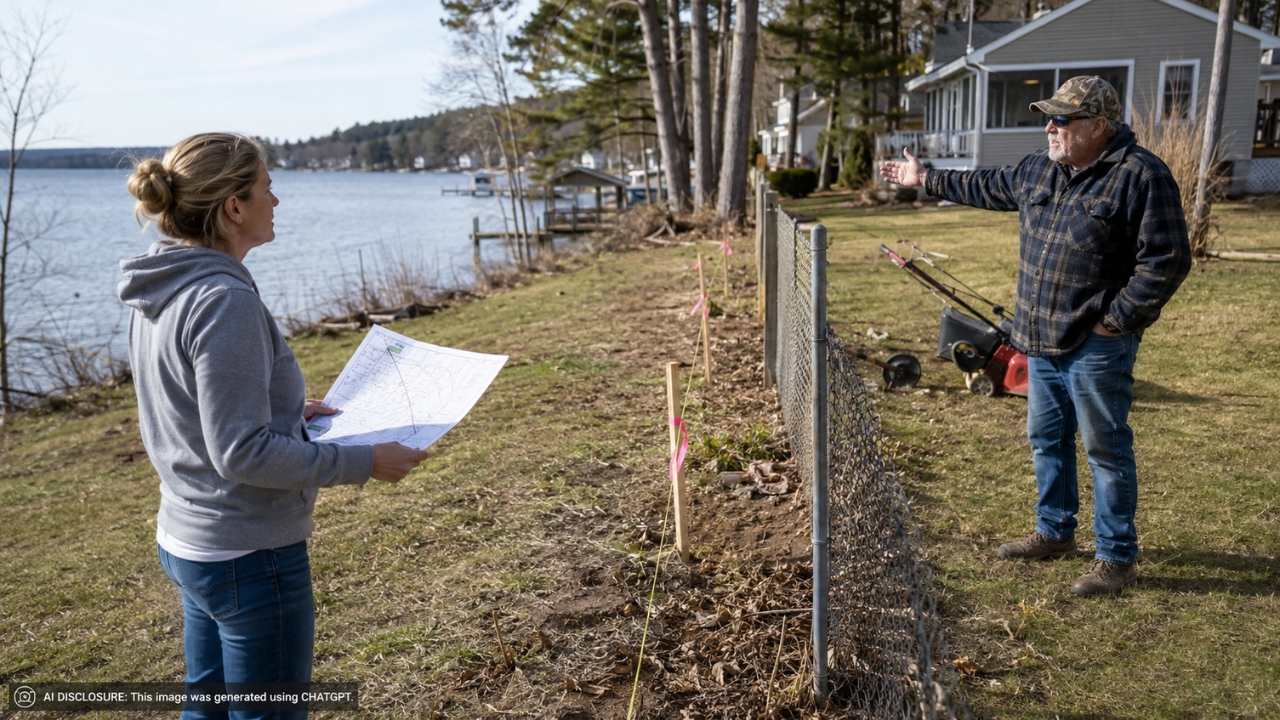
Photo credit: AI-generated image created using ChatGPT. Illustrative only.
Owning a lakefront lot sounds simple on paper: pay the taxes, show up in the summer, keep the brush down, enjoy the water. But for one Michigan family, the peaceful “vacation property” rhythm got shattered when the year-round neighbor walked up and made a threat that landed like a gut punch—he said he was going to try to take the whole lot.
In the original post, the family explains they’ve owned the lakefront parcel for around 20 years. They’re not up there full-time, but they visit almost every summer. The neighbor, who lives next door year-round, confronted the father and claimed he’s maintained their lot for 15 years and now has the right to own it through adverse possession.
A seasonal property became a year-round target
The tricky part about vacation land is that “quiet” can look like “abandoned” to the wrong person. The family says they use the lot during the summer when they’re on vacation, while the neighbor is there all the time. That difference in presence can create a power imbalance fast, especially when one party starts acting like the unofficial caretaker.
According to the post, the neighbor’s claim isn’t just about a strip of land along a property line or a fence that drifted. He allegedly threatened to claim the entire lot. No shed. No cabin. No new driveway or seawall mentioned—just the assertion that mowing and general upkeep for years should translate into ownership.
That’s the kind of statement that makes any landowner picture worst-case scenarios: a surprise lawsuit, a title problem when you try to sell, or a slow-moving boundary grab that’s been happening in plain sight.
“We weren’t there for a few years”—and the neighbor noticed
The family says they typically come up nearly every summer to maintain the property. But they also mention a gap: roughly four years—from 2018 to 2022—when they weren’t able to make it up. Then they resumed their normal summer visits.
Even if the lot wasn’t truly neglected, that kind of stretch is exactly what can encourage a pushy neighbor to start treating a parcel like an extension of their own yard. On lakefront land, where every foot can feel valuable, “I’ve been taking care of it” can turn into “It’s basically mine” surprisingly fast.
The neighbor’s threat also suggests he’s been paying attention to the owners’ patterns. He knew when they weren’t around. He apparently felt confident enough to confront them directly. And he chose a legal-sounding phrase—“adverse possession”—instead of a casual complaint about weeds or property lines.
The confrontation ended with a hard line—and more tension
After the neighbor made the threat, the father told him to never step foot on their property again. That’s an understandable reaction when someone implies they’re trying to take your land. It’s also a moment that can change the neighbor dynamic permanently, because once the word “possession” enters the conversation, every future interaction feels like it could be used as ammo.
The family is now stuck in the worst kind of in-between: they don’t know whether the neighbor will actually “follow through,” but they can’t un-hear what he said. And because the property isn’t their primary residence, they can’t casually keep an eye on it the way a full-time homeowner can.
They’re considering setting up a physical boundary and treating any entry as trespassing. But they’re worried about accidentally doing something that “does more harm,” especially if the neighbor really is building a paper trail or planning to stir things up.
When “maintenance” turns into a claim of ownership
The neighbor’s stated basis is maintenance—he says he has been maintaining the lot for 15 years. The family calls that false and says they’ve continued to visit and maintain it almost every summer, aside from that multi-year gap.
That detail matters because the story isn’t about a clear-cut takeover with a new structure, a locked gate, or a bold “keep out” sign planted by the neighbor. It’s about something murkier: lawn work, brush clearing, the kind of tasks that are hard to prove one way or the other unless you’ve been documenting your visits all along.
And that’s why these disputes hit homestead and second-property owners so hard. You don’t just lose sleep over the land itself—you worry about the mess that comes with it. If someone makes a legal claim, you’re suddenly thinking about surveys, attorneys, property records, and whether you’ll be able to enjoy your own place without an argument waiting next door.
The family also notes the neighbor hasn’t built structures on the lot. That doesn’t make the threat harmless, but it does paint a picture: this isn’t an obvious land grab you can point to from the road. It’s more like a pressure campaign—one that relies on intimidation and the fact that the neighbor is physically present year-round.
Reactions focused on paperwork, boundaries, and being seen
Even without a long comment thread included in the source material, the practical homeowner instinct is easy to predict: stop treating this like an awkward neighbor dispute and start treating it like a property protection problem.
In conflicts like this, people tend to push for the unglamorous steps—having a survey done, clearly marking boundaries, and keeping a clean record that the owners are actively using and caring for the land. A camera facing the lot entrance, dated photos from each visit, and saved receipts for any maintenance can turn vague memories into concrete evidence.
There’s also a real-world safety angle. A lakefront lot can attract more than just one overconfident neighbor: trespassers, unauthorized bonfires, dumped trash, or “helpful” mowing that becomes an excuse to wander. Once a person has announced they believe they’re entitled to your property, owners start thinking about access points, locks, signage, and whether they need someone local to check on things when they can’t.
Most importantly, the reactions in these kinds of threads usually warn against escalating face-to-face. A direct order to stay off the land may feel satisfying in the moment, but it can also turn every future encounter into a confrontation—especially when one party is already talking like a plaintiff.
The lot is still theirs—but the peace is already gone
This family’s biggest problem isn’t just a neighbor with big claims. It’s the way a part-time property can become vulnerable to someone else’s narrative: “They weren’t here, I took care of it, therefore it’s mine.”
They’re now weighing how to draw a clear boundary without pouring gasoline on the relationship next door. Do they fence? Do they post signs? Do they document everything? Do they treat every step onto the parcel as trespass? None of those choices feels relaxing when the whole point of owning a lake lot was to have a place to breathe.
For now, the tension sits there like a storm cloud over the shoreline. The land hasn’t moved. The deed hasn’t changed. But once a neighbor says out loud that he wants your entire lot, the property stops being just a summer getaway—and starts feeling like something you have to actively defend.