New Landowner Finds a Six-Foot Privacy Fence Built Eight Inches Over the Property Line — Then the Neighbor Says Tearing It Down Would Require Replacing the Entire Fence and They Will Not Pay a Cent Toward It
Photo credit: AI-generated image created using ChatGPT. Illustrative only.
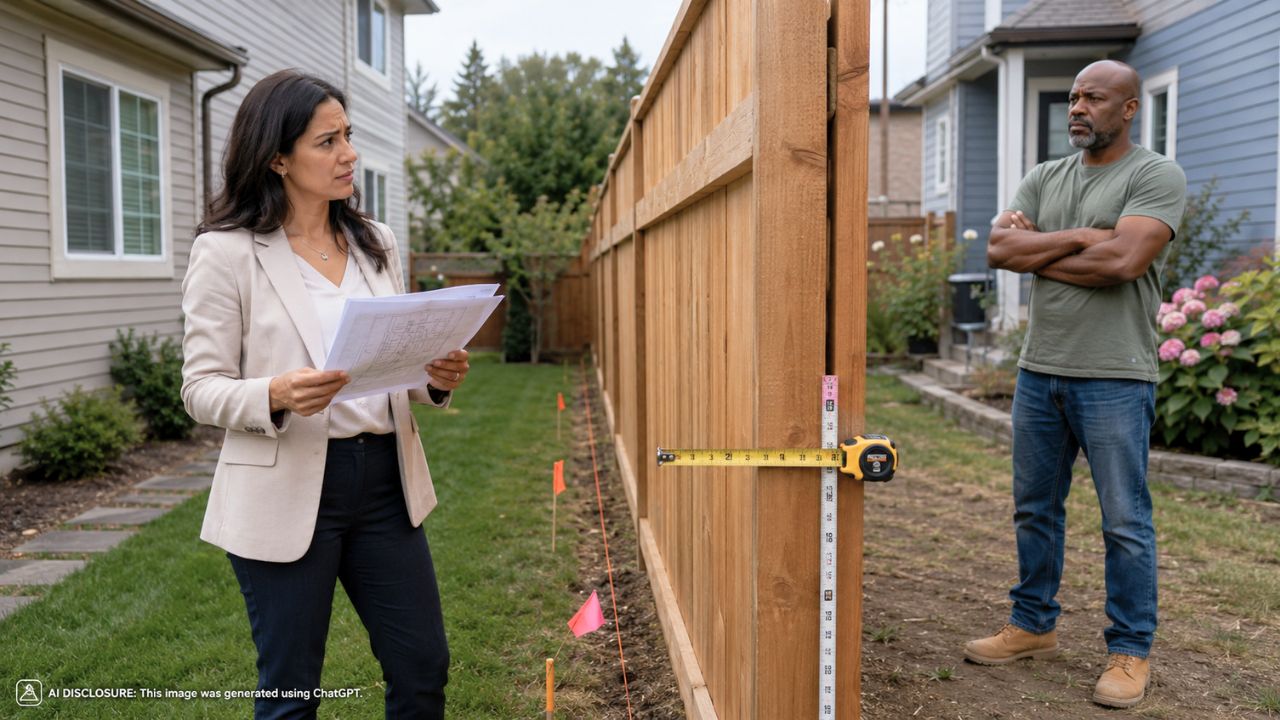
The purchase was supposed to be the clean start: new keys, new plans, and a property line that was already “set” because a tall wooden privacy fence was in place. Then the new landowner looked closer and realized the fence wasn’t sitting where it should. It was over the line—only about eight inches, but enough to make it their problem the moment they noticed.
When they brought it up, the neighbor didn’t react with embarrassment or a quick offer to fix it. Instead came the hard line: moving it would mean rebuilding the entire run, and they wouldn’t pay anything toward it. That’s when a small measuring mistake turned into a full-on homeowner standoff—one that can affect resale, access, and even who owns what years down the road, the way the discussion explains.
The fence looked “finished,” which made it feel permanent
A privacy fence has a way of rewriting a yard overnight. It changes sightlines, blocks noise, and quietly tells everyone, “this is the edge.” For a new owner walking the perimeter, it’s easy to assume the fence is the boundary—especially when it looks professionally installed and has been there long enough to feel like part of the neighborhood.
But fences aren’t magic. They’re boards and posts placed by humans who sometimes miss by inches or feet. And when the fence is on the wrong side of the line, it isn’t a harmless cosmetic error—it’s a physical occupation of land.
Eight inches doesn’t sound like much—until you try to use it
People hear “eight inches” and think it’s petty. Then they picture a six-foot fence that blocks access to the strip of yard behind it. That narrow ribbon becomes the place you can’t easily mow, can’t plant on, can’t maintain, and can’t confidently claim when you go to sell.
The bigger frustration is that it’s not just about a measuring tape. It’s about control. A fence built inside your property can function like a quiet land grab even if the neighbor never “uses” the area for a patio or a shed. The fence itself does the taking by cutting off access.
And because the fence feels permanent, it pressures the wronged owner into a choice: live with it, or pick a fight that could sour the block for years.
When a fence isn’t on the boundary, it’s not a shared fence
In a lot of neighborhoods, a boundary fence is treated as a joint feature—something that sits right on the property line, belongs to both sides, and can’t be removed or damaged without both owners agreeing. That shared responsibility only works if the fence actually straddles the legal boundary.
Once a fence is built over the line onto someone else’s parcel, the whole “we share it” assumption falls apart. Now it’s an encroachment. The neighbor may act like it’s settled because the fence exists, but the placement matters more than the age or the looks.
That’s why the neighbor’s refusal to pay hits so hard. It’s not just stubbornness. It’s a statement: “I’m treating this as mine, and I want the cost of changing it to be yours.”
The long-game risk: a misplaced fence can become an ownership claim
This is the part that keeps new owners up at night, even when the strip of land is narrow. The doctrine people worry about is adverse possession—where a trespasser can eventually claim legal title to someone else’s property if strict requirements are met.
As the source lays out, adverse possession generally requires possession that’s actual, open and notorious, hostile to the true owner’s interests, exclusive, and continuous for a statutory period that can range widely by state, often somewhere between 7 and 20 years. In plain terms: it can’t be secret, it can’t be shared, it can’t be on-and-off, and it can’t be with permission.
A fence is one of the clearest ways to make possession “open” and “exclusive.” It’s built in daylight, it’s visible to everyone, and it sends a message that someone is controlling that area. Even if the neighbor never sets foot on the eight-inch strip, the fence can still function as control of it.
And here’s the practical punch: even if the neighbor can’t win an adverse possession claim today, time is not neutral. Years pass quickly. Homeowners sell. Memories fade. And a future buyer or title issue can turn an “annoying eight inches” into a real transaction problem.
Why “just tear it down” isn’t simple when the neighbor refuses
The neighbor’s argument—“you’d have to replace the entire fence”—isn’t just dramatic. Depending on how it’s constructed, moving a fence line can mean pulling posts, rebuilding sections, and matching panels so the whole thing doesn’t look like a patchwork fix. If the fence was installed as one continuous run, shifting a portion can create weak points and ugly seams.
But the neighbor’s logic also puts the new owner in a bind. If the new owner touches the fence without permission and the neighbor claims it was damaged, that opens another dispute. If the new owner does nothing, the fence remains as a physical barrier, and the clock keeps ticking on years of “exclusive” control.
This is where homeowner drama gets real: the cheapest path today can be the most expensive path later, especially when resale is involved and every square foot “counts.”
People focused on one word: permission
When homeowners trade stories like this, the most common practical reaction isn’t “call a bulldozer.” It’s “document everything, and don’t accidentally give away rights.” In the source material, there’s a key idea that shifts the whole chessboard: adverse possession requires hostility. If the use is with permission, it’s not hostile.
That’s why one of the cleaner pressure-release valves is written permission for the neighbor to “borrow” the strip—often structured as a simple rental agreement for a nominal amount per year. The point isn’t the money. The point is creating a paper trail that makes it much harder for the neighbor to later argue they took the land against the owner’s interests.
It’s also why people urge a conversation before escalation. Not the kind where you accuse, but the kind where you state what you’ve found and ask what fix the neighbor is willing to consider. Some neighbors truly don’t realize they built it wrong and will move it to preserve the relationship. Others double down—like in this case—and that tells you what kind of fight you’re in for.
In the end, this kind of fence problem rarely feels like it’s about wood and posts. It’s about whether the new owner can protect their boundaries—literally—without turning daily life at home into a cold war. Eight inches isn’t much land, but a six-foot wall in the wrong place can cast a long shadow for years.