Buyer Closes on a Corner Lot and Finds the Neighbor’s Concrete Driveway Was Poured Two Feet Over the Property Line — Then the Neighbor Says Removing That Section Would Crack the Entire Slab and Calls It the New Owner’s Problem
Photo credit: AI-generated image created using ChatGPT. Illustrative only.
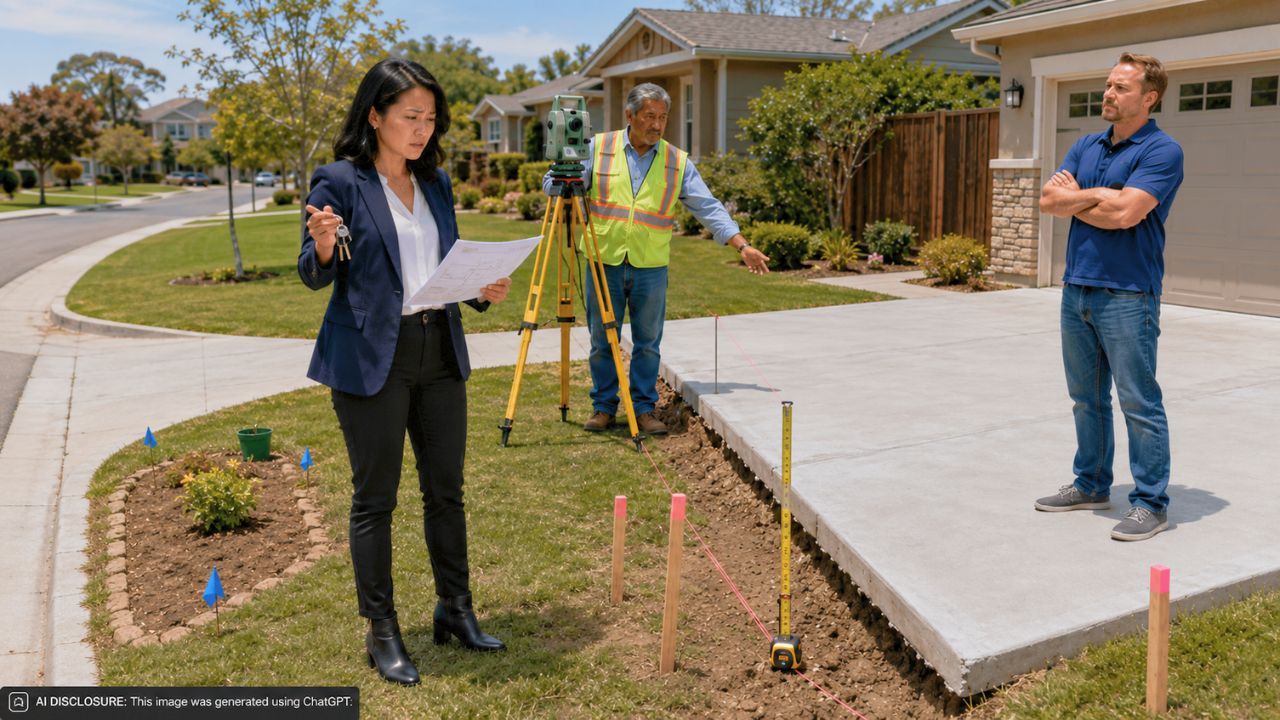
Closing day is supposed to feel like exhaling. Keys in hand, corner lot secured, you start picturing where the garden beds will go and how nice it’ll be to finally have extra frontage. Then the survey comes back and yanks you right back into reality: the neighbor’s concrete driveway doesn’t just hug the line—it’s over it.
In the version of this story that keeps homeowners up at night, the overlap is a clean two feet across the edge of the lot. And when the new owner brings it up, the neighbor’s response isn’t apologetic. It’s practical and pointed: cutting out that strip would crack the whole slab, so it’s “your problem” now. The core dilemma shows up in the source post: a driveway encroachment is common, but it can turn into a title headache fast—especially when the person using your land acts like they’re entitled to it.
The survey turned a “welcome home” moment into a boundary fight
The hardest part is that this isn’t a leaky faucet you can fix quietly on a Saturday. A driveway is big, heavy, and permanent-looking—exactly the kind of thing people assume is “how it’s always been.”
The source material lays out why this discovery hits differently depending on the property. On a big rural parcel, losing a few inches might not matter. On tighter lots—like townhomes or anything with narrow side yards—those inches can change access, setbacks, and how you use the space. Two feet on a corner can feel like a bite taken out of the very reason you paid extra for the lot.
Concrete makes everything feel permanent—even when it’s not yours
Fences can drift. Posts rot. People “follow the tree line” instead of the legal line. Driveways don’t drift, and that’s why they trigger immediate tension. Once concrete is poured, everyone talks like it’s irreversible.
That’s where the neighbor’s claim lands: if you remove the encroaching section, the slab will crack. Whether that’s true in every case isn’t the point here—the point is how effectively it shuts down the conversation. It turns a property-line issue into a structural-threat story, and suddenly the person who’s been encroached on is the one being told to accept risk and damage.
Meanwhile, the new owner is staring at a permanent feature sitting on their deeded land. And that’s not just awkward. The source post frames it as a title issue—something that can affect ownership and the marketability of the property.
What the new owner can do next (and why “do nothing” is still a choice)
The post is blunt: don’t panic, and don’t assume there’s only one move. A driveway or fence over the line is one of the most common survey surprises, and the fix depends on how big the encroachment is and how much you care about reclaiming that space.
One option is simply leaving it alone. If it’s minor and doesn’t change how you use the property, some buyers decide it’s not worth turning their first week of homeownership into a feud. That’s the emotionally easiest route, but it comes with a quiet worry in the background: if someone keeps using your land openly for long enough, could they claim it?
The source material points directly at that fear: adverse possession. It describes it as a “hostile takeover” scenario, and notes that for it to be considered in court, several elements have to line up—including continuous, obvious use over a long period. The timeframe mentioned is fifteen years.
The paper solution: permission, not surrender
If the new owner doesn’t want to rip out concrete but also doesn’t want to hand over rights by default, the post suggests a middle-ground fix: a license.
In plain terms, that means the owner acknowledges the driveway is encroaching and gives written permission for it to remain. The key detail from the source is that a license is revocable, and it helps protect against adverse possession because the neighbor’s use is no longer “hostile”—it’s permitted.
This is the part that tends to surprise people. Homeowners hear “permission” and think it means giving up. But the way it’s described, a license is more like putting a fence around your rights on paper, even if you aren’t moving the concrete today.
When it stops being a courtesy and becomes an easement conversation
Sometimes the encroachment isn’t just a corner of slab. Sometimes the driveway crosses someone else’s land because it’s the only way the neighbor can access their own property. That’s where the “bonus option” comes in: an easement.
The source calls this unique and implies it’s ideally handled before closing. An easement is a bigger step than a casual handshake because it formally creates a right for someone else to use part of your property for a specific purpose. If the driveway is genuinely the neighbor’s access route, this can be the cleanest long-term fix—but it’s also the kind of thing that needs to be handled carefully because it lives with the property.
And that’s why these disputes feel so unfair to the buyer who just closed. You didn’t pour the slab. You didn’t ignore the boundary. But now you’re the one who has to decide whether to legalize it, fight it, or live with it.
The reactions are predictable: “prove it, then decide how hard you want to push”
Even without a comment thread attached, homeowner reactions to driveway-over-the-line stories tend to fall into a few camps, and the source material echoes the practical instincts behind them.
First: get the survey, and take it seriously. The entire mess starts and ends with where the legal line actually is—not where the grass changes color or where the neighbor “always thought” it was. Second: decide whether the encroachment is big enough to matter to your daily life and your future resale. That “how big is this problem to you” question in the source is the real hinge point.
Third: if it matters, handle it in writing. The post’s emphasis on a license is basically the grown-up version of “don’t do handshake deals about land.” If the neighbor is already framing it as your problem, you can’t afford ambiguity.
And finally: buyers reading this are going to walk away with the same thought—this is exactly why people push for surveys even when lenders don’t require them. It’s not about being paranoid. It’s about not inheriting someone else’s concrete mistake without realizing what you’re accepting.
For this corner-lot owner, the dispute doesn’t end with a clean “fix.” Removing concrete might damage the slab, but leaving it untouched without paperwork can create its own long-term risk. The uncomfortable truth is that the first big repair on the new property might not be a roof or a water heater—it might be repairing the boundary between “mine” and “yours,” in ink before it ever gets repaired in concrete.