Rural Landowner Finds the Neighbor’s Entire Septic Drain Field Was Buried on the Property Over Twenty Years Ago — Then the Neighbor Says Relocating the Field Would Cost Forty Thousand Dollars and Suggests the New Owner Simply Grant a Permanent Easement
Photo credit: AI-generated image created using ChatGPT. Illustrative only.
It starts the way a lot of rural neighbor problems do: with something you can smell before you can prove it. A landowner said they discovered their neighbor’s septic system was leaking onto the back of their property and “contaminating the watershed,” the kind of phrase that turns a bad day into a serious one fast.
When they went looking for answers, they laid it out in the source post: sewage effluent showing up where it doesn’t belong, plus a second headache layered on top—neighbors cutting across the poster’s side of the driveway to reach their own backyard. The landowner wanted to know if they had to allow that access, or if they could put a bench right along the property line and shut the shortcut down.
The first clue was in the back of the property
Septic problems don’t always announce themselves with a dramatic collapse. A lot of the time it’s wet ground that never dries, a suspicious patch of greener grass, a faint odor that comes and goes depending on the wind. In this case, the landowner believed the neighbor’s system was “leaching out” onto their land.
That detail matters because it’s not just gross—it can become a land-use and safety issue. When wastewater migrates off-site, it doesn’t respect fences or tree lines. It follows slope, soil, and water.
Add “watershed” to the mix and you can picture the fear behind the question. If runoff is carrying contamination downhill or into a drainage area, it’s not just an argument over mud; it’s an argument over what’s happening to the land itself.
Then the access problem got pulled into the septic fight
At the same time they were dealing with the suspected sewage seepage, the landowner said the neighbor “need[s] to use my side of the driveway to access their backyard.” That’s the kind of arrangement that often starts casually—someone uses the edge of a drive because it’s easier—and then slowly turns into a “we’ve always done it this way” entitlement.
On paper it sounds like two separate disputes: one about wastewater, one about vehicle or foot access. In real life, they tie together quickly. When you’re already stressed about contamination, seeing someone use your driveway like it’s a shared lane can feel like one more boundary being ignored.
The landowner’s proposed solution was simple and very homestead-coded: place a bench right along the border between the properties. Not a chain-link fence, not a lawsuit, not a shouting match—just a physical object that signals “this isn’t your lane.”
“Am I required to grant them the right of way?”
That question is where things get tense, because “right of way” and “easement” aren’t the same as “my neighbor drives here sometimes.” A right of way is the kind of thing that can become permanent if it’s written, recorded, or in some places claimed through long-term use under specific rules.
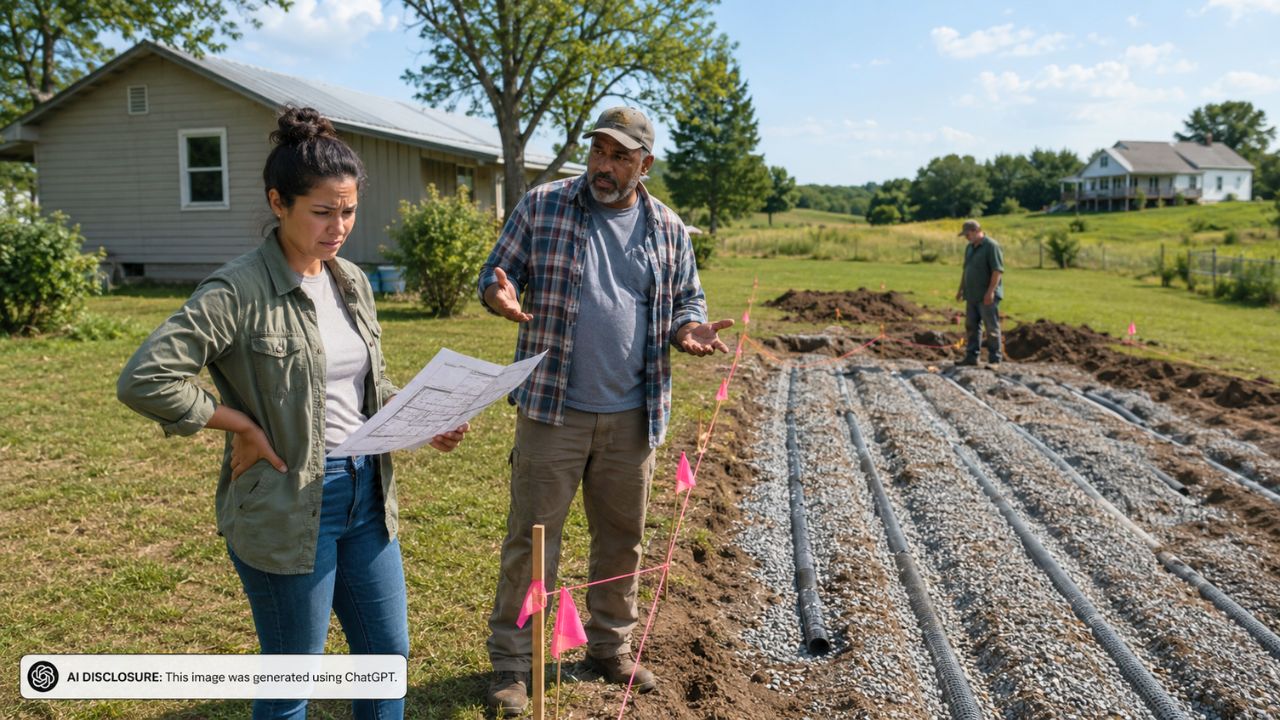
And once you start talking about septic systems leaking across a property line, easements aren’t a hypothetical anymore. If a drain field or leach area was installed too close to the line—or even on the wrong side of it—it can create a messy standoff: the failing system needs repair, but repairs require access, excavation, and sometimes relocation.
The landowner wasn’t asking for a tutorial or a neighborhood mediation script. They were asking for the most practical thing possible: do I have to let this keep happening, or can I block it at the border and force the neighbor to use their own property?
The real-world stakes: water, land value, and who pays
Septic seepage isn’t like a loud dog or an overgrown hedge. If wastewater is crossing onto someone else’s land, it can affect how you use the back acreage, where kids can play, whether livestock can graze, and how comfortable you feel letting pets roam. It can also become an ugly disclosure issue later if the landowner ever sells.
Even without getting into legal jargon, most homeowners understand the basic unfairness: you didn’t install the system, you don’t control what goes down the drains, but you’re the one dealing with the results. And if the neighbor’s fix requires access through your driveway or across your land, the “just let us through” request can come with pressure.
This is where the money angle inevitably enters. Septic work can be expensive even when everything is straightforward. When it isn’t—when a field has to be moved, a line rerouted, or the only workable area is across a property line—the cost becomes the argument. One neighbor sees a giant bill. The other sees a giant liability.
How people react when property lines and waste collide
When homeowners swap stories about septic encroachment and shared driveways, the reactions tend to cluster around the same few instincts: document everything, confirm the boundary, and don’t accidentally give away access rights because you were trying to be polite.
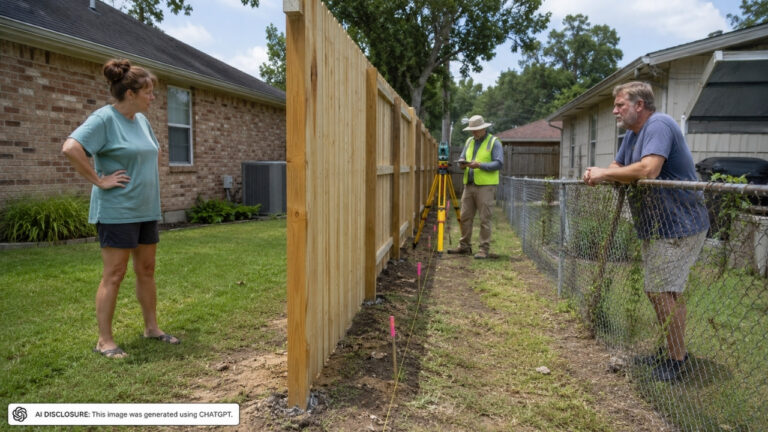
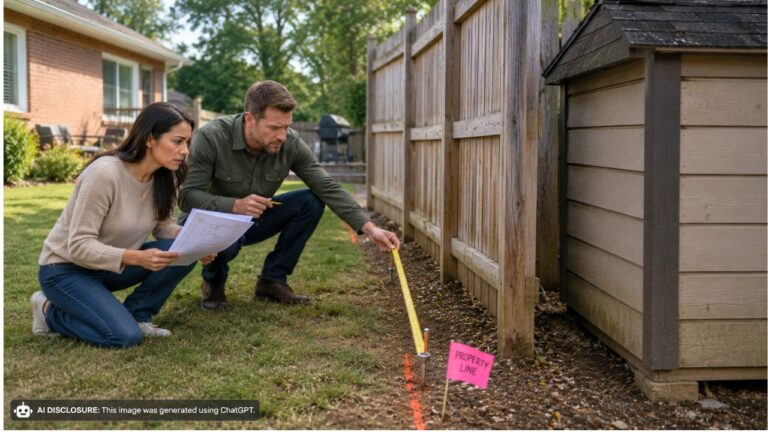
People who’ve been through boundary disputes usually push the same order of operations. First, confirm where the line actually is. Not “where everyone thinks it is,” but where it is on a survey. Then, capture what’s happening on your side—photos of wet areas, dates, anything that shows a pattern rather than a one-time puddle.
And on the driveway issue, the common theme is to be careful about creating an informal arrangement that turns into a “you can’t stop us now” fight later. A bench at the border is the soft version of that—less confrontational than a fence, but still a statement that the space isn’t open for routine use.
At the same time, experienced homeowners also point out the risk of escalating too fast when septic is involved. If the leaking is real and active, the priority becomes stopping the contamination, not winning a driveway argument. In practice, the two get handled together because they involve access and boundaries, but the wastewater is the part that can’t wait.
A bench is easy. Fixing neighbor problems is not.
The landowner’s question captured a familiar rural frustration: you can’t un-smell a septic problem, and you can’t unknow that your neighbor is treating your property like a convenience lane. Putting a bench on the border feels like an immediate action you can take—something solid when everything else is paperwork and uncertainty.
But the septic leak is the kind of problem that doesn’t care about symbolism. If the system is truly leaching onto the back of the property, it’s going to keep doing it until the underlying failure is repaired. That’s when neighborly “can we just…” requests tend to turn into bigger demands—access across the driveway, equipment staging on your land, or pressure to accept a permanent arrangement that benefits the failing system next door.
For this landowner, the core issue wasn’t just whether they could place a bench. It was whether they’d be forced into a long-term compromise over someone else’s infrastructure. And once sewage and property lines get tangled together, even small decisions—where you allow a vehicle to pass, where you set a bench—start to feel like they could echo for decades.