Rural Property Owner Finds the Neighbor Threatening an Adverse Possession Claim Over Five Acres of the Back Field — Then Refuses to Show Any Documentation
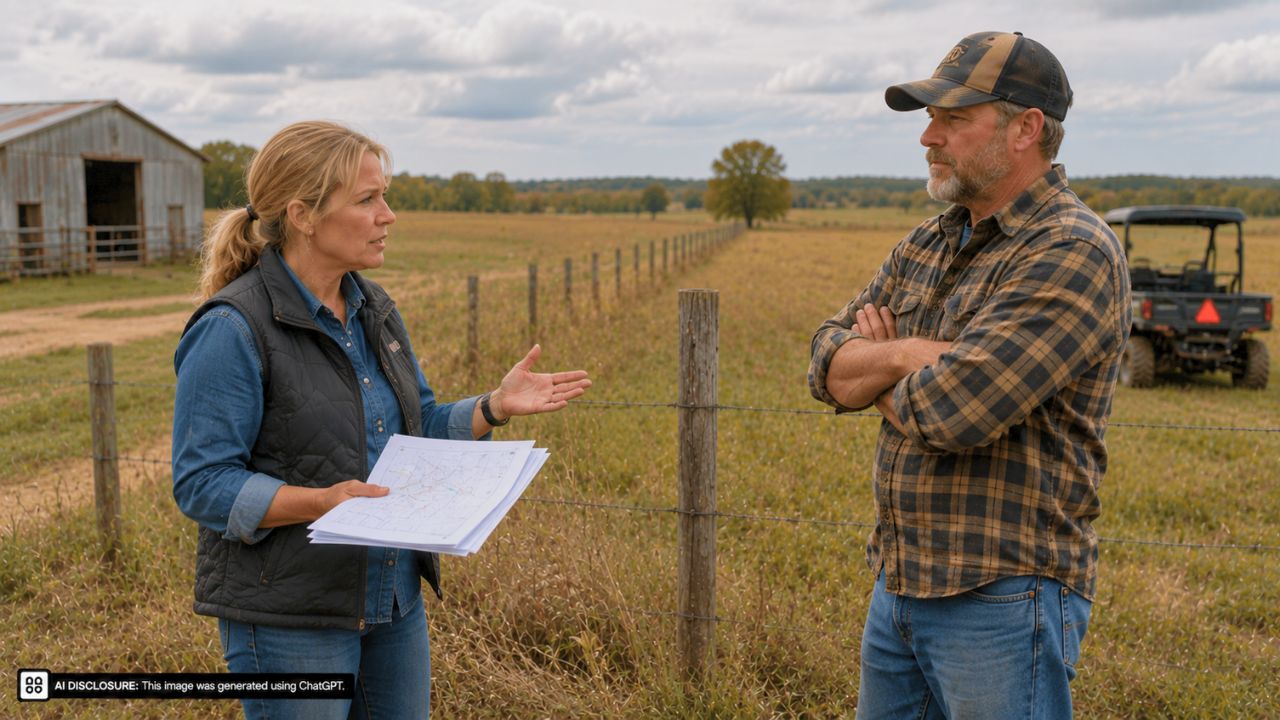
Photo credit: AI-generated image created using ChatGPT. Illustrative only.
It started like a lot of lakefront neighbor tension does: one family uses the place for summer visits, the other lives next door year-round and sees every blade of grass grow. But this time, the conversation didn’t stay at “who mowed what.” A Michigan property owner says a neighboring full-time resident walked up to their father and threatened to take the family’s lakefront lot through adverse possession.
In the original post, the family explains they’ve owned the lot for around 20 years. They come up in the summer to use it as a vacation property and do their own maintenance. The neighbor, who owns the lot directly next to theirs, claims he’s been “maintaining” their lot for 15 years and says that gives him the right to own it.
A summer place, a year-round neighbor, and a sudden threat
The family’s routine sounds familiar to anyone with a seasonal property: open the place up when the weather turns, do some upkeep, enjoy the lake, close it back down. Their neighbor’s routine is the opposite—he’s there all the time, watching who comes and goes, noticing when the property sits quiet.
That difference in presence is where so many rural and lakefront disputes get their footing. A full-time neighbor can start to feel like the “real” caretaker of the area, even when the deed says otherwise. And when the seasonal owners miss a few trips, it can create an opening for entitlement to grow.
The family admits there was a stretch of about four years—roughly 2018 to 2022—when they weren’t able to get up to the property. But they say they’ve been there every summer since, and they describe the neighbor’s claim as flat-out false.
“He’s been maintaining it”—but what does that actually mean?
The neighbor’s argument hinges on the idea that upkeep equals ownership. Not a fence he built, not a cabin he put up, not a driveway he poured—just “maintaining the lot.” The family says he hasn’t built any structures on their land.
That’s what makes this kind of threat so unsettling. Maintenance is ambiguous. It can mean mowing grass once in a while, trimming brush near a property line, or clearing storm debris so it doesn’t blow into his own yard. It can also be exaggerated after the fact, especially if someone is trying to build a story that sounds like they’ve been “in charge” of the land for years.
From a homeowner’s perspective, the practical fear isn’t just a courtroom drama. It’s the day-to-day reality that a neighbor who feels emboldened might start acting like the property is already his—parking equipment over the line, planting trees, cutting trails, stacking brush, or telling others it’s “his field.” Once that behavior becomes routine, it gets harder to unwind socially, even if the paperwork is on your side.
The moment it escalated: “Never step foot on our property again”
After the neighbor made his threat, the father told him to never step foot on their property again. That’s the emotional line in the sand most people draw when they realize a disagreement isn’t just cranky chatter—it’s a direct challenge to ownership.
But that’s also where the stress spikes. A firm warning can stop a reasonable person. It can also provoke an unreasonable one into “proving a point” with more bold activity: more mowing, more clearing, more visible “care,” or even attempts to control access.
The family is now stuck in that uncomfortable waiting period. They’re not sure if the neighbor will actually follow through with a claim, and they’re wrestling with what to do next without accidentally making the problem worse.
Why the idea of a boundary suddenly feels urgent
Once someone hints they want your land, the back field stops being just a back field. Every invisible line becomes a liability. The family says they want to set up a physical boundary and take action for trespass if he enters again, but they worry about unintended consequences.
That worry is a very “real life” one. In rural areas and up north properties, boundaries are often informal—trees, a dip in the terrain, an old marker no one’s checked in years. A neighbor who lives there full-time might push those informal edges little by little, and a seasonal owner may not notice until it’s become “the way it’s always been.”
Even without structures, the field can become psychologically occupied. If he’s the one always out there, always cutting it, always acting like it’s part of his routine, he may start telling himself—and others—that it’s basically his. That’s the kind of story that can turn into a bigger mess later, whether or not it holds up on paper.
Commenters zeroed in on proof, paperwork, and cutting off the “caretaker” narrative
The responses focused less on arguing with the neighbor and more on tightening the basics: documentation, boundaries, and evidence of ongoing ownership. The general vibe was that a threat like this isn’t something to debate in the yard—it’s something to shut down with records and clear lines.
People also latched onto the difference between someone claiming a sliver near a fence versus claiming an entire lot. That’s what made the threat feel more like intimidation than a serious, carefully built case—especially since the family says they visit almost every summer and the neighbor hasn’t built anything on the property.
Another theme in the reactions: don’t rely on memory. If the neighbor is going to say he “maintained” the lot for 15 years, the family’s best counter isn’t just “no you didn’t,” it’s a trail of normal owner behavior—visits, upkeep, photos, receipts, and anything else that demonstrates the property hasn’t been abandoned or handed over informally.
The tension now: a quiet lot that doesn’t feel quiet anymore
The hardest part about a seasonal property is that it can’t defend itself when you’re not there. A year-round neighbor can create a narrative in the off-season, especially after a multi-year gap in visits like the one this family described from 2018 to 2022.
Now, every trip up north comes with a new question: what has changed since last time? Did he mow “to be helpful,” or to be possessive? Did he clear brush because it was messy, or because he wants the land to look like his extension? The family’s instinct—draw a boundary, treat it like trespass—comes from that uneasy feeling that the neighbor is testing how far he can go.
For the moment, the land hasn’t changed hands. But the relationship has. Once a neighbor floats the idea that your lot should be his, you don’t just have to maintain your property—you have to maintain your claim to normal ownership, clearly and consistently, so the next confrontation isn’t just a shouting match in the yard.