New Homeowner Finds a Neighbor’s Sump Pump Ejecting Water Onto the Lawn Twelve Months a Year — Then the Neighbor Says Redirecting the Hose Is “Not Really My Problem”
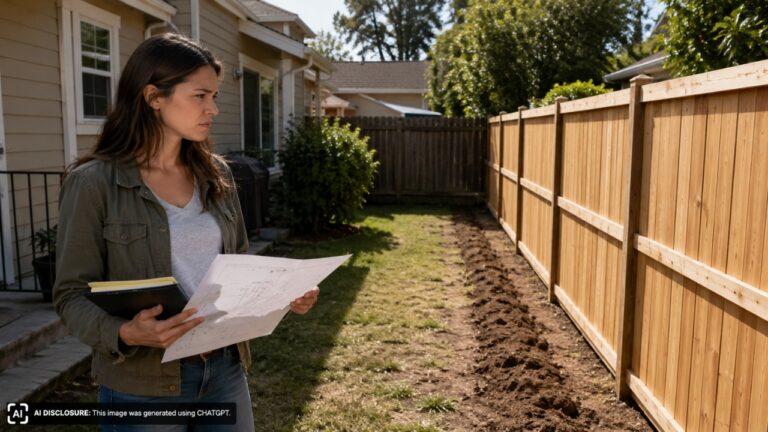
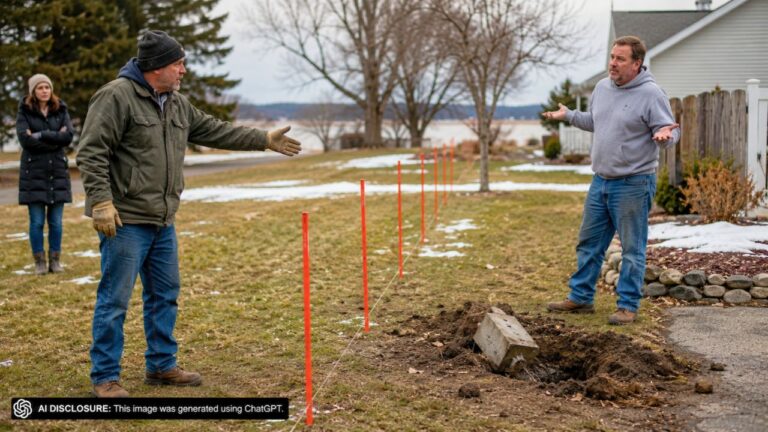
Photo credit: AI-generated image created using ChatGPT. Illustrative only.
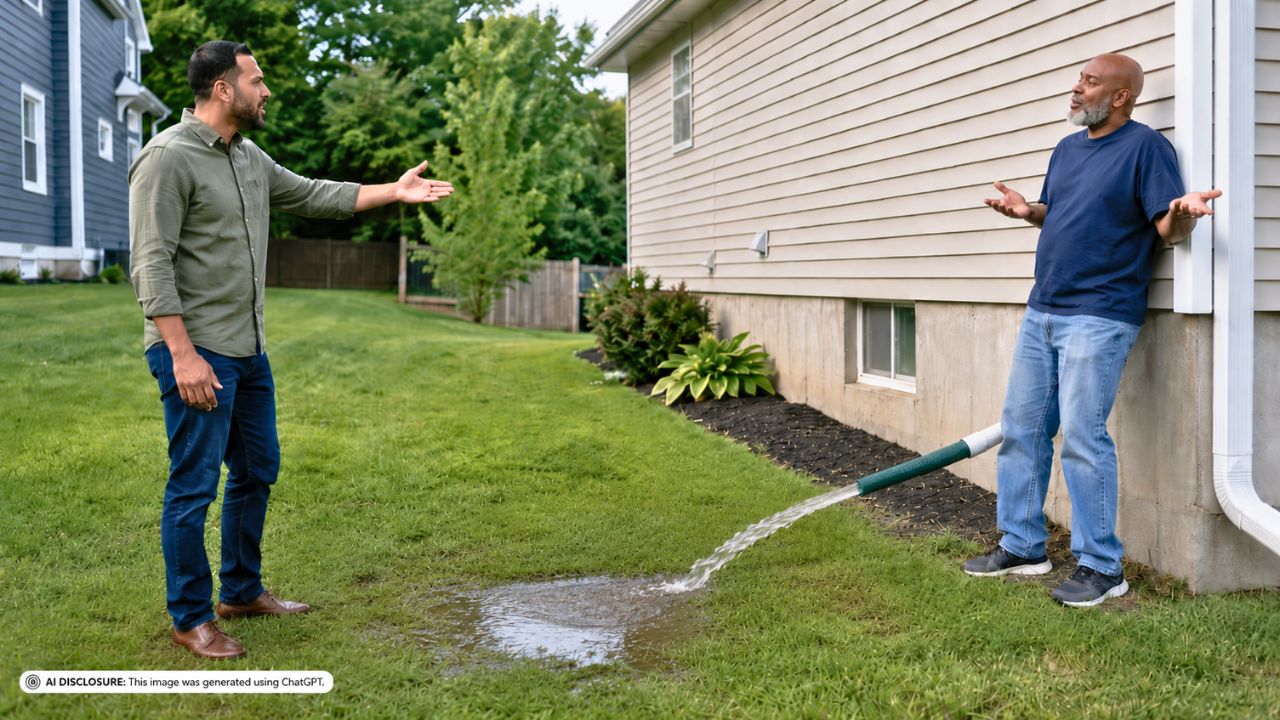
The new routine showed up where routines aren’t supposed to: a steady stream of sump-pump discharge arcing right onto a homeowner’s side of the line, soaking the same strip of lawn over and over. It wasn’t runoff from a storm or a one-time plumbing mishap. It was a deliberate hose placement—right in the shared low area—aimed at someone else’s yard.
In the original post, the homeowner explains that the neighbor “just recently placed his sump pump line to eject directly onto my property.” The two don’t get along, and the homeowner believes the placement is malicious. When he asked for it to be moved, the neighbor refused, leaving him stuck staring at a wet swale and wondering what comes next: rotting fence posts, undermined sidewalks, and a boundary dispute that’s already being watched by a camera.
The day the hose appeared, everything changed
Homeownership comes with plenty of annoying surprises—mystery switches, sticky doors, a gutter you didn’t notice until it overflowed. But this one wasn’t subtle. A sump pump discharge line had been set to dump directly onto the poster’s property.
Because it’s a swale—a low channel where water naturally collects and moves—the county code violations office wouldn’t force a change. That answer landed like a brick. The homeowner wasn’t asking for a neighbor to rebuild a retaining wall or regrade half the neighborhood. He just wanted the hose not aimed at his yard.
And then there’s the part that makes people clam up: “This neighbor and I do not get along,” he wrote, adding that the neighbor refused to move it “when asked.” This wasn’t a misunderstanding about drainage patterns. It was personal.
A swale sounds harmless until it’s always wet
Swales exist for a reason. They’re supposed to guide water where it can drain without flooding foundations or pooling in basements. But there’s a big difference between a swale that carries rainwater after a storm and a swale that’s being fed regularly by a mechanical pump.
The homeowner’s main fear wasn’t just soggy grass. He asked what kind of long-term damage he should expect to his fence post and sidewalk. That’s the kind of question you ask when you can already picture the next few seasons: constant saturation around wood posts, freeze-thaw cycles, settlement, and that slow widening crack that turns into a trip hazard.
Even if the volume seems small in the moment, water has a way of rewriting your property over time. It softens soil. It moves fine particles away from where you need them. It finds tiny gaps under concrete and makes them bigger. And once an area becomes “the wet spot,” it tends to stay the wet spot—more mud, more erosion, more mess when you mow.
The homeowner wanted a quick fix, but every fix has a downside
At home, the first proposed solution was the kind of thing couples suggest when they want the stress to stop: put up a landscaping barrier. The homeowner’s wife liked the idea. It’s simple, it’s visible, and it doesn’t require stepping onto someone else’s property.
But the homeowner wasn’t convinced a barrier would protect what he actually cared about. A little edging might deflect some surface flow, but it won’t magically keep water from saturating the ground around a fence post. And it won’t guarantee the sidewalk stays stable if the soil beneath it keeps getting fed water.
He floated another idea: physically moving the sump pump line so it points to where the yard starts to slope downhill. That’s the kind of sentence that shows how stuck he feels—trying to solve the drainage problem while also avoiding a legal or interpersonal blow-up. The catch is obvious, and he said it plainly: he doesn’t want “the cops called on me for trespassing,” especially because “a camera on his property is watching this area as well.”
It’s the homeowner version of a standoff. Touch the hose and you risk escalation. Don’t touch the hose and you risk slow damage.
Why the fence post and sidewalk are the real pressure points
Grass can recover. Mud can be reseeded. But wood posts and concrete don’t bounce back the same way.
A fence post that stays damp can start to break down at the ground line—the exact spot you don’t see until the fence starts leaning. If the post is set in concrete, constant moisture around that collar can still create problems, especially if the soil stays soft and the post starts to wobble. And if winter temperatures come into play, freeze-thaw cycles can turn a small void into a bigger one.
Sidewalks are their own headache. Water doesn’t have to be dramatic to cause trouble. If the soil under one section becomes consistently wetter than the soil under the next section, you can get uneven support. Over time that can mean settlement, cracking, or lifting in spots—problems that become expensive the moment they become safety issues.
The hardest part is that the damage, if it happens, won’t feel like a single “event.” It will be a slow drift from “annoying” to “now we have to fix it.” That’s what makes the hose so infuriating: it’s an everyday drip of risk.
What people tend to focus on in disputes like this
Even without a full comment thread included in the source material, the homeowner’s instincts point to the same toolbox property owners reach for when a neighbor won’t cooperate: documentation, clear boundaries, and avoiding anything that looks like retaliation on camera.
The camera detail changes the tone. It means any hands-on solution can be recorded, replayed, and framed as tampering—regardless of intent. That doesn’t mean the homeowner has to accept the damage. It just means the cleanest next steps usually involve building a paper trail and keeping actions confined to one’s own property.
There’s also the county’s response: because it’s a swale, they won’t intervene. That kind of answer often pushes homeowners toward other routes—finding out what local stormwater rules actually say, whether the discharge is allowed to cross property lines, and whether a different department handles drainage impacts versus “code violations.” The homeowner already took the first step by calling. The frustration is that the “right office” isn’t always the first one that picks up the phone.
The tension now lives in the yard
This isn’t just about water. It’s about being forced into a problem you didn’t create, on a property you’re responsible for, with a neighbor who has already refused a basic request. The homeowner is left weighing choices that all carry risk: do nothing and watch the ground soften, install a barrier that may only redirect surface flow, or take a direct action that could be construed as trespassing—especially under a camera’s gaze.
In the meantime, the hose keeps doing what it was set up to do. And that’s what makes this kind of neighbor dispute so exhausting: you can’t unsee it, you can’t ignore it, and you can’t solve it with a weekend project unless the other person agrees to meet you halfway.
Like Fix It Homestead’s content? Be sure to follow us.