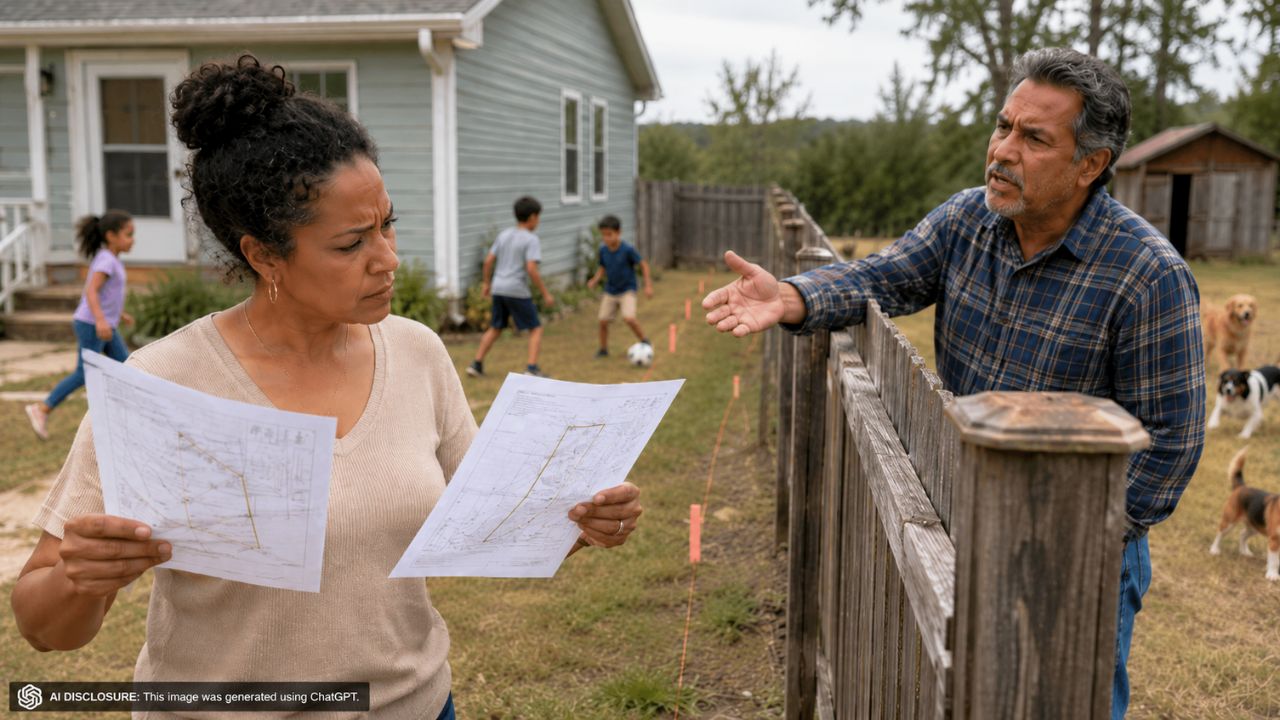
Buyer Finds Two Separate Surveys Placing the Property Line Six Feet Apart on the Same Lot — Then the Neighbor Insists Only the Older Survey Counts
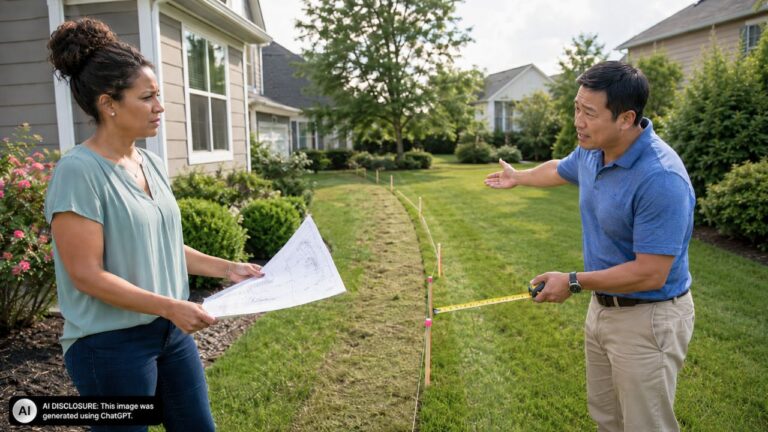
Photo credit: AI-generated image created using ChatGPT. Illustrative only.
It started the way a lot of property-line fights start: a homeowner bought a place, looked at the paperwork, and assumed the lines on the page would match the lines in the yard. Then a neighbor stepped in and said the usable strip on the other side of the fence wasn’t theirs to touch.
In the original post, the homeowner says they purchased the home last year and now have a neighbor claiming land west of an existing fence. The homeowner’s problem is simple on paper and messy in real life: they say every survey they’ve seen puts the disputed piece on their side, but the neighbor insists the fence has been there so long that it “automatically” became his—even though, according to the homeowner, he’s never filed paperwork to formalize that change.
A strip of land that suddenly mattered
The homeowner kept the details tight, but the stakes were clear. They’re “making moves to utilize the piece,” and that’s when the neighbor’s frustration boiled over. Anyone who’s tried to improve a yard knows how quickly a “quiet” boundary can turn into a loud one the moment you start clearing brush, planning a garden, or lining up a contractor.
The disputed area was marked by a yellow squiggly line on an image the homeowner referenced. Even without seeing the full layout, it reads like a classic side-yard strip—small enough that it might have been ignored for years, big enough to feel like a loss when you finally want to use it.
And that’s the thing about fence lines: they feel permanent. Once grass grows up to them and everyone mows the same way for a decade, people start treating the fence like a legal document instead of a piece of hardware someone set in the ground.
When paperwork doesn’t match what people “remember”
The neighbor’s argument, as the homeowner describes it, is that long-standing fence placement alone made the land his “now regardless.” That belief is common in neighborhoods where fences were installed by past owners, where markers got buried, or where people rely on what the previous resident “always said.”
The homeowner, though, keeps coming back to surveys. They say the surveys they have show the disputed land belongs to them. That’s where the tension sharpens: one side is leaning on documents, the other is leaning on time and habit.
Even if two surveys differ—an older one and a newer one—neighbors often latch onto whichever version benefits them. And once someone feels like they’re “losing” space they’ve mentally claimed, it can get personal fast. Not because of the square footage, but because of pride and routine.
The fence becomes a trigger, not a boundary
Fences are supposed to prevent arguments. In these disputes, they do the opposite: they become the trigger that turns a private assumption into a public standoff.
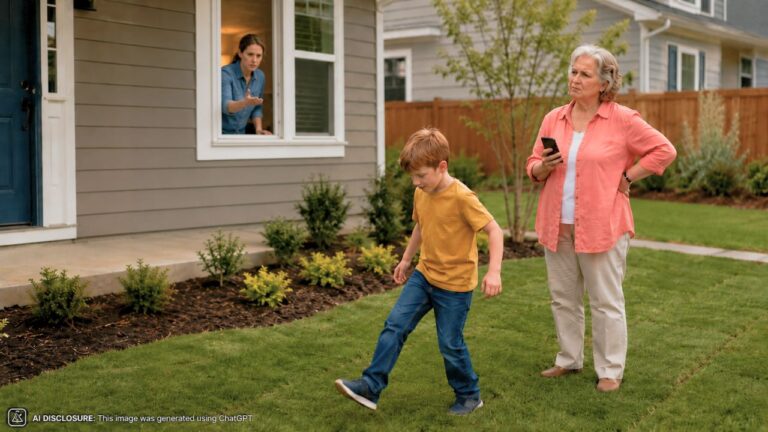
The homeowner describes the neighbor “throwing a fit” about the planned use of the area. That detail matters because it suggests this was manageable when nobody was touching anything. The moment work starts—staking, digging, laying gravel, planting—suddenly there’s a reason to confront.
This is where small projects can spiral into big problems. A simple plan to “utilize the piece” can turn into accusations, threats to call authorities, or constant interference. Even if nobody is doing anything illegal, the stress alone can make homeowners freeze and delay improvements for months.
And practically speaking, it can put you in a bind. Do you pause your project and avoid escalation? Or do you proceed and risk the neighbor escalating it for you?
The question everyone asks: how much does a survey really matter?
The homeowner’s bottom-line question was blunt: how much weight does a property survey hold in court?
It’s the kind of question that comes up when you realize a boundary dispute isn’t just about mowing lines—it’s about what happens if someone digs in, refuses to cooperate, and forces the issue into a legal arena. Surveys feel authoritative, but homeowners also hear plenty of horror stories: old pins missing, fences set “for convenience,” deeds with confusing descriptions, and neighbors who swear a handshake agreement from 1998 should settle it.
What makes this homeowner’s post feel urgent is the sense that the neighbor is treating time as a trump card. The homeowner says the neighbor never filed paperwork to change ownership, yet is acting like the clock alone settled it. That gap—between what’s recorded and what’s asserted—often determines whether a dispute stays a yelling match or becomes a formal, expensive process.
How people reacted: document everything, and don’t let a yard project become your proof
Even without a long comment thread included in the pasted material, the community this homeowner posted to is one that tends to focus on practical proof. In these kinds of disputes, the consistent advice is usually to lean on documentation and process, not on arguing across the fence line.
Homeowners in similar positions are often urged to keep everything in writing once the neighbor gets heated—because the tone can shift from “I’ve always used that” to “I’m going to stop you,” and that’s when misunderstandings turn into allegations.
Another common reaction in boundary disputes: don’t make your landscaping project the thing that “proves” your claim. People suggest sorting out the line first—through whatever formal steps are appropriate locally—so you’re not halfway through improvements when someone decides to challenge you. Once money and materials go into the ground, it’s harder to step back calmly, and easier for the neighbor to claim you were acting aggressively.
And because fences are such a flashpoint, many homeowners also think about visibility and security early—simple steps like photographing the current conditions before any work begins. It’s not about being dramatic. It’s about preventing a later argument over what was where, and when.
Living next to someone who won’t accept “on paper”
The hardest part of these fights isn’t the measuring tape. It’s the long-term reality of living beside someone who rejects the documents you’re relying on.
Even if the homeowner is completely right, the neighbor can still make day-to-day life miserable: glaring, complaints, intimidation, or constant commentary every time you step outside. And if the homeowner is wrong—or if the boundary is legitimately unclear—the “we’re using it now” approach can backfire and deepen resentment on both sides.
For now, the homeowner is stuck in the uncomfortable middle ground: they believe the surveys back them up, they want to use what they say they own, and the neighbor is trying to win the argument with longevity and force of will. That’s a bad recipe for a quiet backyard—and a reminder that sometimes the most expensive part of a home isn’t the roof or the foundation, but a six-foot strip of dirt everyone thought belonged to someone else.
Like Fix It Homestead’s content? Be sure to follow us.