Homeowner With a Legal Right of Way to a Neighbor’s Lot Finds a New Fence Blocking It Completely — Then Has No Way to Reach the Maintenance Access He Kept Clear for Years
Photo credit: AI-generated image created using ChatGPT. Illustrative only.
The homeowner thought they were doing everything right: owning a zero-lot-line property, keeping the narrow side space clear, and relying on a legal right of way to access a neighbor’s lot when repairs and maintenance inevitably came up. It wasn’t about being nosy or cutting through someone else’s yard. It was about being able to reach the parts of their home you can’t safely service from inside.
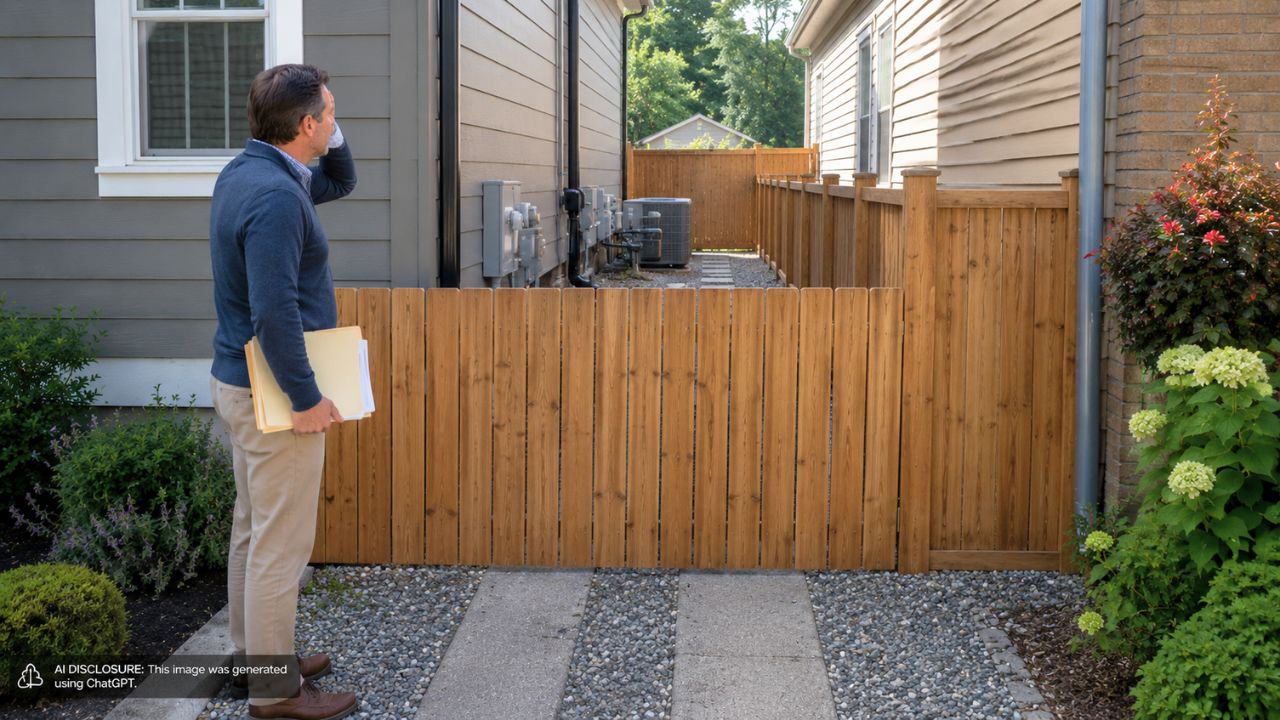
Then a new fence went up next door—on both sides of the access path—blocking it completely. The homeowner laid out the problem in the original post, explaining that they’d kept the area clear for years specifically so future maintenance wouldn’t turn into a major ordeal. Now, with the access shut off, they’re staring at the kind of property dispute that can go from awkward to expensive fast.
The access wasn’t a favor — it was part of how the property works
Zero-lot-line homes come with a special kind of tradeoff. You get a tighter footprint—sometimes a more affordable option, sometimes just the layout of the neighborhood—but you lose the easy “walk around the house” access many homeowners take for granted.
That’s why the right of way matters here. The homeowner described it as a legal access route onto the neighbor’s lot, intended for maintenance and repairs. In other words, it’s the built-in workaround for a design that otherwise leaves you trapped when you need to service siding, inspect an exterior wall, handle drainage issues, or do repairs that physically can’t be done from the homeowner’s own property.
They weren’t casual about it, either. They said they’d intentionally kept that space clear on their side, thinking ahead to future work—both for their own property and “potentially for my next neighbor.” That’s the detail that makes this sting: this wasn’t a random scramble after the fence went up. This was years of planning, now blocked by a few panels and posts.
Then the fence went up, and the route disappeared overnight
The neighbor’s new fence didn’t partially pinch the pathway or create a narrow squeeze. According to the homeowner, it blocks the access completely on both sides. That wording matters, because it implies there isn’t even a workaround like a gate, a removable panel, or a section that can be opened temporarily for contractors.
And when you lose a maintenance easement, you don’t just lose convenience—you lose options. Every exterior job starts to sound like a problem: “How do I reach it?” “Who’s liable if something gets damaged?” “How much extra will a contractor charge if they can’t stage properly?” It can turn a routine repair into a custom, complicated project.
It also sets up a tense neighbor dynamic. Fences feel permanent. Even if they can be modified, they signal that someone has decided where the boundary of cooperation is—and they picked a hard line.
The real pressure is what happens when the house needs work
The homeowner’s post is short, but the stakes are easy to picture. Exterior maintenance isn’t optional forever. A small issue becomes a big one when you can’t reach it: caulk fails, water finds a path, pests find a gap, paint peels, flashing loosens, and suddenly you’re not just maintaining—you’re repairing damage that had time to spread.
Even when the work is simple, the logistics can be brutal. Contractors don’t like guessing games about access. If they can’t get to the work area safely, they may decline the job, charge more, or require written permission from the neighboring property owner.
And if the homeowner ever needs urgent repairs—after a storm, a leak, or a suspected structural issue—waiting for a neighbor to “be reasonable” stops being a polite inconvenience. It becomes a clock ticking on preventable damage.
They want to keep it friendly, but the next move matters
The homeowner emphasized they want an amicable solution. That’s the instinct most people have at first: knock on the door, explain the issue, and hope the neighbor says, “Oh, I didn’t realize—let’s add a gate.”
But the way the fence is described—blocking access on both sides—suggests the neighbor either didn’t know about the right of way or didn’t consider it important. Either possibility can go sideways. If it’s ignorance, the conversation might fix it quickly. If it’s defiance, the same conversation can harden positions.
There’s also a common trap in these disputes: the longer you wait, the more “normal” the blockage becomes. What starts as a new fence can turn into a “that’s how it’s been” argument, even if the legal paperwork says otherwise. The homeowner’s urgency feels less like panic and more like recognizing the timing problem.
Reactions centered on paper trails and boundaries, not shouting matches
While the post itself asks broadly what options exist, it’s the kind of scenario where practical minds tend to focus on documentation first. When rights of way and maintenance access are involved, feelings don’t carry much weight compared to recorded easements, plats, deed language, and property surveys.
Homeowners who’ve been through similar messes often treat the first steps like building a file: gather the documents that describe the right of way, mark the exact area it covers, and make sure the boundary and easement location are unambiguous. Not because everyone wants to escalate, but because vague claims like “I’m pretty sure I’m allowed to go there” don’t survive the first serious disagreement.
Just as important is keeping the approach calm and trackable. “Amicable” doesn’t mean “informal.” It often means communicating clearly, sticking to what the property documents say, and avoiding confrontations that turn into personal feuds. Once a neighbor dispute becomes a pride contest, even simple fixes—like a gate, a fence relocation, or temporary access agreements—get harder to negotiate.
A fence is wood and nails — but it can lock up years of planning
The homeowner’s frustration is easy to understand because they did the boring, responsible thing for years: keep the access area clear, plan for maintenance, and assume the right of way would be there when needed. Now they’re forced into the opposite mode—reactive, uncertain, and potentially stuck—because a single change next door erased their practical ability to maintain their own home the way the property was designed to be maintained.
This is how neighbor disputes become home-repair disputes. The fence isn’t just a fence if it blocks the only route for upkeep. It’s a new barrier between a homeowner and basic responsibility for their property—and it turns “someday maintenance” into “figure this out now, before something breaks.”
For the homeowner, the immediate challenge is choosing the next step that keeps the peace without giving up the access they’ve relied on. Because once the next repair comes due, the house won’t care how polite the conversation was. It will just need to be fixed.
Like Fix It Homestead’s content? Be sure to follow us.
- Man Says He Found Out the Fence He Paid For Wasn’t Actually on His Property
- Woman Says Her Neighbor Started Taking Mulch From Her Delivery Pile Before She Could Even Spread It
- I made Joanna Gaines’s Friendsgiving casserole and here is what I would keep
- What Caliber Works Best for Groundhogs, Armadillos, and Other Digging Pests?