Buyer Considers a Landlocked New York Property With a Deeded Right of Way — Then Finds the Neighbor Blocking It After Cutting Down Trees He Wasn’t Supposed To
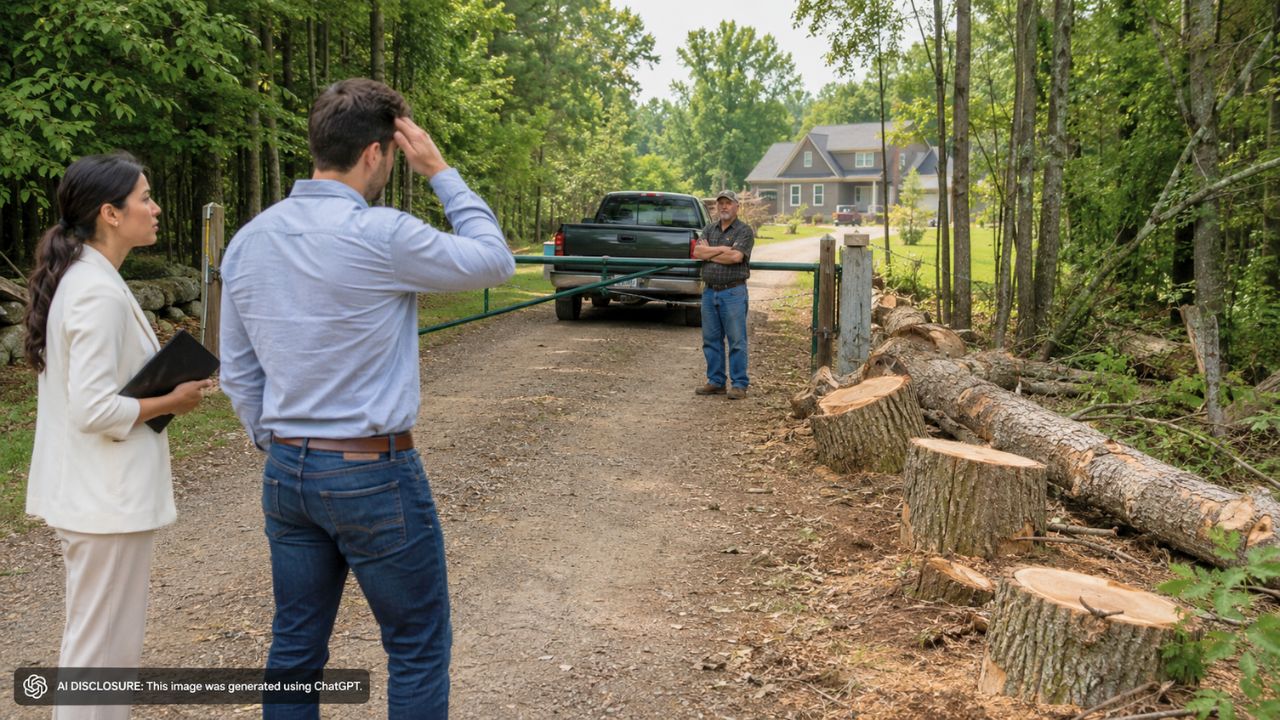
Photo credit: AI-generated image created using ChatGPT. Illustrative only.
It started like one of those deals that makes you pause and reread the listing: a cheap piece of land in New York that looks like a steal—until you learn it’s landlocked and the only way in is through a deeded right of way that the neighbor is currently blocking.
In the original post, a buyer said they were interested in purchasing the property, and the realtor assured them there is a right of way on paper. The problem is that the neighbor is allegedly blocking that access after a dispute over trees that were cut down when they “weren’t supposed to.” The seller, the buyer wrote, doesn’t want to touch a lawsuit—so the land is priced low, with the access fight baked in.
A bargain that comes with a gate you can’t open
Landlocked property can be fine—if the access is real, usable, and enforceable. But when the only driveway or lane you’re relying on is controlled by someone else’s mood, it stops being a “quirk” and becomes the whole property.
That’s the corner the potential buyer found themselves in. They’re tempted by the price, but they’re staring at a practical nightmare: owning land you can’t legally or physically reach without a fight.
And it’s not just a future worry. The neighbor is already blocking the way, right now, before the buyer has even signed anything.
The tree-cutting detail is the spark that makes it messy
The buyer relayed that the blockage is connected to trees that were cut down when they weren’t supposed to be. That kind of detail matters because it hints at a feud, not a simple misunderstanding about property lines.
Tree disputes tend to get personal fast. People don’t just argue about timber value; they argue about privacy, boundaries, and “who thinks they can do what around here.” If the access route runs along the edge of someone’s property, it doesn’t take much for resentment to turn into rocks, fencing, parked vehicles, or “accidental” obstructions.
Even without a full timeline, you can feel the dynamic: someone thinks they were wronged, and the easiest leverage they have is the path in and out.
Paper rights versus real-world access
The buyer said the realtor told them the property has a right of way. That phrase sounds reassuring, but anyone who’s lived around shared driveways and rural easements knows the difference between “it exists” and “it works.”
A deeded right of way may be spelled out clearly, or it may be vague—an old description, a width that’s not obvious on the ground, a route that has shifted over time, or language that doesn’t match what’s actually driveable.
And even when it’s perfectly written, enforcement is its own expensive project. If a neighbor decides to block it, the owner of the landlocked parcel can end up spending serious time and money proving the easement, demanding compliance, and getting it cleared. Meanwhile, you still can’t get a vehicle to your own land.
That’s why this listing is “very cheap for what it is,” as the buyer put it. The price isn’t reflecting the land. It’s reflecting the conflict.
The seller walking away tells you what you’re buying
One of the loudest details in the post is that the seller doesn’t want to deal with lawsuits. That’s understandable on a personal level, but it’s also a flashing warning to any new buyer: the current owner is essentially saying, “I don’t want to be the one to fight this.”
When a seller prices a property to avoid confronting an access problem, they’re not just discounting land—they’re passing the burden of enforcement. A buyer isn’t only purchasing acreage; they’re purchasing a dispute that already has momentum.
And disputes like this don’t reset when the deed changes hands. If the neighbor is already angry, a new owner can inherit the same hostility and the same obstruction, with the added complication that the neighbor may see the new buyer as an outsider trying to “push through” what the last owner wouldn’t.
The first practical question: is it legal to block it?
The buyer’s most immediate question was simple and urgent: is it legal for the neighbor to block the way?
They also mentioned they’ll be reaching out to a lawyer and wondered how long this could take. That’s the other thing people don’t always factor in with landlocked access: time can be as expensive as money. If you plan to build, hunt, camp, farm, or even just maintain the property, delays can ruin seasons and schedules. You can’t maintain fencing, clear brush, or bring in materials if the route is blocked.
Even basic ownership tasks—like walking the property, checking for dumping, or keeping an eye on trespassing—get harder when your access depends on whether someone else feels like cooperating that week.
The buyer floated the idea of signing a contract contingent on “this working out.” That’s the posture of someone who knows the deal could be great, but only if the access problem is resolved in a concrete, enforceable way—not just promised verbally.
How people reacted: “Don’t buy the lawsuit with the land”
The pasted post doesn’t include a full comment thread, but the framing alone is familiar to anyone who’s seen these deals play out. When access is being actively blocked, experienced homeowners tend to focus on proof, documentation, and enforceability before they get emotionally attached to the “cheap” price.
In other words: don’t treat a deeded right of way like a magic key if the lock is already being jammed. If you’re considering buying something like this, the big question isn’t whether the right of way exists—it’s whether you can actually use it without spending years and thousands of dollars forcing compliance.
The other predictable reaction is to avoid becoming the next person holding the bag. If the current owner is unwilling to press the issue, that often signals the fight won’t be quick, friendly, or cheap. People back away from that kind of uncertainty for a reason.
Still, some buyers do move forward—especially when the land is priced far below market and they have the patience, cash, and appetite for conflict. But it’s not a normal purchase anymore. It’s a project, and the first “repair” is legal access.
The buyer in this case seems to understand that, and they’re doing the one smart thing you can do early: pause, talk to a lawyer, and treat the right of way as the deciding factor—not a footnote. Because until that path is open, the property isn’t just cheap. It’s stuck.
Like Fix It Homestead’s content? Be sure to follow us.
- Man Says He Found Out the Fence He Paid For Wasn’t Actually on His Property
- Woman Says Her Neighbor Started Taking Mulch From Her Delivery Pile Before She Could Even Spread It
- I made Joanna Gaines’s Friendsgiving casserole and here is what I would keep
- What Caliber Works Best for Groundhogs, Armadillos, and Other Digging Pests?