Homeowner Steps Outside Just in Time to Catch a Contractor About to Cut Seventeen Inches Off Her Lawn — Then Learns the Neighbor Never Asked Before Ordering the Driveway Extended
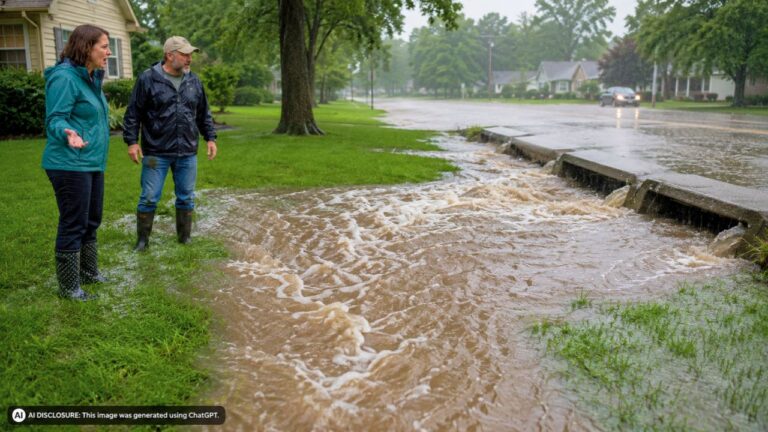
Photo credit: AI-generated image created using ChatGPT. Illustrative only.
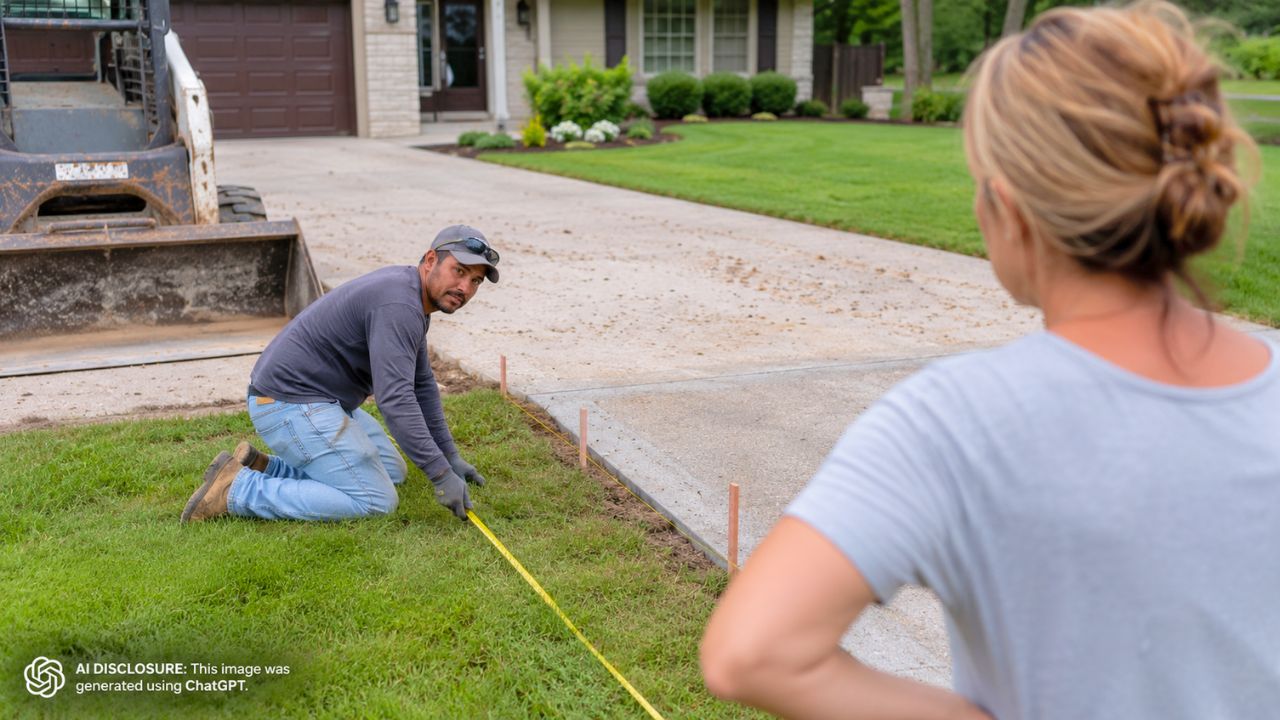
She was just trying to get to her car when a neighbor’s relative and a contractor flagged her down in the driveway. They weren’t there to chat. They were there to tell her they were about to take 17 inches of her front lawn—today—to widen the neighbor’s driveway all the way back to the fence line.
In the original post, the homeowner described how close she came to missing it. If she’d left a few minutes earlier, she likely would’ve come home to a new strip of concrete where grass used to be, with no warning and no conversation beforehand.
A morning interruption that changed everything
The way the homeowner tells it, the crew’s plan was simple: extend the neighbor’s driveway straight back, using the backyard fence line as the visual guide, then continue that line forward to the street. The problem was that her backyard fence ends before the front yard does, leaving a band of lawn—about 17 inches—stretching beyond the fence line toward the neighbor’s side.
She’d always treated that strip as hers. She mowed it, maintained it, and stopped when she hit the neighbor’s existing driveway where the cement begins. In day-to-day life, that’s how property lines feel: you care for what’s in front of you, and patterns become “truth.”
But a contractor with a crew and a schedule doesn’t run on feelings. He runs on the plan in his head, and on whatever the person paying him told him. And that morning, he was ready to cut into turf she believed belonged to her.
No survey, no permit, and no warning
When she pushed back, she ran into the most frustrating kind of homeowner limbo: she didn’t have a survey in hand, and she couldn’t point to an official marker and say, “That’s the line.” She knew what she’d been maintaining, but she didn’t know what a recorded boundary would say.
What made her angrier wasn’t just the potential land grab. It was the total lack of notice. No knock on the door the day before. No “Hey, we’re planning to widen the driveway—can we talk about where the line is?” Just workers showing up ready to remove part of her yard.
She asked the contractor for basics: a permit, and something identifying where the property line actually sits. According to her account, he couldn’t produce either. Instead, he repeated his method—drawing a straight line from the fence to the street—like that alone settled it.
That’s the moment where a lot of homeowners realize how quickly a neighbor project can become their emergency. If the concrete goes in, the fight changes. It’s no longer “don’t do this.” It becomes “undo what you did,” which is always harder, louder, and more expensive.
Seventeen inches doesn’t sound like much—until it’s concrete
On paper, 17 inches is less than two feet. In a front yard, it can feel like nothing. But in real life, it’s enough to change the look and function of a property line overnight.
For the neighbor expanding the driveway, 17 inches could mean the difference between squeezing by and having a comfortable approach to the backyard. For the homeowner losing it, that strip isn’t just grass. It’s usable space, curb appeal, and a boundary she’s been caring for like it’s hers.
And once a driveway is poured, you don’t just “put the lawn back.” You’re talking about demolition, hauling, grading, and restoration. Even if the concrete comes out, the soil underneath may be compacted or disrupted. The fix isn’t just cosmetic; it can turn into drainage quirks, muddy patches, and a front yard that never quite grows the same.
The homeowner included a Google Street View-style image with a red line showing where the neighbor intended to extend the driveway. The visual clarified why it felt so aggressive: the extension wasn’t a small flare at the street. It was a long push back along the side, reaching toward the backyard fence line.
Contractors follow instructions—neighbors live with the results
One of the messiest parts of these disputes is that the contractor is rarely the real decision-maker. The crew shows up to execute a job. If the person paying says, “This is my property,” the contractor may accept it, especially if nobody stops them before the saws and forms come out.
But the homeowner’s questions were the right ones for that exact moment: Where’s your permit? Where’s your proof of the line? Who decided this boundary? The contractor’s answer—using the fence as the guide—might be convenient, but fences aren’t always installed on the line. Sometimes they’re set back on purpose. Sometimes they’re placed wrong. Sometimes they zig and jog around old obstacles.
And front lawns often have their own surprises: old driveway remnants, utility easements, city right-of-way, or shared access patterns that made sense decades ago but don’t match modern expectations. None of that is solved by “we’re making a straight line.”
What left her feeling stuck was the speed. She wrote that she couldn’t stop the work from happening and could only hope to reverse it afterward. That’s a brutal feeling—watching something permanent get planned on a timeline you didn’t choose.
Reactions focused on proof, paper trails, and slowing the pour
Even without the full thread of replies included, the direction of homeowner-to-homeowner advice in these moments is usually consistent: don’t argue from the hip; argue from documentation. When someone is about to alter a boundary area, the first priority becomes slowing things down long enough to confirm where the line actually is.
That means getting the basics lined up: recorded surveys, property descriptions, pins if they exist, and local permitting requirements if a driveway expansion triggers them. If a contractor can’t show a permit when one is required, that’s often the only leverage a surprised neighbor has in the moment—because it’s not about who’s right; it’s about whether the work is allowed to proceed today.
It’s also the kind of scenario that pushes people to document everything fast: photos of the existing lawn, the edge where mowing typically stops, the fence termination point, and any markings the crew puts down. Because if the worst happens and the strip gets cut or poured, the before-and-after becomes the evidence.
Homeowners who’ve been through similar fights tend to stress one thing: keep it calm, keep it written, and don’t rely on a handshake. Not because you want war with your neighbor, but because misunderstandings become “memories” quickly once concrete is on the ground.
The real damage was the relationship hit
The homeowner’s anger wasn’t hard to understand. This wasn’t a leaf blower dispute or a loud music complaint. This was someone arriving with heavy work planned for the edge of her property without asking first.
Even if a future survey somehow shows the neighbor is correct, the method—show up and take it—creates lasting tension. It turns a next-door relationship into a boundary enforcement problem, where every future project feels like it needs oversight.
If the neighbor is wrong, the stakes get even heavier. Then it’s not just a driveway extension—it’s an encroachment that can complicate resale, title questions, and years of awkward conversations every time someone parks, shovels snow, or redoes landscaping.
That morning, she caught it just in time to ask the questions that should’ve been answered before a single inch of lawn was touched. But the larger issue didn’t go away when the conversation ended. Once a driveway expansion is on the schedule and the contractor is on site, “just 17 inches” becomes exactly the kind of problem that can swallow a whole summer.