Homeowner Discovers a Neighbor’s New Fence Left Her Sprinkler Heads on the Wrong Side of the Line — Then He Hires Someone to Move Her Sprinklers Instead of the Fence
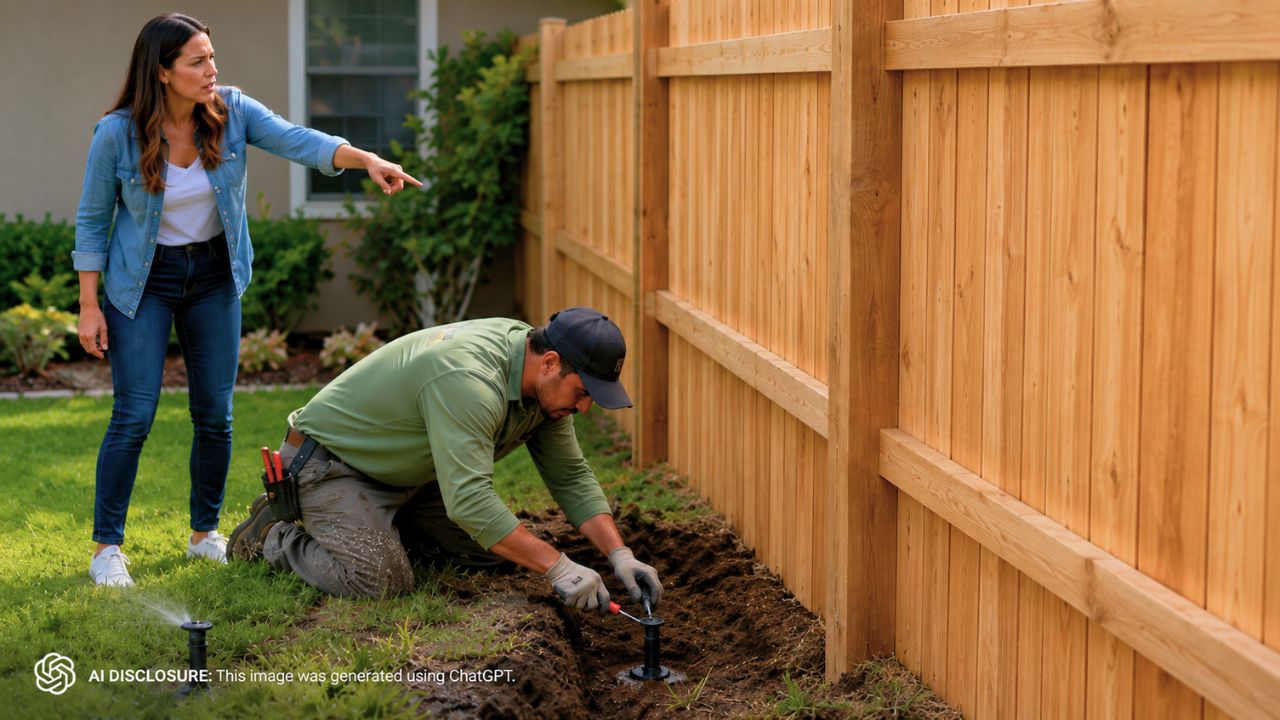
Photo credit: AI-generated image created using ChatGPT. Illustrative only.
It started the way a lot of property-line headaches do: a fence goes up in winter, everything looks fine under a layer of snow, and nobody thinks twice until spring. Five years of peace with the next-door neighbor, and then—when the homeowner went to turn on her sprinklers—she realized the heads were now sitting on the “wrong” side of the new chain-link fence.
In the original post, she explains that she’s planning to sell her house this year, which turns a minor annoyance into a real problem. A buyer’s survey doesn’t care that everyone “gets along.” If a fence is over the line, it’s over the line—and it can derail a sale fast.
The first clue was the sprinklers, not the fence
The fence was installed during winter without a survey. With snow on the ground, the homeowner says you couldn’t see sprinkler heads that would have given away where the yard infrastructure actually sat.
Once she tried to fire the system up for the season, the surprise was immediate: her sprinkler heads were on the far side of the fence. She says she normally wouldn’t even care about that strip of side yard, but selling changes everything. “Up to code” isn’t just a phrase when closing paperwork starts stacking up.
So she did the normal neighbor-to-neighbor thing: she asked him to move the fence. She even pointed out it was chain link, the kind of fencing that’s often easier to shift than solid privacy panels.
He didn’t offer to move the fence—he offered to move her yard
Instead of agreeing to adjust the fence line, the neighbor told her it was “all good” because he had already hired someone to come move her sprinkler heads over. In his mind, if the sprinklers were relocated, then the fence placement “wouldn’t matter.”
But for anyone who has sold a house (or tried to), the problem isn’t where the sprinklers sit. It’s the encroachment. She told him no—because when a survey is done for a sale, the fence would still be sitting on her property and would still need to be moved. Then she’d be stuck paying to move the sprinkler heads back to where they belonged in the first place.
When he refused to cancel the contractor, she says she tracked down the person he hired and canceled the work herself. That wasn’t the end of it. She says the neighbor tried twice again to send the contractor back to move the sprinkler heads, and she stopped it both times.
The cash offer made it feel less like a mistake
After she asked again for the fence to be moved, the neighbor changed tactics. He offered to buy her house for cash—for what she owes on her mortgage, not what the house is worth. She’d lose “a ton of money” by taking that deal, she said, and declined.
She also pointed out something that’s hard to argue with: even if she wanted to sell, the fence would still have to be addressed for any normal transaction. A quick cash purchase that ignores the market doesn’t solve the underlying boundary problem. It just moves it around and tries to make it disappear.
Next, he proposed paying for a new survey and buying the strip of property where his fence sits. That kind of sounds reasonable until you get to the part that makes this whole thing combustible: structures and zoning setbacks.
The survey came back, and it wasn’t close
The homeowner says the survey found the fence is 40 inches onto her property. Not a couple inches from a sloppy post hole. Over three feet.
Worse, she says the fence is touching the back of her shed. She also learned that his shed is on her property too, which turns “oops, the fence is off” into a bigger pattern of boundary use.
At that point the neighbor again asked to buy the land and make the fence the new property line. That’s when the homeowner brought up the detail that matters to anyone dealing with permits and code enforcement: her city zoning laws require the shed to be at least 36 inches from the property line.
With the correct line, her shed is compliant. If the neighbor’s fence becomes the line, her shed becomes noncompliant—instantly. That’s not just inconvenient; it’s the kind of thing that can blow up during a sale when a buyer’s lender, appraiser, or inspector starts asking questions.
Then he offered to replace her shed with a smaller one
Rather than accept the simplest fix—move the fence back to where it belongs—the neighbor escalated again. The homeowner says he told her he would pay to have her shed torn down and rebuilt with a smaller shed, because hers is “too big anyway.”
She refused, and her reasons weren’t cosmetic. She needs that shed size to store a tractor in winter, and it also houses her pool pump and filter. Relocating or rebuilding isn’t just swapping a box—it means redoing piping and electrical. She describes that as costing thousands of dollars and being “very complicated.”
Through all of this, she kept coming back to the same point: moving the fence is the cheapest and simplest option. He was willing to spend serious money on everything except the one fix that actually resolves the boundary issue cleanly.
“I gifted you the fence” and the question that follows
The neighbor’s latest response, according to the homeowner, is that he has “gifted” her the fence and if she wants it moved, she can move it. In other words: he’s done, and the problem is hers now.
That’s where the post turns from frustration to that tight, specific homeowner rage: she asks whether she’d be wrong if she just tears it down this weekend. Not someday, not after a long back-and-forth. Now—because she’s staring at a surveyed encroachment while trying to get her property ready to sell.
The post itself is labeled “Not the A-hole,” reflecting how readers reacted to the basic idea that you can’t just build onto a neighbor’s lot and then treat their sprinklers, their shed, and their future sale as movable obstacles.
Even without a full comment thread included, the practical undercurrent is obvious: once you have a survey showing a 40-inch encroachment, the pressure shifts. It’s no longer a vague “I think the fence is off.” It’s documented, measured, and tied to real zoning setbacks and real utility hookups.
For this homeowner, the hard part isn’t recognizing the problem—it’s that every “solution” the neighbor offers seems designed to keep the fence exactly where it is, even if it means rearranging sprinklers, rewriting property lines, or tearing down a working shed that supports her day-to-day life. And with a sale on the horizon, she’s left staring at the mess that started with a winter fence and somehow turned into a full-blown fight over whose land it really is.
Like Fix It Homestead’s content? Be sure to follow us.