Rural California Landowner’s Split-Rail Fence Gets Replaced With Tall Privacy Fencing on Her Side of the Line — Then the Neighbor Ignores Both a Letter and a Certified Letter Asking for Proof
Photo credit: AI-generated image created using ChatGPT. Illustrative only.
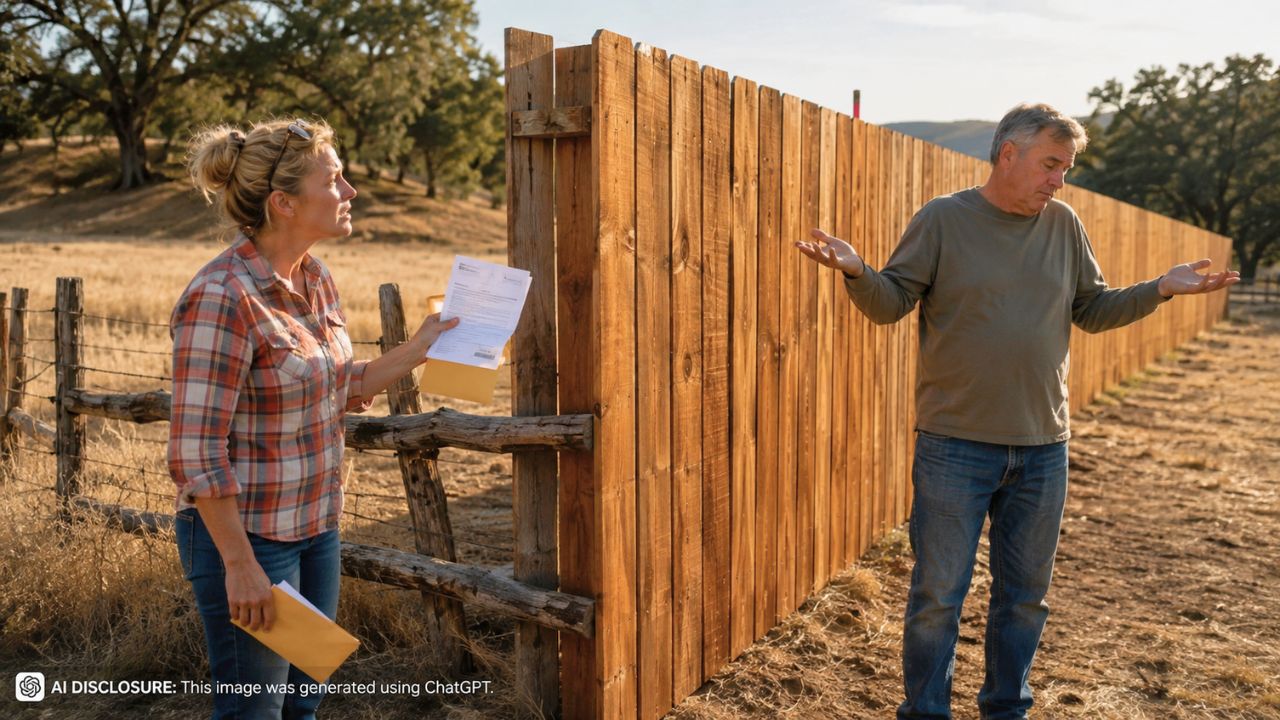
In a rural, ranch-like corner of California, one landowner looked up and realized the familiar split-rail fence line she’d lived with for years was gone. In its place: tall privacy fencing—installed without a heads-up, without a knock on the door, and (as it turned out) not even on the right side of the property line.
She laid out the whole mess in the original post, describing an L-shaped lot and an unfriendly neighbor who moved into the “nook” in front of her about two years earlier. The fence used to feel like a normal rural boundary. Now it felt like a wall someone built where it didn’t belong.
The old split-rail disappeared, and nobody asked permission
The homeowner had been on the property around 10 years. The neighbor was newer, and “not long after moving in,” replaced the shared-looking split-rail with tall privacy fencing—without communicating first.
At the time, the homeowner wasn’t 100% sure where the legal line fell compared to the existing fence. Still, she suspected the fencing that got torn out and replaced had been on her land. That’s a bad feeling in the country, where boundaries are often marked by habit and handshake as much as paperwork—until someone swaps a casual fence for something that screams “mine.”
Two letters, including a certified one, got ignored
Instead of starting with threats, she started with documentation. She wrote a letter telling the neighbor she suspected the fence had been hers, asking them to provide records proving it belonged to them, and requesting they remove what they installed and restore the split-rail they tore out.
No response. So she followed up with a certified letter. Still no response.
That silence is what pushed the issue from “maybe this is a misunderstanding” into something sharper. If a neighbor believes they’re right, they usually show you what they’ve got—survey, deed description, whatever. When they won’t even answer the mail, it leaves the other side holding the entire burden of proving reality.
The survey made it real—and revealed the scary part
Eventually she paid for a survey. The results confirmed what she feared: the privacy fences weren’t just aggressive-looking, they were physically on her land.
On one boundary, the neighbor’s side of the fence sat about two inches onto her property. Two inches might sound petty until you’re trying to sell a home and the buyer’s agent starts asking about encroachments.
On the other boundary, it was far worse: about two feet over the line. And then came the detail that turns this from a property-line squabble into a practical homestead problem—she realized her gas line was buried on what had effectively become the neighbor’s side of the fence.
That’s the kind of thing rural owners worry about: not just who owns which boards, but who has access when something breaks, who gets blamed if digging happens, and how quickly a “fence issue” can become a utility issue.
Law enforcement showed up, but it stayed a civil fight
With survey results in hand, she sent another letter. This one included a copy of the survey, pointed out where the gas line was, and demanded removal of the installed fences and restoration of the fencing that had been destroyed. Again, no response.
She tried another route: the sheriff. The deputy wouldn’t review survey documents or monuments, explaining it was a civil matter. The sheriff did speak with the neighbor, and came back with a simple takeaway: the neighbor believed the fences were theirs.
That’s a familiar frustration for homeowners. You can be standing next to a survey stake, holding paperwork, and still get told, “This isn’t criminal.” Meanwhile the physical object is still there, affecting access, value, and your ability to use your own land normally.
Pressure builds because the home is about to hit the market
This wasn’t just about pride or aesthetics. The homeowner was preparing to sell the property, and she didn’t want a fence encroachment hanging over the deal like a dark cloud.
She also noted that an adverse possession claim shouldn’t apply because the neighbor hadn’t been there long enough. Her area didn’t require permits for fences, so there wasn’t an easy code-enforcement lever to pull either.
The big problem was time. She understood that a lawsuit could lead to a court order and potentially money for the fence restoration, the survey, and legal fees. But she also expected it could take a long time—possibly a year—just to get a court date. That timeline doesn’t match a “listing soon” schedule.
So she floated the option that many stressed-out homeowners eventually consider: remove the privacy fence herself, rebuild the split-rail, and then go to small claims to recover costs.
Commenters zeroed in on the risk of “self-help” and the value of paperwork
In responses, the practical theme that usually comes up in these disputes is that being right on a survey isn’t the same thing as being protected from the headache of escalation. Taking down a fence yourself can invite retaliation, counterclaims, or a fast-moving neighbor who suddenly starts documenting everything once the boards come down.
At the same time, the homeowner had already done what people always say to do: she documented her concerns in writing, used certified mail, and paid for a survey. She wasn’t guessing anymore. She could point to inches on one edge and feet on the other.
Her remaining questions were the kind that keep people up at night: Who owns a fence built on someone else’s land? If she removes it, does she have to return the materials? Could she get in trouble for removing it without a court order, even with a survey and a paper trail showing she warned them?
That tension—between the practical urge to fix your own property and the fear of triggering an even bigger legal mess—is where neighbor disputes tend to stall. Especially when one side refuses to talk.
For now, the privacy fencing is still standing where the split-rail used to be, and the homeowner is left balancing three unpleasant options: wait out a slow court process, risk self-removal and potential backlash, or try to sell with the boundary dispute unresolved. In rural living, fences are supposed to keep things simple. Here, it did the opposite—turning a familiar property edge into a silent, stubborn standoff made of posts, panels, and two feet of someone else’s “new normal.”
Like Fix It Homestead’s content? Be sure to follow us.