Homeowner Starts Parking in a Shared Driveway After a Neighbor Uses It Without Permission for a Year — Then He Comes to the Door Demanding to Know “What the Deal Was”
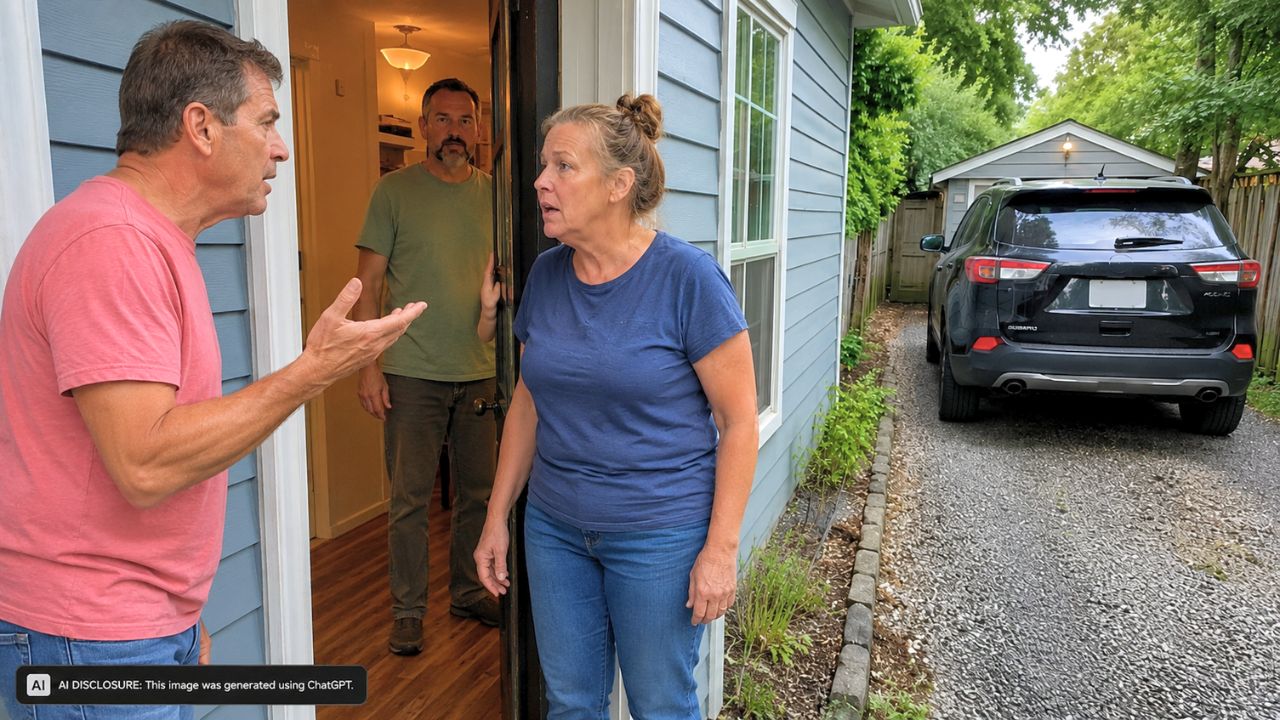
Photo credit: AI-generated image created using ChatGPT. Illustrative only.
It started like a minor oddity: a driveway that technically served two properties, one occupied and one vacant. But after months of watching neighboring trucks barrel down it at all hours—without asking and without helping maintain it—the homeowner finally did the simplest thing they could think of. They started parking in the driveway to stop the traffic.
That’s when a neighbor showed up at the door demanding an explanation. In the original post, the Tennessee homeowner describes how a “shared” driveway turned into a year-long battle over access, damage, and a neighbor who insisted he had rights he couldn’t—or wouldn’t—prove.
The driveway was “shared,” but the behavior wasn’t
The property layout is the kind that can look normal on a map and become a headache in real life. The homeowner’s driveway leads to two parcels: their home and the lot next door, which has been vacant for the entire year they’ve lived there. That vacant lot became the loophole.
Neighbors on the opposite side of the vacant property were using the homeowner’s driveway “a lot” to get behind the house and access the area behind that empty parcel. It wasn’t an occasional turnaround. The homeowner described people “tearing” up and down the driveway at all hours, the kind of activity that makes you listen for engines in your sleep.
Worse, the driveway needed help. Gravel and maintenance weren’t optional if it was going to survive regular truck traffic. Yet nobody using it offered to contribute—and nobody even asked permission.
Parking in the drive forced the first confrontation
Instead of putting up a sign or starting with a legal letter, the homeowner chose a practical move: they parked in the driveway to physically interrupt the flow. It worked immediately, not because it stopped the trucks forever, but because it finally triggered a conversation.
A neighbor came knocking, asking “what the deal was.” The homeowner responded with what they believed was the basic truth: there was no easement with any of the surrounding properties, not even the vacant lot. And if the neighbor wanted driveway access, it would need to be handled like adults—help pay for gravel and maintenance, and agree to a curfew so it wasn’t chaos around the clock.
The neighbor agreed. For a moment, it sounded like the kind of uneasy rural compromise that can actually hold: you share a path, you share the cost, and everybody stays respectful.
A year later, the driveway was still getting used—and still getting destroyed
The agreement didn’t survive contact with reality. The homeowner said that over the next year, there was “absolutely no effort” from the neighbor to help with upkeep. When the driveway needed gravel, the homeowner paid for it and had it spread on their own dime.
Meanwhile, the traffic continued. Big trucks kept using the driveway, and the homeowner said the use was disrespectful and hard on the surface. It’s not just the money; it’s the feeling of watching your property get worn down while someone else treats it like a free road.
Eventually the homeowner told them to stop. They tried parking in the driveway again. And when that still didn’t feel like enough, they started talking about building a fence to the end of their property around the driveway—essentially turning the “share” into a hard boundary.
The easement claim didn’t match the homeowner’s paperwork
When people want access, they often reach for one magic word: easement. The neighbor claimed he had an easement with the vacant property next door. The homeowner didn’t buy it.
In the homeowner’s closing documents, the language they remembered was specific: “there is a shared driveway with a vacant property” and “there will need to be a sharing agreement if the property becomes inhabited.” To the homeowner, that read like a warning about future arrangements, not permission for unrelated neighbors to treat the driveway like public infrastructure.
But easement talk gets messy fast, especially when “vacant” doesn’t mean “simple.” The homeowner later discovered something that made the whole thing feel even more unsettled: the vacant property’s owner had reportedly been dead since 2014. That raised new questions about who was responsible for the parcel, who was paying the taxes, and whether any old easement existed from years before.
Then the vacant lot turned into a junkyard—and the stakes jumped
The homeowner added another detail that changed the tone from annoying to alarming. The only reason the neighbors were going behind the vacant property, they said, was because they were using that backyard as a junkyard for old cars and car parts.
That matters because junkyard-like storage isn’t just unsightly—it can attract complaints, environmental questions, pests, and safety issues. It also suggests the traffic isn’t incidental; it’s supporting an ongoing use that the homeowner never agreed to facilitate.
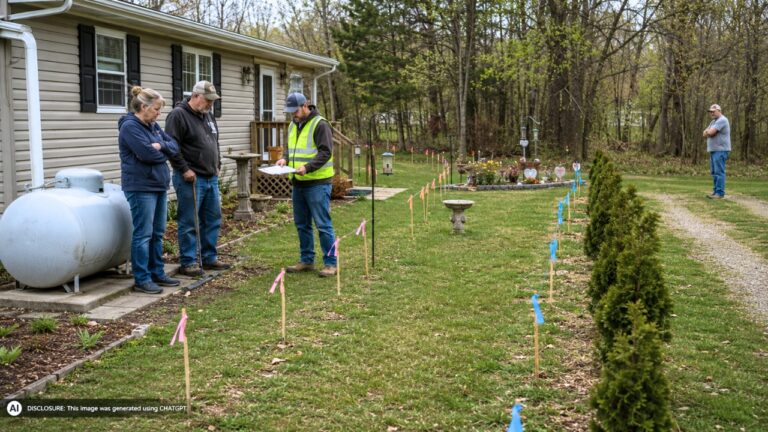
The homeowner began making calls. Planning and zoning couldn’t confirm much because the home wasn’t within city limits, but the person they spoke with was described as very helpful. From satellite view, the junkyard was visible, and the homeowner was told the neighbor was “100% trespassing.” The advice: take it to the sheriff’s office.
At that point, the homeowner chose to slow down—not because they were giving up, but because they wanted proof. They planned to wait until security cameras arrived so any confrontation, threats, or continued use would be documented.
People pushed documentation first, and escalation showed up anyway
In stories like this, the most practical voices tend to focus on two things: documentation and clear boundaries. The homeowner was already heading in that direction—confirming jurisdiction, looking up assessments, checking tax status, and planning cameras before making a formal complaint.
The trustee’s office added another layer. The property taxes for the vacant lot had been paid the previous year but not yet for the current year, and the listed owner was still the deceased woman. The homeowner’s next mission became figuring out who was paying taxes and whether contacting the deceased owner’s daughter would be appropriate—because someone, somewhere, still had a legal tie to that parcel.
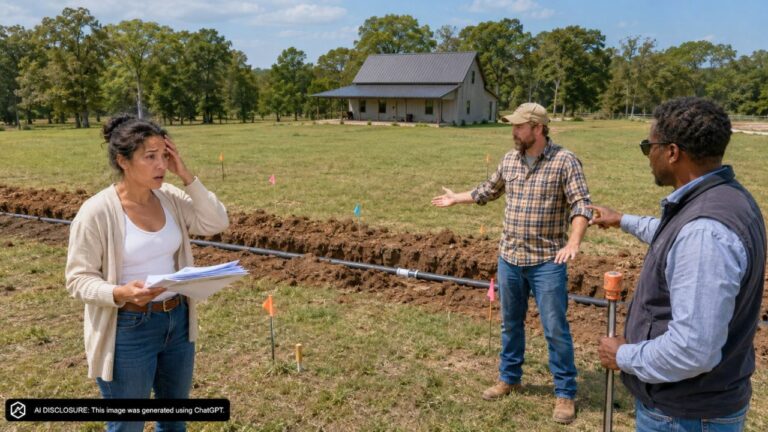
Then, just when it seemed like the homeowner was trying to de-escalate and gather evidence, the neighbors escalated on their own. In a later update, the homeowner reported the neighbors brought in an excavator and were digging a path from their property to the vacant lot.
That’s the kind of move that makes a driveway dispute feel like it’s turning into a land-use fight. It also suggests the neighbors expected to keep using that vacant parcel, one way or another—driveway or no driveway.
For now, the homeowner is stuck in the most frustrating phase of a property conflict: you know what’s happening, you’ve tried being reasonable, and you can feel the pressure building, but you also know one wrong step could make it more volatile. Cameras, records, and official channels may not be as satisfying as blocking the driveway today—but when heavy equipment starts showing up next door, “satisfying” isn’t the goal anymore. Safety and proof are.
Like Fix It Homestead’s content? Be sure to follow us.