New North Carolina Homeowner Puts Up a Post-Survey Fence — Then a Twenty- to Thirty-Year Neighbor Threatens Over an Old Dock Stake, Claiming Up to Five Feet of Encroachment
Photo credit: AI-generated image created using ChatGPT. Illustrative only.
A new homeowner in North Carolina thought they were doing everything the right way: buy the house, get a survey, then build a fence so the dog can finally run free. Five months later, the peace was gone. A neighbor who’s lived next door for decades started warning that the fence was sitting on her land—anywhere from a foot to “up to five feet,” depending on which story you believe.
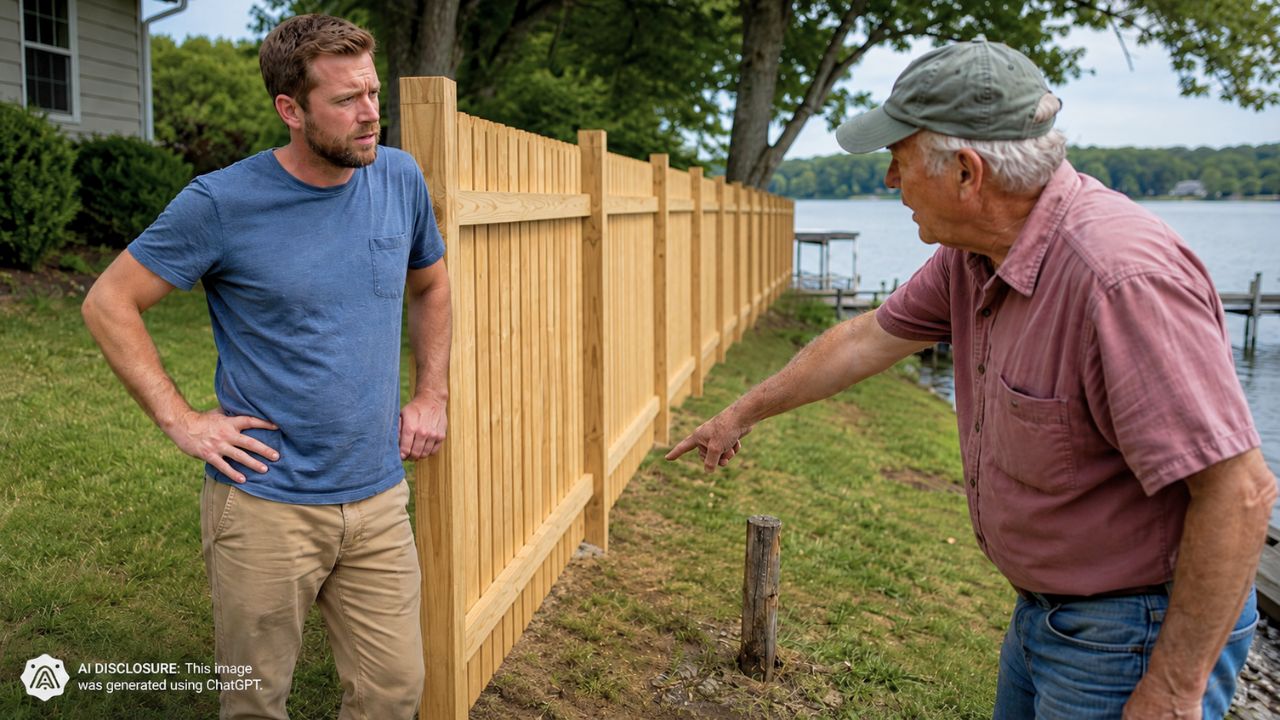
The homeowner laid it out in the original post: the neighbor pointed to an old dock area and a metal stake in the ground as “proof” of the real border. If that stake was the true marker, the homeowner’s fence would be three to four feet over the line. Stress spiked fast, and the tone wasn’t exactly neighborly.
The fence went up after a survey, not a handshake deal
This wasn’t someone eyeballing the boundary and hoping for the best. The homeowner said they had a survey completed before putting up the fence, which is the step most people skip until it’s too late. They built the fence, settled into the place, and figured the hard part was done.
Instead, months later, they got hit with accusations of encroachment. Not an “I’m worried” conversation—threats. The neighbor was adamant that an older reference point, tied to a prior owner’s dock and an old fence line, proved the new fence had crossed onto her property.
That’s the thing about old stakes and long-ago structures: they feel authoritative because they’re physical. But in a lot of yards, metal stakes and “my dad always said the line was here” markers can be leftovers from something unrelated, moved over time, or never meant to be the legal boundary in the first place.
A decades-long neighbor leaned on history—and pressure
The neighbor, according to the homeowner, has been there 20 to 30 years. That kind of tenure can create a sense of ownership that goes beyond the deed—especially if previous owners were passive, absent, or simply didn’t push back.
The neighbor said she would share her own survey, which the homeowner suspected was much older. That set up a classic face-off: the new survey tied to the new fence versus an older document and a physical stake that’s been in the ground long enough to feel like “the way it’s always been.”
Then it escalated again. The homeowner said the neighbor’s granddaughter threatened “property damage” if the fence was moved back, even though the homeowner was trying to keep things calm and was already taking steps to confirm the line. It’s the kind of threat that makes people stop thinking about grass and setbacks and start thinking about cameras, receipts, and whether they need to document everything.
The homeowner tried to verify the line—and had a sudden realization
At first, the homeowner’s approach was straightforward: talk to the surveyor who did the work and ask them to come back out and re-walk the property line, ideally with the neighbor present. If there was a mismatch, it would be caught in real time, with a professional standing there.
But then came the “eureka moment.” Looking back at their survey measurements, the homeowner realized they had been measuring from the deck—not the foundation. That small detail changed everything. They went back outside, measured again, and found they actually had about two feet of space after their fence.
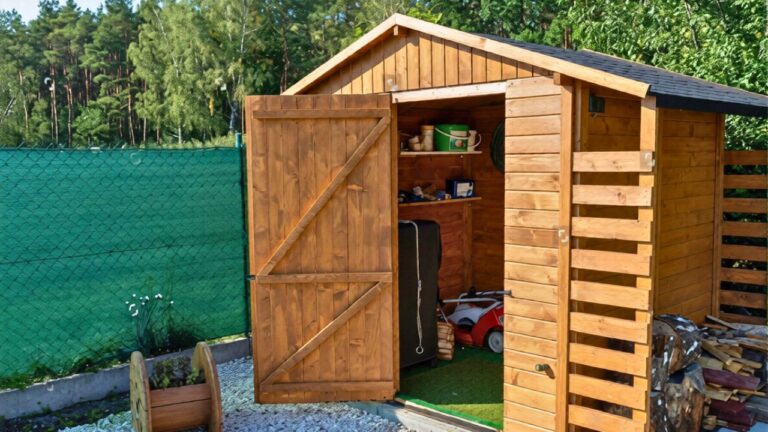
In other words, their fence might not be the one crowding the line after all. And there was a new twist: the neighbors had just built a “fancy new shed” right on the property line. Suddenly the boundary dispute didn’t feel like an old dock stake problem. It felt like someone was trying to push a narrative before questions got asked about their own new construction.
County zoning introduced a whole new angle: permits and placement
Once the homeowner started looking at details instead of just absorbing threats, they took a step that changes the temperature in any neighborhood standoff: they went to County Zoning.
There, they asked about the legality of the neighbor’s shed. What they learned made the whole dispute feel less like a simple misunderstanding and more like a preemptive intimidation tactic. The homeowner said the shed didn’t have permits and may have been built in an area where it’s not allowed.
That matters because once code compliance enters the picture, the argument stops being “my stake says so” and starts becoming “what’s documented, what’s approved, and what’s enforceable.” Even if the homeowner never files a complaint, just knowing there’s a permitting issue can shift leverage—sometimes enough to quiet down a neighbor who’s counting on you to fold.
By that point, the homeowner was also planning to install a new camera aimed at the neighbor’s side. Not as a gesture of friendship, but because when someone starts tossing around “property damage” threats, homeowners start thinking about protecting what they’ve already paid for.
Most reactions focused on proof, not arguments in the yard
The homeowner’s own thinking evolved in real time: stop reacting to noise and start requiring proof. In their final update, they decided they might not have their surveyor come back out immediately. Instead, the neighbor could pay for her own survey, and only if the homeowner was shown to be wrong—“then and only then”—would they move the fence.
That approach fits the most common practical advice people give in boundary disputes: don’t negotiate based on a rusty stake and a heated conversation. Negotiate based on documents, a marked line, and professionals who are accountable for what they mark.
And when threats are involved, documenting behavior becomes part of “home maintenance” in the most frustrating way. Cameras, written communication, and sticking to verifiable facts can keep a property line argument from turning into a cycle of accusations and retaliation.
For now, it’s a standoff—with a dog in the middle
What started as a simple plan—secure a backyard and get on with life—turned into a high-stress boundary battle where every measurement matters. The homeowner wanted the simplest outcome: be left alone, keep the fence where it belongs, and let the dog run without worrying about escape routes or neighbor confrontations.
Instead, they’re juggling surveys, old markers tied to a dock, a neighbor with decades of history on the property, and a newly built shed that may not be permitted. In the middle of all that is the reality every homeowner recognizes: once a fence goes in, moving it isn’t just a “quick fix.” It’s money, time, and the risk of admitting fault when you may not be wrong.
The next move depends on what the competing surveys actually show—and whether the neighbor is willing to back up claims with something more solid than an old stake. Until then, the fence is standing, the camera is going up, and the homeowner is done being bullied into rearranging their yard on someone else’s say-so.
Like Fix It Homestead’s content? Be sure to follow us.