Homeowner Finds the Neighbor Storing Manure and Chopping Firewood Along the Driveway He Uses — Then the Court Rejects His Claim to a Prescriptive Easement
Photo credit: AI-generated image created using ChatGPT. Illustrative only
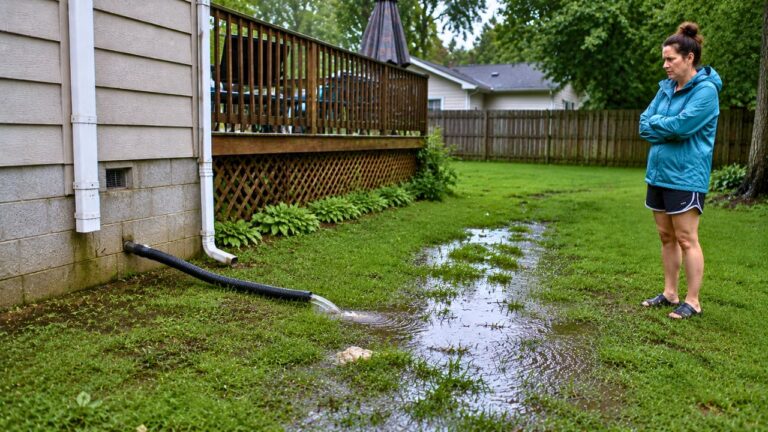
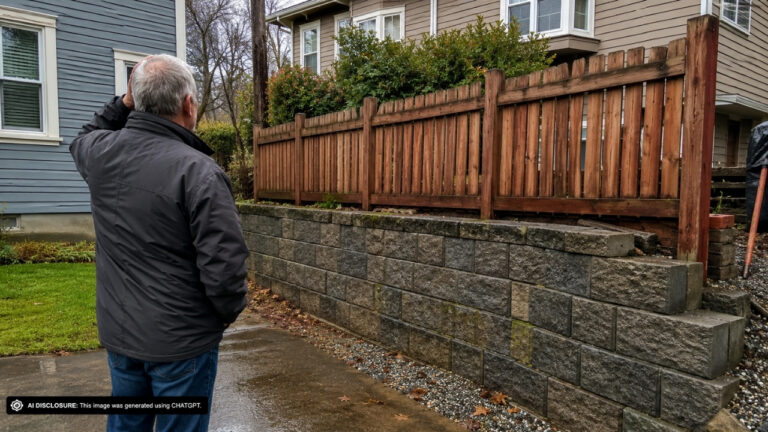
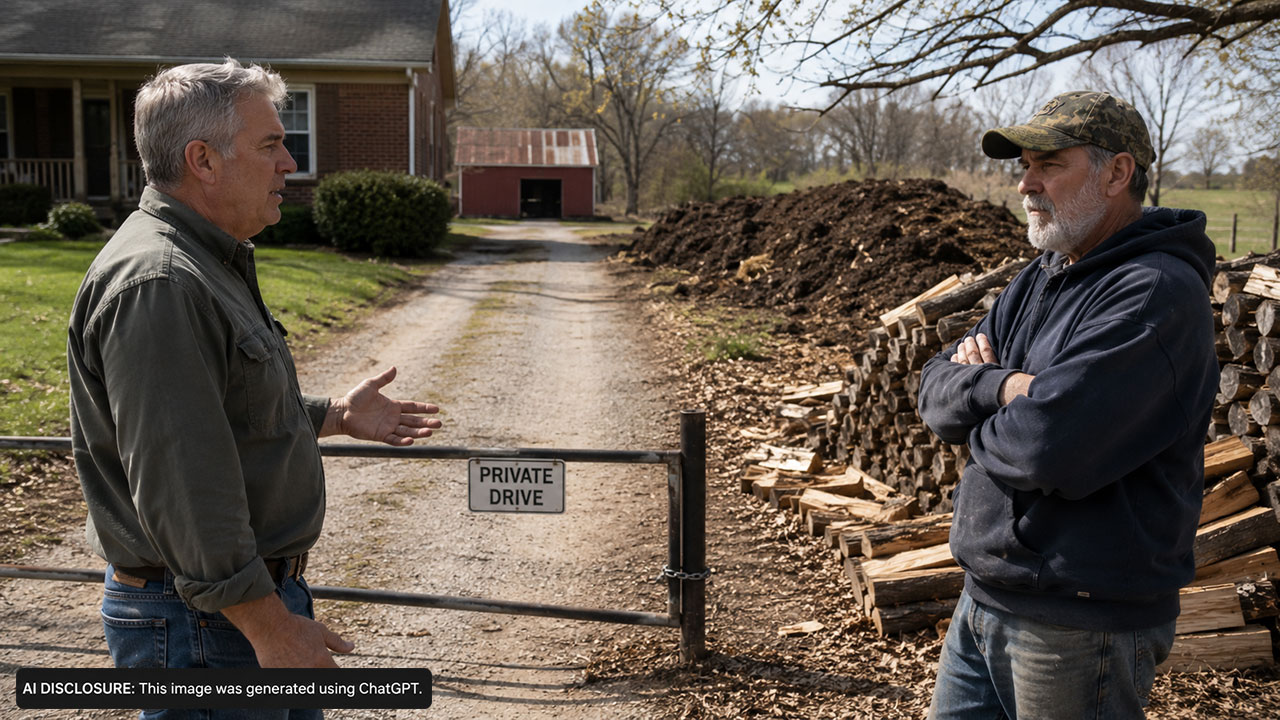
It started like a lot of rural neighbor disputes do: one driveway, two properties, and years of “we’ve always done it this way.” Then one day, the neighbor is storing manure near the drive, chopping firewood along the edge, and posting signs like she’s had enough of the old routine.
That’s the backdrop in an Ohio property fight that ended up in the Fifth District Court of Appeals. In the discussion, the homeowner who relied on the shared driveway got to keep a legal right to use it—but the court refused to give her a broader prescriptive claim over the surrounding land where the messy day-to-day stuff was happening.
The first sign was easy to brush off
Beth Mock and Teresa Schupp own adjoining parcels in Tuscarawas County, Ohio. Mock’s family had owned their place since 1941, and for decades they used a driveway and a chunk of neighboring ground around it in ways that probably felt normal in the moment and permanent over time.
Mock said her grandparents used the area for homestead-style purposes: raising pigs, dogs, rabbits, pheasants, and chickens. There were plantings—elderberries and daffodils—plus gardening, and even a shed built in the disputed area. A septic system sat there too, and later Mock and her husband hunted and trimmed trees on the same land.
If you’re the family using that space year after year, it’s not hard to see how it turns into “ours” in your head, even if the deed never matched the habit.
Then the neighbor’s “use” got a lot more visible
Schupp didn’t describe herself as some absentee owner who never touched the property. She testified that she’d used the same disputed area too—chopping firewood, maintaining a path, trimming trees and bushes, and using the old shed for storage, including keeping her lawn mower in it.
And then the turning point arrived the way it often does: a survey. In 2018, Schupp had the boundary surveyed and learned the half-acre in question belonged to her. After that, she began taking more obvious steps to assert control.
One of those steps was dumping manure on the disputed area. Schupp said she put it there to discourage Mock’s tenant from mowing on her land after the tenant had rolled his lawn mower. Mock took photos of manure, driveway ruts, potholes, and no-trespassing signs—classic documentation you see once a property line fight goes from “awkward” to “we’re going to court.”
A shared driveway can feel like a lifeline
The driveway wasn’t a minor detail here. It was the route leading to Mock’s property, and Mock argued Schupp was interfering—putting up barriers, blocking trucks, posting no-trespassing signs, and otherwise making it harder for people to reach her place.
If you’ve ever lived with a shared lane, you know how quickly it can mess with real life: deliveries, service calls, visitors, and emergency access. Even small acts—parking in the wrong spot, a gate closed at the wrong time—feel bigger when it’s the only way in or out.
Mock filed suit in February 2023 asking the court for three things: a prescriptive easement over the driveway, ownership of the larger disputed half-acre via adverse possession, and a permanent injunction stopping Schupp from interfering with access.
The court drew a hard line between “road use” and “land ownership”
After a bench trial, the judge didn’t give either side the full win they wanted. Mock did get a prescriptive easement over the roadway—meaning she has a recognized legal right to use that drive to access her property.
Schupp also was granted a prescriptive easement over Mock’s property for access to her own real estate, and the court adopted the parties’ supplemental agreement concerning the shared driveway. In other words: the road use got formalized, because both sides had history there.
But Mock’s bigger swing—taking ownership of roughly half an acre surrounding the driveway—didn’t land. Ohio’s standard for adverse possession is demanding. A person has to prove, by clear and convincing evidence, that the possession was exclusive, open, notorious, continuous, and adverse for 21 years. Miss any element, and the claim fails.
The appeals court agreed with the trial judge that Mock didn’t prove exclusivity and adversity. She acknowledged she didn’t know whether her grandfather originally had permission from Schupp’s predecessor to use the land, which matters because “we were allowed to” is the opposite of “we took it despite the owner.”
On top of that, Schupp’s own use of the land—storing a lawn mower in the shed, cutting firewood, maintaining vegetation—helped show Mock’s family wasn’t the only one treating it like theirs. That undercuts the idea that Mock had exclusive control for the required period.
The injunction claim ran into a practical problem: access wasn’t actually blocked
Mock also wanted a permanent injunction, describing what she characterized as harassment: manure dumping, looking in windows, yelling over parking, blocking visitors, posting signs, calling police, and even locking a gate when plumbers mistakenly parked on Schupp’s property.
But in court, the testimony that sometimes matters most isn’t the loudest—it’s the simplest. Mock’s own tenant said Schupp had dumped manure on the driveway but cleaned it up promptly, and it never actually prevented him or anyone else from using the road. He also testified the driveway’s condition hadn’t materially changed over the 14 years he lived there.
That detail goes straight to the heart of an injunction request. Courts are looking for ongoing, irreparable harm that needs a court order to stop. If the mess gets cleaned up quickly and access continues, the case for emergency-style relief gets harder.
Schupp also testified that some visits to the tenant were prompted by concern over his medical history, which included a stroke and lawn-mower accidents. In the end, the judge did not find clear and convincing evidence that a permanent injunction was warranted. Without that, Mock also failed to obtain attorney fees and damages tied to the injunction request.
How homeowners reacted: “Survey first, feelings later”
Cases like this tend to pull out the same practical homeowner instincts: get a survey, document everything, and don’t assume decades of informal use turns into ownership. The 2018 survey was pivotal because it turned an old family narrative into a modern property-line fact pattern.
It also shows why shared-driveway arrangements can go sideways when people rely on tradition instead of paperwork. Once one neighbor starts posting no-trespassing signs or putting physical objects in the area—whether it’s manure meant to discourage mowing or barriers meant to signal control—the other side often responds by taking photos, calling contractors, and eventually calling lawyers.
Here, the court’s outcome landed in a familiar place: the driveway use was recognized, because it had a clear, continuous purpose. But the surrounding land—where both neighbors had been doing “owner-like” things over the years—stayed with the deed holder.
Mock walked away with the legal right to use the roadway leading to her property, but not the half-acre she said her family had treated as theirs for generations. Schupp kept title to that surrounding land, and neither side got the kind of court order that would permanently silence the day-to-day friction that comes with living right on a contested line.
Like Fix It Homestead’s content? Be sure to follow us.