Landowners Find Between Twenty-Five and Fifty Trees Removed From the Disputed Strip — Then Testimony Puts Their Value at Roughly $250 a Tree
Photo credit: AI-generated image created using ChatGPT. Illustrative only
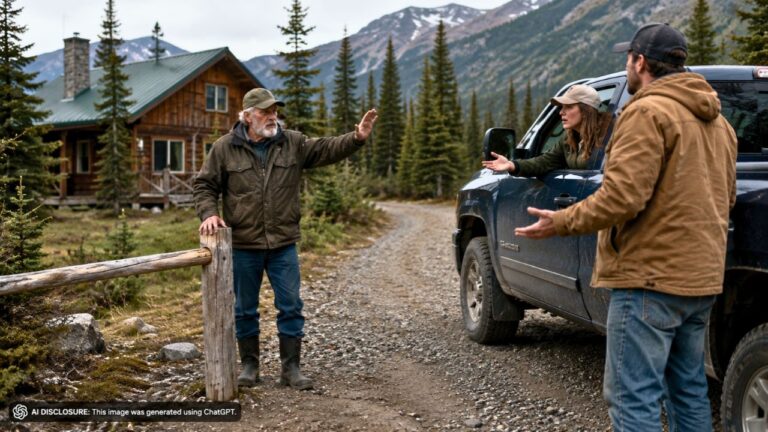
It starts the way a lot of rural boundary fights start: with a fence everyone’s treated like “the line” for as long as anyone can remember. Then one day, the fence is cut, then torn down, and the trees on the “wrong side” start disappearing.
That’s the reality behind an Arkansas dispute where a family said they found dozens of trees removed from a narrow strip of land along a long-standing fence line, and testimony put the value at about $250 per tree. The Arkansas Court of Appeals ultimately upheld the old fence as the legal boundary and affirmed damages in the case described in the court’s opinion.
The fence had been “the line” since the 1960s
Joy Bowlin-Lemon testified that her family bought their Crawford County property when she was around ten years old. Back then, she said, the prior owner walked the boundary with them and pointed to the existing fence lines as the edges of the property.
From 1967 onward, the Bowlins treated those fences like the boundary markers that mattered in real life: where you mow, where you cut hay, where the animals stay, where you fix things after storms. Joy said they repaired fencing in the early 1970s, kept cattle and horses, brush-hogged, and maintained the ground up to the fence for decades.
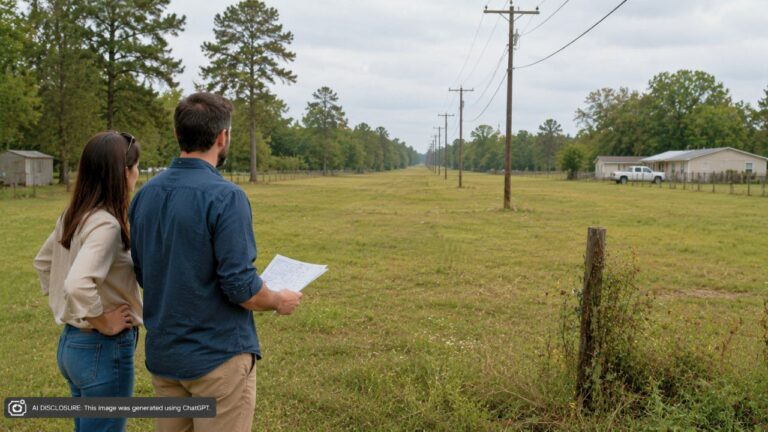
One detail later became the fuse for everything: the southern fence didn’t perfectly match the metes-and-bounds description. Joy estimated the old fence ran roughly 30 to 40 feet beyond the surveyed line in places. But generation after generation of neighbors apparently lived with that without a fight.
The first damage was fence cuts—then the strip got cleared
Things changed after Ty and Kristy Floyd acquired the adjoining tract. Joy said the first dispute popped up around 2017 when part of the southern fence was cut. There were repairs—twice, according to her testimony—but by around 2019 she said the fence was torn down completely.
Anyone who’s kept livestock knows what that means on a practical level. A fence doesn’t just mark a boundary; it’s the thing that keeps your day from becoming a chase. Joy told the court that by the time the lawsuit was filed, the fencing was in complete disrepair and no longer able to contain animals.
She also described the land itself changing: sections bulldozed or removed, ditches dug, gravel dumped into cleared areas. And then came the part that hits homeowners in the stomach—trees disappearing from the disputed strip.
Twenty-five to fifty trees, and a price tag that added up fast
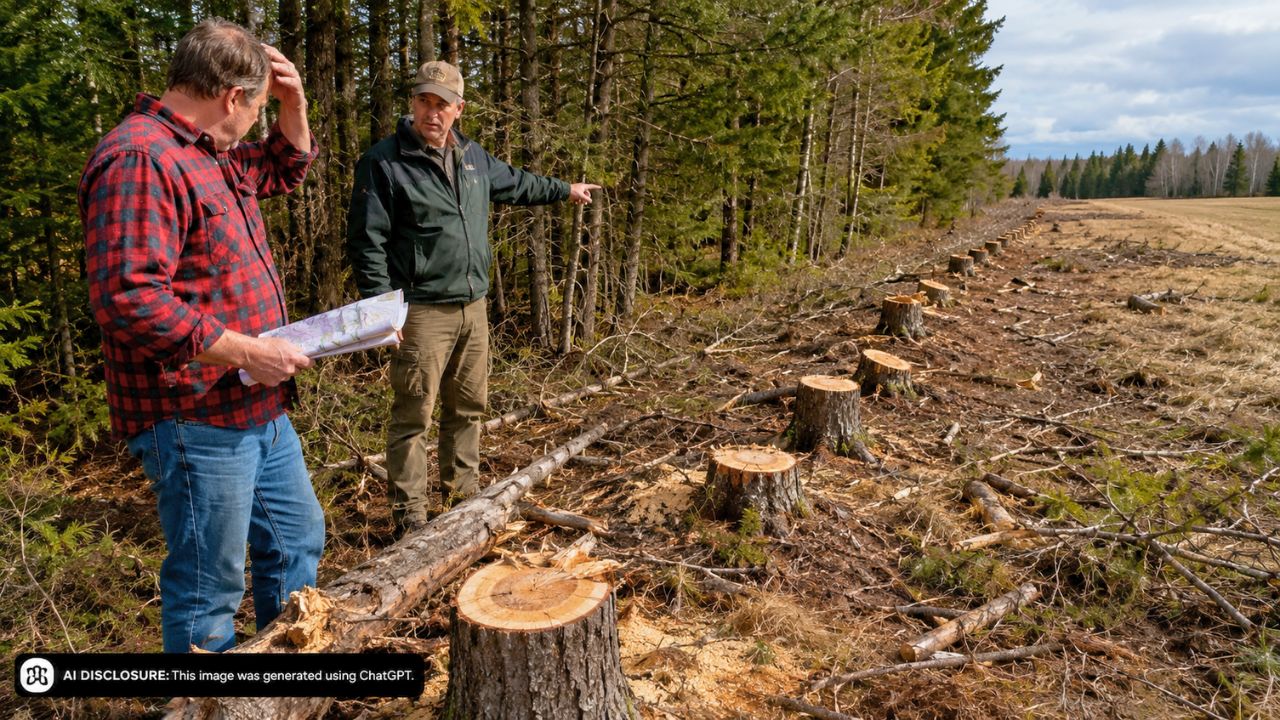
Joy testified that 50 to 100 trees—mostly oaks—had been removed from the disputed area. Her brother Kim, testifying separately, estimated Ty Floyd removed about 25 to 50 trees and put their value at roughly $250 each.
This is where these disputes stop being “just” about lines on paper. Clearing trees changes shade, wind, drainage, privacy, and the feel of a property. It also changes how easy it is to claim a strip later—because once the fence and trees are gone, the land looks like it always belonged to whoever’s been running equipment through it.
There was also testimony that “No trespassing” signs attached to the fence were rolled up and discarded during the destruction. That kind of detail matters because it speaks to notice: whether someone should have known they were pushing into contested ground.
Proof in court: decades of use beat a missing survey
Ty Floyd admitted removing portions of the fence and trees. His position was that the disputed land belonged to him based on his understanding of the boundary and a survey he said he relied on.
But the appeals court highlighted a major problem with that defense: he did not introduce a survey establishing the southern boundary into evidence at trial. Meanwhile, the Bowlins had decades of lived proof—repairs, farming patterns, livestock use, and a fence line that had been treated as the dividing marker for a very long time without objection.
The trial judge ruled that the old southern fence had become a “boundary by acquiescence.” In plain terms, that means neighbors can effectively make a fence the real boundary by treating it that way long enough, even if later paperwork or a modern measurement suggests something slightly different.
The appeals court agreed, emphasizing that a fence alone isn’t enough. What mattered here was the conduct: consistent use and maintenance up to that fence since the 1960s, with no meaningful dispute for decades.
The damages weren’t just for trees—they were tripled
The trial court valued the destroyed trees at $4,000. On appeal, the Floyds argued that number was speculative because there wasn’t an expert appraisal.
The appeals court didn’t buy that. Arkansas law allows property owners to testify about the value of their own property, and the judge had testimony about the number of trees, their approximate value, photos of the cleared area, and descriptions of the before-and-after condition of the property. The $4,000 figure stood.
Then the multiplier kicked in. Arkansas law allows treble damages—triple the amount—when someone intentionally cuts or destroys trees or similar property that belongs to someone else. The trial court tripled the tree damages to $12,000.
The Floyds argued that Ty believed he owned the land, and that should defeat the idea he intentionally damaged someone else’s property. The appeals court wasn’t persuaded, pointing to facts like the “No trespassing” signs, Ty’s admission that he removed fencing and trees, and the fact that he placed stakes where he believed a new boundary should run—without producing the survey he claimed supported him.
Rebuild the fence—plus one last fix to the paperwork
On top of the money, the court left in place an order requiring the fence to be rebuilt. That portion was especially hard for the Floyds to fight on appeal because Ty testified he was willing to rebuild the fence “boundary wise on the property lines,” and their attorney told the judge there was no objection to ultimately erecting the fence.
The one narrow point the Floyds did win wasn’t about who owned the strip—it was about clarity. The judgment declared the boundary but didn’t include a sufficiently specific legal description that could stand on its own. Both sides agreed that needed correction, so the appeals court affirmed the substance of the ruling but sent it back solely to add a precise legal description.
In the end, the practical picture looks like this: a decades-old fence line remains the boundary, the neighbors who took it down are on the hook for $12,000 tied to the tree loss, and the fence still has to go back up—this time with the courts making sure the written description matches what everyone will be living with on the ground.
Like Fix It Homestead’s content? Be sure to follow us.