Calibers That Won’t Break the Bank When You’re Burning Ammo on Nuisance Animals
When you are shooting nuisance animals, the real cost is rarely the rifle, it is the steady stream of cartridges you burn through on every stand, hayfield, or feedlot check. Choosing calibers that stay affordable while still doing clean work on pests lets you train more, miss less, and keep pressure on problem critters without dreading the next credit card bill. The goal is simple: stretch every dollar as far as you can without sacrificing humane kills or practical performance in the field.
That balance looks different if you are knocking squirrels out of hardwoods, anchoring coyotes in open pasture, or thinning prairie dogs on a windy flat. Rimfire, small centerfire, and bulk pistol options all have a place if you match them to realistic ranges and target size. With ammo prices rising on many traditional hunting rounds, you need to be deliberate about which calibers you lean on when you are burning volume on pests instead of taking a single shot at a trophy animal.
How to think about “cheap enough” when you are shooting a lot
Before you pick a cartridge, you need a framework for what “budget friendly” actually means in your situation. Price per round is the obvious starting point, but it is not the only variable that matters when you are shooting nuisance animals. You also have to factor in how many shots you are likely to take in a session, how far you are shooting, and how much terminal performance you need to kill cleanly instead of wounding and losing animals. A round that costs a few cents more but cuts your follow up shots in half can end up cheaper in practice than the rock bottom option that forces you to walk in every hit.
Availability and platform costs matter just as much. A caliber that looks inexpensive on paper is not much help if you cannot find it in bulk or if it requires a specialized rifle you do not already own. Tables that compare the Cheapest Rifle Cartridges to Shoot by listing each Cartridge and its Average Curren price per round are useful starting points because they show you where the real bargains cluster. Once you know which families of cartridges are consistently low cost, you can narrow down to the ones that fit your terrain, your nuisance species, and the rifles you actually like to carry.
Why .22 LR still rules the volume game for small pests
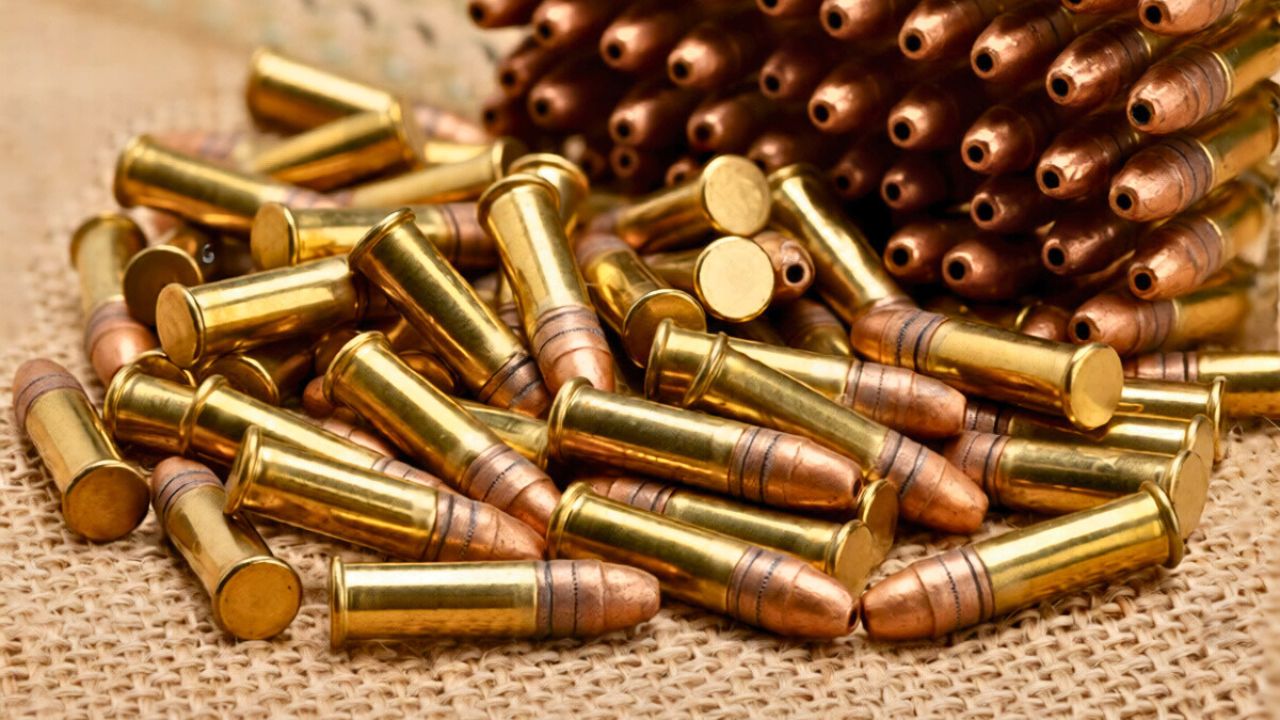
If you are shooting high numbers of small nuisance animals at modest ranges, .22 LR remains the undisputed king of cost control. Long term tracking of .22 LR Price Milestones According to market data shows that this rimfire has hit an all time low of $0.04 per roun, with the same source noting that $0.04 is roughly 50 percent below its all time average. Even when prices spike, it usually stays dramatically cheaper than centerfire options, which is why you can afford to burn bricks of it on squirrels, rats, or close range raccoons without thinking twice.
The platform options are just as forgiving. A simple 22 Rifle like The Ruger 10/22 has become so common in the squirrel woods that it is described as the most popular .22 rifle in the hands of small game hunters, praised as light, dependable, and deadly accurate in Rifle recommendations. When you pair that kind of reliability with bulk packs that run into the thousands of rounds, you get a tool that lets you practice marksmanship, manage pests, and introduce new shooters, all on the same shoestring ammo budget.
Stretching rimfire performance with .17 HMR and .22 WMR
Once your shots stretch past typical .22 LR distances, you start to see the appeal of hotter rimfires that still keep costs manageable. Cartridges like .17 HMR and .22 WMR give you flatter trajectories and more authority on small predators without jumping straight into centerfire pricing. A comparison that pits CCI .17 HMR TNT against CCI .22LR Stinger lays out Average Ammo Costs and shows how the HMR round, while more expensive than basic .22, still sits in a different budget tier than full size centerfire varmint loads, especially when you are buying in volume from brands like CCI that keep HMR and Stinger offerings widely available for Now and the foreseeable future in HMR vs 22LR.
On the performance side, experienced varmint shooters point out that the .17 HMR is accurate, flat shooting, and effective on Small targets like prairie dogs and ground squirrels, which is why it has earned a place among top varmint hunting cartridges in Most of the varmint discussions. Another detailed comparison of 22WMR and 17HMR vs 223 Remington notes that these rimfires bridge the gap between cheap rimfire ammo and centerfire ammo, giving you more reach on pests without the full recoil and cost of 223 Remington, which is why many hunters keep both a .22 LR and a hotter rimfire like 22WMR or 17HMR in their truck for flexible pest control, as outlined in Dec comparisons with Remington.
Why .223 / 5.56 is the workhorse centerfire for cheap volume
When you need centerfire punch for coyotes, foxes, or feral dogs but still want to keep ammo costs in check, .223 and its military cousin 5.56 are hard to beat. Shooters who have compared price per round across common rifle calibers consistently find that .223 is generally the cheapest rifle round you will find because of the enormous production volume driven by AR pattern rifles, a point that comes through clearly in a Jul thread in the Comments Section where new owners ask for a 9 mm equivalent of rifle calibers. Another discussion that looks at what is the most affordable rifle caliber to buy that is not a .22 notes that after comparing some prices, 223 and 5.56 tend to cluster near the bottom of the centerfire price range, especially when you buy in bulk or take advantage of .22 long conversion kits for ARs that let you swap magazines and shoot rimfire for training, as described in a 223 and 5.56 cost comparison.
That combination of low recoil, flat trajectory, and cheap ammo is why .223 Remington shows up repeatedly in lists of practical varmint cartridges. One overview of Common Hunting Calibers explains that Choosing the right round means weighing recoil, trajectory, and game size, and it places .223 among the versatile options that can handle varmints and some medium game when used carefully, which is why it is recommended in FAQs about Common Hunting Calibers. If you are running an AR or a lightweight bolt gun, .223 lets you sit on a field edge and take repeated shots at coyotes or groundhogs without flinching at either the recoil or the running tab on your ammo stash.
When stepping up to bigger centerfire makes sense
There are times when nuisance animals overlap with true big game, and that is when your budget calculus changes. If feral hogs, large coyotes, or depredating deer are on the menu, you may need more cartridge than .223 can comfortably provide, especially at longer ranges or in thick cover where shot angles are not ideal. Popular rifle rounds such as the .308 Winchester and .30-06 Springfield are capable of taking virtually any game in North Americ, which is why they are often described as some of the most versatile hunting cartridges, but that capability comes with higher per round costs that make them less attractive for high volume pest shooting, as highlighted in a report on Popular Winchester and Springfield.
Instead of defaulting to those heavy hitters for every nuisance job, you can often get by with intermediate cartridges that split the difference between .223 and .308. Lists of top varmint calibers point to options like .220 SWIFT for long range work on smaller varmints, noting that if you are going to be shooting tiny targets from a long distance, you will appreciate the flat trajectory and high velocity of a 220 class round, as explained in a guide to Aug SWIFT varmint choices. You pay more per shot than .223, but if you are taking deliberate, single shots at wary coyotes or foxes instead of dumping magazines into a prairie dog town, that extra cost can be justified by the extended reach and wind bucking performance.
Leveraging bulk ammo economics for nuisance control
Whatever caliber you choose, buying in bulk is one of the most reliable ways to keep your cost per shot under control when you are shooting pests. Bulk sellers routinely list hundreds of SKUs that let you stock up on your preferred rimfire or centerfire load at a discount compared with single box pricing. One major retailer of Ammunition notes that it has 295 products in stock and ready to ship in its bulk section, including Federal Champion .22 LR Ammunition 5250 Rounds LHP 36 G rain packs that you can Add to your Cart when you want a long term supply of plinking and small game ammo, as shown in its bulk rimfire listings.
Centerfire shooters can take the same approach. A site that specializes in bulk Ammo advertises 500 Rounds of .40 S&W Ammo by Winchester in 165gr FMJ configuration, with pricing that shows On Sale at $139 compared with a crossed out $154 and a note that 97 boxes are Ready to Ship, illustrating how buying 500 or more rounds at a time can dramatically lower your per shot cost for practice or pest control with pistol caliber carbines, as seen in its Rounds of bulk deals. Even if you are not shooting .40 on pests, the same math applies to .223, .17 HMR, or .22 LR: the more you can afford to buy at once, the less each trigger pull costs when you are out in the field.
Matching caliber to species so you do not waste money or wound animals
Cost per round only matters if the cartridge actually does the job on the animals you are targeting. Choosing the wrong caliber can be expensive in two directions: too much gun wastes money and meat, while too little gun leads to wounded animals that require follow up shots or are lost entirely. A comprehensive hunting caliber chart that breaks down the best Cartridge per species notes that While most medium sized game can be taken with buckshot at close range, a rifle is often preferred, and it lists options like .17 Hornet and other small centerfires as ideal for certain varmints, underscoring how important it is to match bullet energy and construction to the animal you are trying to control, as detailed in the Oct Hornet recommendations.
More general guidance on Common Hunting Calibers reinforces that What factors should be considered when Choosing the right hunting caliber include game size, typical shooting distance, recoil tolerance, and ammunition availability, all of which apply directly to nuisance work as well as traditional seasons, according to the Apr overview of Common Hunting Calibers. If you are primarily shooting ground squirrels and prairie dogs, a .22 LR or .17 HMR is usually sufficient and far cheaper than a .243 or .308. If coyotes are raiding your calving pens, a .223 or .220 Swift gives you more margin for error without jumping all the way to magnum pricing. The key is to be honest about your real world shots instead of buying into marketing hype about “overkill” cartridges you will rarely use to their full potential.
Using suppressors and training to squeeze more value from every round
Once you have settled on a few economical calibers, you can stretch your ammo budget further by making each shot more effective and less disruptive. Affordable Suppressors that are marketed as a Guide to Cost Effective Silencer Solutions Rimfire highlight how 22lr silencers are generally the most affordable class of suppressor, and some can even run on centerfire rifles, which means you can tame muzzle blast on your .22 LR or .17 HMR pest rig without spending as much as you would on a full size centerfire can, according to a detailed overview of Affordable Suppressors and Cost Effective Silencer Solutions Rimfire. Less noise means less spooked game, more follow up opportunities, and a better chance that your first shot will be calm and deliberate instead of rushed.
Training with the same rifles you use on pests, but with cheaper ammo, is another way to keep your hit percentage high without burning your best loads. Some shooters run .22 long conversion kits in their ARs so they can practice with rimfire and then switch back to 223 or 5.56 for actual hunts, a strategy that shows up in discussions of what is the most affordable rifle caliber to buy that is not a .22, where shooters compare price per round and talk about how conversion kits let them keep muscle memory sharp while saving money, as mentioned in the thread on affordable calibers. When you combine that kind of cross training with realistic zeroing, dope cards, and practice on small targets, you end up needing fewer rounds to solve each nuisance problem, which is the most reliable way to keep your ammo budget from spiraling as you protect your property.
Like Fix It Homestead’s content? Be sure to follow us.
Here’s more from us:
- I made Joanna Gaines’s Friendsgiving casserole and here is what I would keep
- Pump Shotguns That Jam the Moment You Actually Need Them
- The First 5 Things Guests Notice About Your Living Room at Christmas
- What Caliber Works Best for Groundhogs, Armadillos, and Other Digging Pests?
- Rifles worth keeping by the back door on any rural property
*This article was developed with AI-powered tools and has been carefully reviewed by our editors.