Chinese EV maker unveils car that can charge in just five minutes
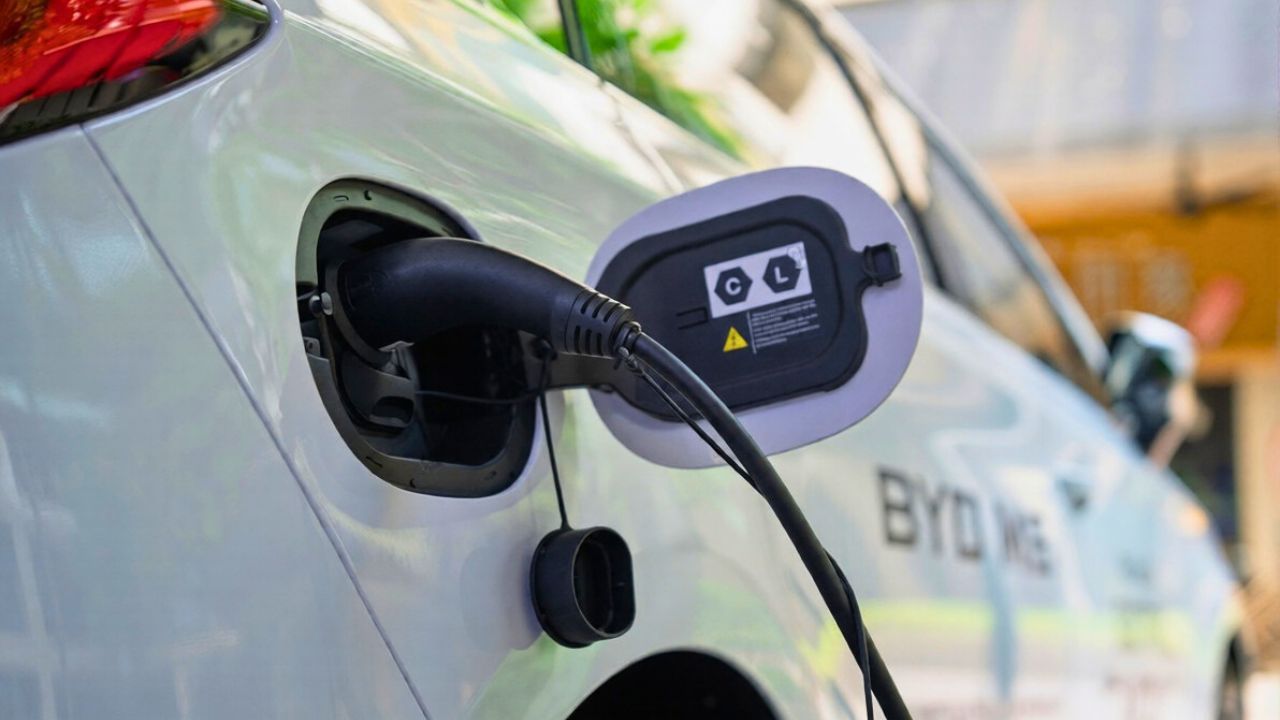
China EV maker BYD has thrown down a new marker in the global electric car race, unveiling a production car and charging system that it says can refill the battery in about the time it takes to pay for fuel. The company claims its latest technology can add hundreds of kilometers of range in roughly five minutes, a step that aims to erase one of the last psychological advantages of gasoline.
The move turns ultra fast charging from a lab talking point into a commercial weapon, arriving just as rival Chinese brands, battery suppliers and Western automakers scramble to keep pace with a wave of high power systems already reshaping expectations.
BYD’s five minute bet
BYD has presented what it calls a Super e-Platform, a new EV architecture that pairs a high power battery pack with megawatt scale charging hardware. According to the company, the system can deliver enough energy in about five minutes to drive roughly 400 kilometers, effectively matching the convenience of a quick gasoline stop for many daily use cases.
In public explanations of the technology, BYD has described a peak charging setup that can deliver around 1.5 megawatts of electricity to its latest packs, a level that pushes far beyond today’s typical highway fast chargers and underpins the claimed five to eight minute refill window.
The new platform is not just a technical demo. BYD has started rolling it into a fresh lineup of electric models in China, positioning the cars as volume offerings rather than halo projects, with some of the first Super e-Platform vehicles priced from about $30,000 to pull the technology into the mass market.
The company is pairing the cars with a network rollout that includes newly built megawatt chargers across China, since the five minute claim depends on access to hardware that can actually sustain those power levels instead of the 150 kilowatt to 350 kilowatt units common on many current routes.
How it compares with China’s fast charging pack
BYD is not arriving in a vacuum. Chinese rivals have spent the past several years turning charging speed into a core part of their pitch, and the new five minute claim is landing in a field already packed with high wattage experiments and commercial launches.
Battery giant CATL has promoted cell technology in China that it says can deliver meaningful range from only a few minutes on a compatible charger, including packs that marketing materials describe as providing useful distance with just five minutes of charging, an early sign that chemistry and thermal management advances are converging around similar targets.
On the vehicle side, GAC has used its Aion sub brand to showcase extreme charge rates. The Aion V compact SUV has been paired with a high power station that GAC Aion says can push a pack from low state of charge toward a usable level in around eight minutes, while a later 480 k watt charger demonstration reinforced that Chinese infrastructure developers are already thinking in several hundred kilowatts as a baseline.
Premium brand Zeekr has pushed a similar message at the higher end of the market. The company’s own materials for the Zeekr range and independent tests of the Zeekr 001 wagon describe charge sessions where the car reaches about 80% in roughly nine minutes, which until now has been one of the most aggressive real world demonstrations of a fast charging passenger EV.
Li Auto has used its large Li MEGA to show what ultra fast charging looks like for a family sized people carrier. Company figures highlighted by Chinese media say the Li MEGA can gain a 500 Kilometers range boost in just 10.5 M of charging, while earlier demonstrations tied to CATL technology suggested the same model could reach about 400 km with roughly nine and a half minutes plugged in.
Other Chinese players are experimenting with different angles on the same problem. Nio has leaned on battery swapping, while Xpeng and Zeekr have targeted high peak charge rates on conventional plugs, and a sedan known as the 7X has been cited in local coverage as part of the broader push toward ever shorter charge stops.
From spec sheet to street reality
Laboratory claims and launch presentations are only part of the story, and early hands on tests of BYD’s megawatt chargers in China suggest a more complex reality for drivers. Video reviews of the system describe impressive power levels that still fluctuate with battery temperature, state of charge and station conditions, producing charge times that sometimes stretch beyond the headline five minutes, especially when the pack is not near its ideal window.
Even so, the same tests show that the system can deliver very large chunks of range in a single short stop, and that the tapering curve still leaves the car significantly ahead of conventional 400 volt EVs that rely on older 50 kilowatt or 100 kilowatt infrastructure.
Thermal management is central to making these figures repeatable. BYD’s presentation of the Super e-Platform emphasizes advanced cooling plates and cell to pack integration, an approach similar to what CATL, GAC Aion and Zeekr have described, since pushing hundreds of kilowatt hours per hour into a pack without overheating it is the main constraint on how far engineers can shorten charge sessions.
What it means for global EV competition
The five minute claim has quickly become a talking point in financial circles that track Chinese EV stocks. Analysts following BYD’s rapid charging argue that it increases pressure on rivals such as Nio, Li Auto, Xpeng and Zeekr to accelerate their own battery and charging roadmaps or risk losing buyers who see refueling time as the last hurdle to switching from gasoline.
Commentary that compares BYD directly with Tesla has framed the five minute technology as a symbolic moment for the balance of power between the two brands. One widely shared analysis described how BYD, identified as a major Chinese rival, surprised the market by claiming a production car that can recharge in roughly five minutes, a contrast with Tesla’s focus on incremental Supercharger upgrades.
International battery developers are watching as well. Coverage of QuantumScape’s QSE 5 solid state prototype, for example, notes that while its projected charge times are fast, there are already Chinese companies like CATL aiming at similar or better performance with lithium based chemistries that are closer to mass production.
The arms race is not only about bragging rights. If BYD’s system proves reliable and cost effective, it could reshape how charging networks are built, how city planners think about grid upgrades and how consumers weigh the trade off between home charging and public infrastructure.
Caveats, catches and next steps
There are still significant catches. Reports on BYD’s rollout note that the five minute figure depends on ideal conditions, including a compatible charger, a battery at the right temperature and a relatively low starting state of charge. As with other fast charging systems, sessions that start at a half full battery or in very cold weather will take longer.
Infrastructure is another limiting factor. Even in China, where state backed initiatives have driven rapid charger deployment, megawatt scale units remain rare, and building enough of them to support large fleets of BYD cars will require heavy investment and careful coordination with grid operators.
Battery longevity is also under scrutiny. GAC Aion has previously claimed that its ultra fast system for the Aion V could support up to about 1,000,000 kilometers of driving without unacceptable degradation, but independent long term data on BYD’s new packs is not yet available, so real world durability remains unverified based on available sources.
Still, the direction of travel is clear. From the Aion V to Zeekr’s fast charging wagons and Li Auto’s mega vans, Chinese brands are turning charge time into a front line feature. BYD’s move to push five minute refills into relatively affordable Li Auto Mega competitors and other high volume segments signals that the era of waiting half an hour at a highway charger may already be on borrowed time.
Like Fix It Homestead’s content? Be sure to follow us.
Here’s more from us:
- I made Joanna Gaines’s Friendsgiving casserole and here is what I would keep
- Pump Shotguns That Jam the Moment You Actually Need Them
- The First 5 Things Guests Notice About Your Living Room at Christmas
- What Caliber Works Best for Groundhogs, Armadillos, and Other Digging Pests?
- Rifles worth keeping by the back door on any rural property
*This article was developed with AI-powered tools and has been carefully reviewed by our editors.