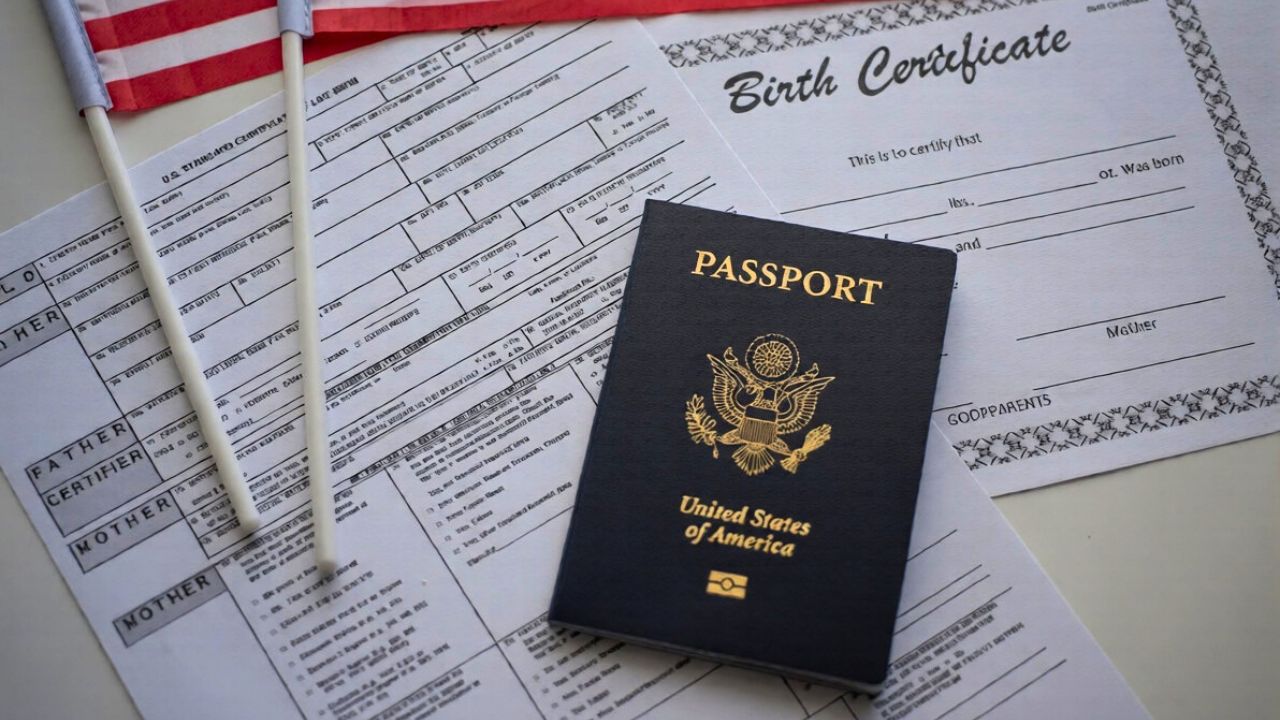
DOJ’s birthright-citizenship argument heads into high-stakes legal fight
The Justice Department is asking the Supreme Court to adopt a sharply narrower view of who qualifies as a citizen at birth, turning an executive order on immigration into a test of the Fourteenth Amendment itself. The coming argument will force the justices to confront not only modern politics but also a contested history of Reconstruction, Chinese exclusion, and the treatment of children born to noncitizens on United States soil.
At stake is whether the executive branch can restrict birthright citizenship by reinterpretation, or whether the constitutional guarantee that anyone born in the United States and “subject to the jurisdiction” of the country automatically becomes a citizen still holds its traditional meaning. The outcome will shape the lives of future children as much as it will define the boundaries of presidential power.
The Trump order and a fast track to the Supreme Court
On the day Donald Trump returned to the White House, the administration issued an executive order aimed at ending automatic citizenship for some children born in the United States to noncitizen parents. According to a detailed account of the policy, the order rests on the claim that the Fourteenth Amendment does not cover children whose parents lack permanent legal status, even if the birth occurs on United States soil. Legal analysts describe the order as a direct challenge to the long-settled understanding that the Citizenship Clause covers nearly everyone born in the country, including the children of undocumented immigrants, tourists, and other temporary visitors, a premise that the Justice Department now seeks to overturn through its litigation strategy.
The Justice Department has defended the order with an aggressive historical brief that tries to recast the meaning of “subject to the jurisdiction” away from the near-universal rule that has prevailed since the late nineteenth century. Critics argue that the department’s reading ignores key Reconstruction debates and later practice that treated almost all U.S.-born children as citizens, with only narrow exceptions for children of foreign diplomats and certain hostile occupying forces. That historical critique is central to a recent analysis of what the department overlooks in its argument, which contends that the executive branch is asking the Court to accept a history that never existed, as explained in one influential review of the Justice Department brief.
Trump v. Barbara, Trump v. CASA, and a consolidated showdown
The Supreme Court has already signaled how seriously it takes the dispute by agreeing to hear Trump v. Barbara, a direct challenge to the executive order that seeks to limit birthright citizenship for children of certain noncitizens. The case centers on whether the president can redefine the scope of the Fourteenth Amendment by executive action, or whether such a shift would require a constitutional amendment or at least congressional legislation. The litigation record describes Trump v. Barbara as the lead case in a set of consolidated challenges that will test the reach of presidential power over citizenship rules and the meaning of “subject to the jurisdiction” for families who live and work in the country but lack formal status.
In parallel, the Court has also heard argument in Trump v. Cassa Incorporated, another case that grew out of the same executive order and was argued alongside related disputes. During oral argument in Trump v. Cassa Incorporated, the justices pressed the lawyers, including the advocate referred to in the transcript as Sour Mr, on whether the Constitution allows the government to treat U.S.-born children of noncitizens as permanent outsiders. The consolidated posture of Trump v. Barbara and Trump v. Cassa Incorporated reflects the Court’s decision to resolve the issue in one sweeping ruling that will apply nationwide, as previewed when the Supreme Court was described as preparing to hear a landmark birthright case involving Trump and Barbara in a report on a University of Minnesota.
DOJ’s historical theory and the fight over “jurisdiction”
The Justice Department’s core move is to argue that the phrase “subject to the jurisdiction” in the Fourteenth Amendment was historically understood to exclude children of parents who lacked permanent allegiance to the United States. In the department’s telling, that category sweeps in children of undocumented immigrants, temporary visitors, and other nonpermanent residents, who it says were never meant to be automatic citizens. The brief leans on selective episodes from the nineteenth century, including obscure cases and legislative remarks, to suggest that Reconstruction lawmakers and courts drew a sharp line between permanent residents and those who remained legally tied to foreign sovereigns.
Legal historians have pushed back, pointing out that the Reconstruction Congress repeatedly rejected proposals to limit birthright citizenship in the way the Justice Department now urges. A detailed critique notes that, in the executive order seeking to end birthright citizenship, issued the day that Donald Trump returned to the White House, the president and his lawyers relied on a misreading of historical sources to claim that children of noncitizens were not U.S. citizens. That critique stresses that the department has downplayed evidence that lawmakers at the time understood the Citizenship Clause to apply broadly, including to the children of Chinese immigrants who were themselves barred from naturalization, a point that undercuts the government’s attempt to narrow the clause through selective history, as laid out in an examination of what executive order left out.
Civil rights groups, states, and a new limits-on-injunctions backdrop
Outside the courtroom, civil rights advocates have framed the case as an existential test of the Fourteenth Amendment’s promise of equal citizenship. The American Civil Liberties Union and allied organizations have described the litigation as a “high stakes” challenge to an executive order that they characterize as cruel and discriminatory. In a public statement previewing the Supreme Court hearing, the ACLU pledged to continue fighting the executive order to ensure that every child born in the United States has their right to citizenship respected, emphasizing that the principle at issue has anchored American identity for generations, as reflected in the group’s description of the birthright citizenship challenge.
State officials have also taken sides, with some attorneys general arguing that the executive order would destabilize communities and burden state systems that rely on clear citizenship rules. Their arguments have unfolded against a new procedural backdrop in which the Supreme Court recently limited the availability of nationwide injunctions, ruling that lower courts can no longer block federal policies across the entire country and instead can only issue regional relief. That shift has already shaped how challenges to the Trump birthright order have moved through the courts and will influence what happens after the justices rule, since any attempt to block or implement the policy will have to respect the Court’s new framework for injunctions, a change that was highlighted when the Supreme Court was described as curbing nationwide orders in a discussion by Washington Attorney General Nick Brown on a major legal victory.
Competing conservative strategies and what the justices must decide
Conservative legal advocates have not spoken with one voice about how to handle birthright citizenship. Some have urged the Court to adopt the Justice Department’s sweeping historical theory, which would allow the federal government to deny citizenship to large categories of U.S.-born children. Others have argued for a more incremental approach that focuses on specific fact patterns, such as children of tourists or foreign students, or that relies on Congress rather than the president to draw any new lines. A prominent example of this more targeted strategy appears in a commentary that points to the 1885 case of Richard Greisser, whose German father and Swiss mother never became permanent U.S. residents and returned to Ger, as supposed evidence that not every child born in the country was treated as an American citizen, an argument advanced by critics who say that birthright supporters ignore obvious historical counterexamples in their case against automatic.
Like Fix It Homestead’s content? Be sure to follow us.
Here’s more from us:
- I made Joanna Gaines’s Friendsgiving casserole and here is what I would keep
- Pump Shotguns That Jam the Moment You Actually Need Them
- The First 5 Things Guests Notice About Your Living Room at Christmas
- What Caliber Works Best for Groundhogs, Armadillos, and Other Digging Pests?
- Rifles worth keeping by the back door on any rural property
*This article was developed with AI-powered tools and has been carefully reviewed by our editors.