Gutter checks that stop icy surprises
Gutters are boring right up until they aren’t—like when you’ve got ice sheets hanging over the sidewalk or water sneaking into the house. You don’t need a full inspection crew to stay ahead of it. A few simple checks before and during winter can keep your gutters moving water instead of turning it into a frozen mess.
Think of it as a quick habit: every time the season changes or a big storm rolls through, you give the gutters a once-over before they have a chance to cause trouble.
Clear out leaves, sticks, and roof grit

The first step is the one nobody wants to do: actually scooping out the gunk. Packed gutters trap water, and trapped water turns to ice fast once temps drop. That ice weighs down the gutters, pulls on the fascia, and can create those icy sheets that hang over walkways.
Use a small scoop or gloved hand, work in sections, and move your ladder carefully. If you can’t safely reach a spot, it’s worth hiring someone for one good clean-out before winter. Once everything is open, run a hose along the gutter to flush out leftover grit.
Check that water actually flows to the downspouts
A clean gutter still doesn’t help if water pools in the wrong spots. After you’ve cleared debris, use a hose to send water toward each downspout and watch what happens. You’re looking for steady flow, not standing puddles.
If water sits instead of draining, your gutter may be sagging slightly in the middle or sloped the wrong way. Sometimes you can fix that by tightening or adjusting a hanger. Other times, a section needs to be rehung. Fixing slope now is a lot easier than dealing with an icy block weighing on your fascia all winter.
Make sure downspouts are clear and extended
Downspouts need just as much attention as the gutters feeding into them. Pop off the bottom elbow if you can and look for leaves, acorns, or mud lodged inside. Flush from the top with a hose until water runs freely out the end.
Then look at where that water goes. Add extenders or splash blocks so it flows away from your foundation and walkways. In freezing weather, water that dumps right at the base of your steps can turn into a surprise skating rink overnight.
Look for sagging sections and loose hangers
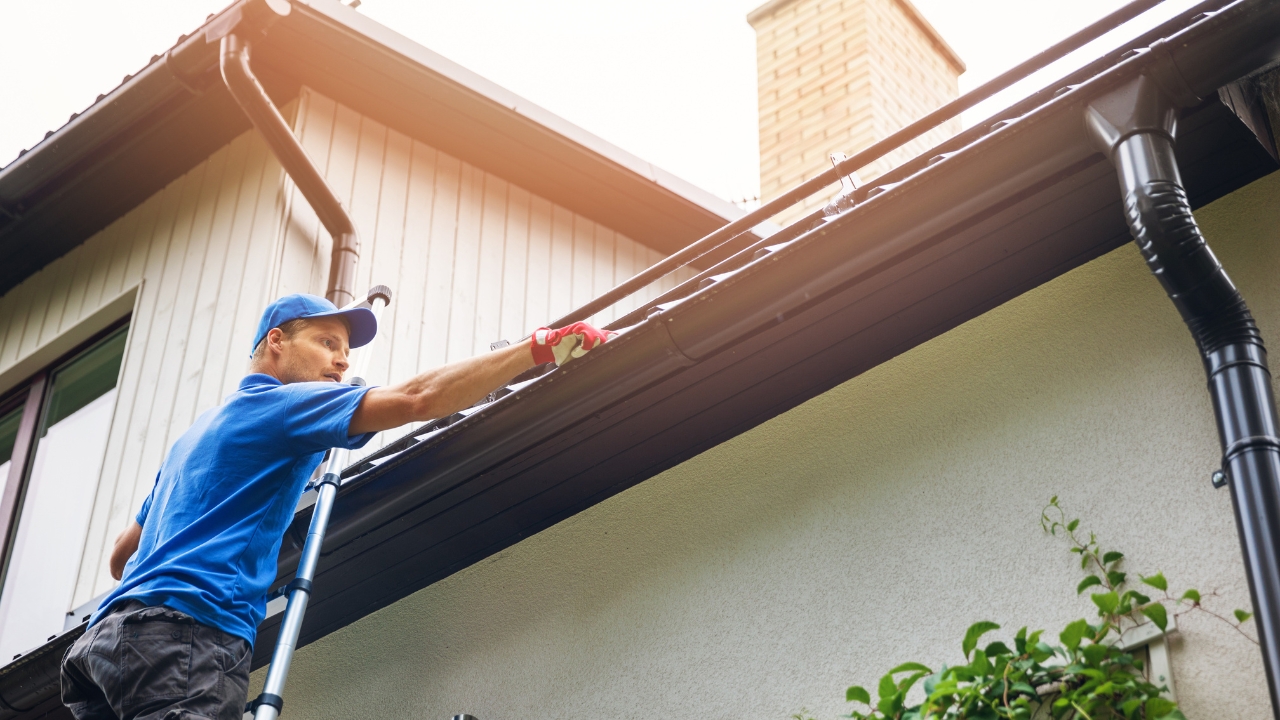
Walk your property and look up along the roofline. Any section that sags, tilts forward, or looks like it’s pulling away from the house is a weak point. Those spots are more likely to catch ice and overflow.
If you’re comfortable on a ladder, you can often tighten or replace hangers yourself. For older wood fascia or taller houses, it may be worth having a pro check that the wood behind the gutter is still sound. A little sag now is usually easier to fix than a full tear-away later.
Check for gaps at corners and seams
Corners and seam joints are common leak points. During your hose test, pay attention to any spot where water drips out from the middle of a run instead of the ends. In winter, those little drips can freeze into long icicles right at entry paths.
Many small gaps can be sealed with gutter sealant once the metal is dry. If you spot major separation or cracked sections, plan to replace that part before next winter. In the meantime, you can at least keep heavy ice from forming by knocking snow off the roof edge after storms.
Keep an eye on ice patterns after the first freeze
Once you’ve done your checks, watch how ice forms after a couple of freezes. Do you always see icicles in the same place? Is there a spot where ice builds up faster than anywhere else? That’s your clue that water is still catching there.
Use that information as a spring to-do list. Maybe that section needs more cleaning, better slope, or a downspout added. The goal isn’t zero icicles—it’s keeping the worst buildup away from walkways, decks, and doors.
Set a simple schedule you’ll actually follow
You don’t need a complicated maintenance plan. Two or three touchpoints a year make a huge difference:
- Once in late fall after most leaves drop
- Once mid-winter after a big thaw or storm
- Once in spring to prep for heavy rains
Put it on your calendar like an appointment. The more often you stay ahead of it, the less time each check takes—and the less likely you are to find an icy surprise hanging off the side of your house.