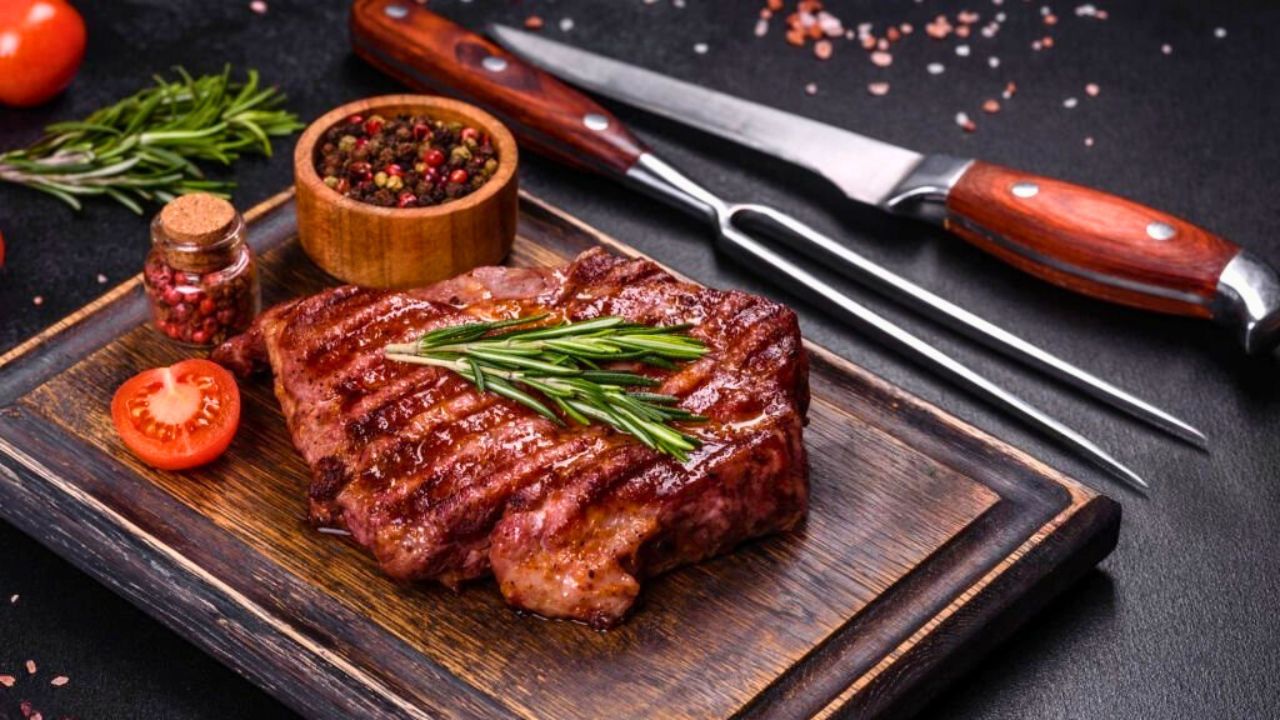
Halls Chophouse called beef costs “code red” and raised its filet to $61 and rib-eye to $85
When a beloved Southern steakhouse chain decides its beef costs are “code red,” you feel the shift on your plate and in your wallet. Halls Chophouse has pushed its signature filet to $61 and its rib-eye to $85, turning a celebratory splurge into a stark lesson in how fragile the steak economy has become. You are not just paying for a luxurious cut of meat, you are paying for a supply chain under historic strain.
What looks like a single menu price jump is really the front line of a national story about scarce cattle, stressed ranchers, and restaurants trying to survive without alienating you. As you weigh whether that $85 rib-eye is still worth it, you are also confronting how deeply the cost of beef has been reshaped by drought, demand, and decisions made years before your server sets down the steak knife.
The moment Halls Chophouse hit “code red”
You feel the stakes of the beef crisis most clearly at the table, and Halls Chophouse has become the emblem of that pressure. Earlier this season, the company’s leadership warned staff that beef costs had reached a “code red” level, then moved to raise its classic filet to $61 and its rib-eye to $85 across its fine dining rooms in the Southeast. For a restaurant that built its reputation on hospitality and consistency, labeling its own menu a crisis is a signal to you that the economics of a steak dinner have shifted from uncomfortable to urgent.
Halls Chophouse is not a single white-tablecloth room but a growing group of restaurants, with locations from Charleston to other cities in the region that have turned the brand into a destination for birthdays, business deals, and big nights out. That growth means the chain buys a lot of premium beef, so when the nation’s cattle inventory falls to its lowest level in roughly seven decades, the impact on its purchasing costs is immediate and punishing. The company’s “code red” language reflects how sharply wholesale prices have risen as the US cattle inventory has tightened, leaving steakhouses like Halls with little choice but to pass more of the bill to you.
Why your steak suddenly costs so much more
From your side of the table, it can feel as if restaurants simply decided to charge more because they could. In reality, the price of boneless steak has climbed about 20 percent to an average of $10.61 a pound at retail, a surge driven by a national herd that has shrunk to levels not seen since the 1950s. When the supply of cattle drops that far, every link in the chain, from feedlots to packers to restaurants, competes for fewer animals, and the cost of each rib-eye or filet you order reflects that scarcity.
Industry analysts describe a perfect storm of drought, high feed costs, and ranchers culling herds that has left With US cattle inventory at its lowest since the mid twentieth century. That tight supply has pushed wholesale beef prices to record highs, especially for the boneless, premium cuts that steakhouses rely on for their margins. When you see a $61 filet on the menu, you are looking at the downstream effect of a national herd that has been thinned by years of weather and cost pressures, not just a restaurant’s ambition to pad its profits.
Inside the supply crunch: drought, herds, and record highs
To understand why Halls Chophouse and its peers are in “code red” mode, you have to step away from the white tablecloth and into the pasture. Severe drought in key cattle states over the past several years has dried up grazing land and driven up the cost of feed, forcing ranchers to send more animals to slaughter earlier and to hold back on rebuilding their herds. At the start of 2025, the United States recorded the smallest number of cattle since 1951, a structural shortfall that cannot be fixed in a single season.
Experts in the MSU Department of Animal and Dairy Sciences describe how High beef prices are mainly driven by reduced national cattle inventories that are at their lowest in decades, a direct consequence of those weather and cost pressures. A major driver of the rising price of beef is this record low cattle supply, which has tightened availability of both premium steaks and ground beef. As A major driver of the current spike, that shortage is tied to basic supply and demand, and it leaves restaurants like Halls paying more for every pound they bring in the door.
How restaurants are scrambling to protect margins
When beef prices jump this sharply, you might expect restaurants to simply raise menu prices and move on, but the reality is more complicated. Some operators have tried to absorb part of the hit, trimming labor, renegotiating leases, or cutting back on promotions to avoid scaring off regulars. Others have leaned into dynamic menu engineering, steering you toward slightly smaller portions or alternative cuts that carry better margins while keeping the headline price of a steak from climbing even higher.
Not every company has handled the squeeze the same way. Executives at Omaha Steaks, for example, said preorders for the holiday season were up 15 percent, and the company has not raised prices for its steaks and other meats this year because it stockpiled beef when prices dipped, locking in inventory at lower costs. By contrast, another meat company raised prices about 1.7% in the fourth quarter and has seen its stock fall 14 percent over the past year, leaving executives nervous about January and February. Those divergent strategies show you how precarious margins have become, and why a restaurant like Halls, which cannot warehouse years of beef, ends up moving more of the cost directly onto your bill.
Halls Chophouse as a case study in tough choices
For Halls Chophouse, the decision to label beef costs “code red” and lift its filet and rib-eye prices was not made lightly. Earlier in November, as the group headed into the critical holiday season, its leaders pored over invoices and forecasts, weighing how much of the surge they could absorb and how much they had to pass on. They knew that a $61 filet and an $85 rib-eye would test your loyalty, but they also knew that failing to act could turn a busy December into a money-losing month.
Reporter JULIE CRESWELL detailed how Halls Chophouse, facing the nation’s cattle inventory at a seven decade low, wrestled with how customers will take it when they see those new numbers on the menu. The company’s leadership framed the move as a survival tactic rather than opportunism, pointing out that their costs for prime cuts had risen far faster than general inflation. For you, that means the familiar Halls experience now comes with a higher cover charge, but it also means the restaurant is trying to stay in business without cutting the quality that made you a regular in the first place.
Code red across the steakhouse landscape
Halls is not alone in sounding the alarm. Across the country, steakhouses have described their situation as “code red” as beef prices butcher holiday margins and turn what should be the most profitable weeks of the year into a balancing act. When boneless steak prices jump 20 percent and the national herd sits at 1950s lows, even well run operations find their carefully modeled profit assumptions blown apart.
Reports on boneless steak costs show how quickly the math has changed, with the average price per pound climbing to $10.61 and leaving operators little room to maneuver. Even modest chains like Outback Steakhouse and Texas Roadhouse have felt the strain, as highlighted in coverage of code red warnings this year. When chains with national purchasing power are squeezed, independent operators and regional groups like Halls Chophouse feel the pressure even more intensely, which is why you are seeing price hikes across the spectrum, from white tablecloth rooms to casual bar-and-grill concepts.
What diners are actually ordering at these prices
Despite the sticker shock, your fellow diners are not abandoning steak. Instead, they are adjusting how they order. Some are trading down from the largest rib-eye to a slightly smaller filet, or splitting a tomahawk between two people while filling out the table with sides and appetizers. Others are sticking with their favorite cuts but visiting less often, turning what used to be a monthly ritual into a quarterly indulgence.
One restaurateur told a newsletter audience that People are still buying the more expensive cuts, including the bone-in filet, the tomahawk steak, and the Kansas City strip steak, even as prices climb. At the same time, data on How Much Less Beef Are Americans Eating shows that, Despite the higher prices, Americans are still eating roughly the same amount of beef overall. For Halls Chophouse, that means you may grumble about a $61 filet but still order it for a special night, giving the restaurant some breathing room even as it worries about how far it can push prices before you finally say no.
How long this beef shock could last
If you are hoping that Halls Chophouse’s $85 rib-eye is a one season anomaly, the supply side suggests otherwise. Rebuilding the national cattle herd is a slow, capital intensive process. Ranchers need to hold back heifers for breeding instead of sending them to slaughter, invest in feed and pasture improvements, and wait years for those decisions to translate into more animals ready for market. That lag means today’s tight supply will echo through the system long after the current drought has eased.
Analysts warn that efforts to expand herds will take years and require major investments that many producers cannot afford, a reality underscored by reporting that notes how Meanwhile, efforts to rebuild cattle herds will require capital that is scarce in a volatile market. Industry voices like When Barker of the Ohio Restaurant and Hospitality Alliance say they do not expect beef prices to drop meaningfully in the near term, leaving restaurants and diners to adapt to a new normal. For you, that suggests that the elevated prices at Halls and other steakhouses are not a temporary blip but the baseline for the next several years.
What this means for your next night out
As a diner, you are not powerless in the face of “code red” beef costs, but you do need to approach your next steakhouse reservation with clearer eyes. You can still enjoy a prime steak at Halls Chophouse, yet you may want to think more strategically about how you order, whether that means sharing a larger cut, exploring less expensive options on the menu, or pairing one splurge item with more modest choices. Understanding that the $61 filet reflects a national cattle shortage and record wholesale prices can help you decide when the experience is worth it and when you would rather save that money for something else.
For their part, restaurants are trying to preserve the sense of occasion that makes you book a table in the first place. Some are investing more in service and ambiance to justify higher prices, while others are experimenting with menu formats that highlight value, such as prix fixe offerings or inclusive steak dinners that bundle sides and dessert. Coverage of how The start of 2025 saw the lowest cattle numbers since 1951, and how that shortage will continue to affect the ground beef supply as well as premium cuts, suggests that your expectations will need to adjust too. When you sit down at Halls or any other steakhouse in the coming months, you are not just ordering dinner, you are participating in a supply chain story that stretches from drought stricken ranches to the glowing sign above the door.
Beef, inflation, and the broader cost of dining out
The shock you feel at Halls Chophouse’s new prices is part of a wider inflation story that has reshaped how you eat out. Beef is one of the most visible examples because it sits at the center of the steakhouse experience, but restaurants are also paying more for labor, utilities, insurance, and financing. When you see a menu that looks dramatically more expensive than it did a few years ago, you are seeing the cumulative effect of all those pressures layered on top of a historically tight cattle market.
Writers like Nicole Hoey have described how one of the biggest contributors to rising steakhouse prices is the cost of Beef itself, but they also point to a broader “perfect price increasing storm” that includes everything from higher rents to more expensive debt. For you, that means the $85 rib-eye at Halls is not just a story about cattle, it is a snapshot of an economy in which every input to a restaurant meal has become more expensive. When you decide whether to book that table, you are weighing not only your appetite for steak but your tolerance for a dining landscape that has been permanently repriced.
How Halls and other steakhouses might adapt next
Looking ahead, you can expect Halls Chophouse and its competitors to keep experimenting with ways to make high beef costs sustainable without losing you as a guest. Some may lean more heavily on non beef menu items, highlighting seafood, pork, or plant forward dishes that are less exposed to cattle shortages. Others might double down on loyalty programs, private dining, and special events that encourage you to see a steak dinner as a premium experience worth budgeting for, rather than a casual weeknight option.
At the same time, the broader dining ecosystem is adjusting. Analysts note that Consumers and restaurants alike are feeling the pinch, and some operators are already exploring long term contracts or alternative sourcing strategies to smooth out volatility. Local guides such as the Halls Chophouse location listings show how deeply embedded these restaurants are in their communities, which gives them an incentive to find creative solutions rather than simply pricing you out. As you plan your next night out, you will be watching in real time how a beloved steakhouse brand navigates one of the toughest cost environments in its history, and deciding whether that $61 filet still feels like money well spent.
Like Fix It Homestead’s content? Be sure to follow us.
Here’s more from us:
- I made Joanna Gaines’s Friendsgiving casserole and here is what I would keep
- Pump Shotguns That Jam the Moment You Actually Need Them
- The First 5 Things Guests Notice About Your Living Room at Christmas
- What Caliber Works Best for Groundhogs, Armadillos, and Other Digging Pests?
- Rifles worth keeping by the back door on any rural property
*This article was developed with AI-powered tools and has been carefully reviewed by our editors.