Here’s where the Feb. 17 annular eclipse is visible — and where it isn’t
The first solar eclipse of 2026 will deliver a classic “ring of fire” — but almost no one will be in position to see it.
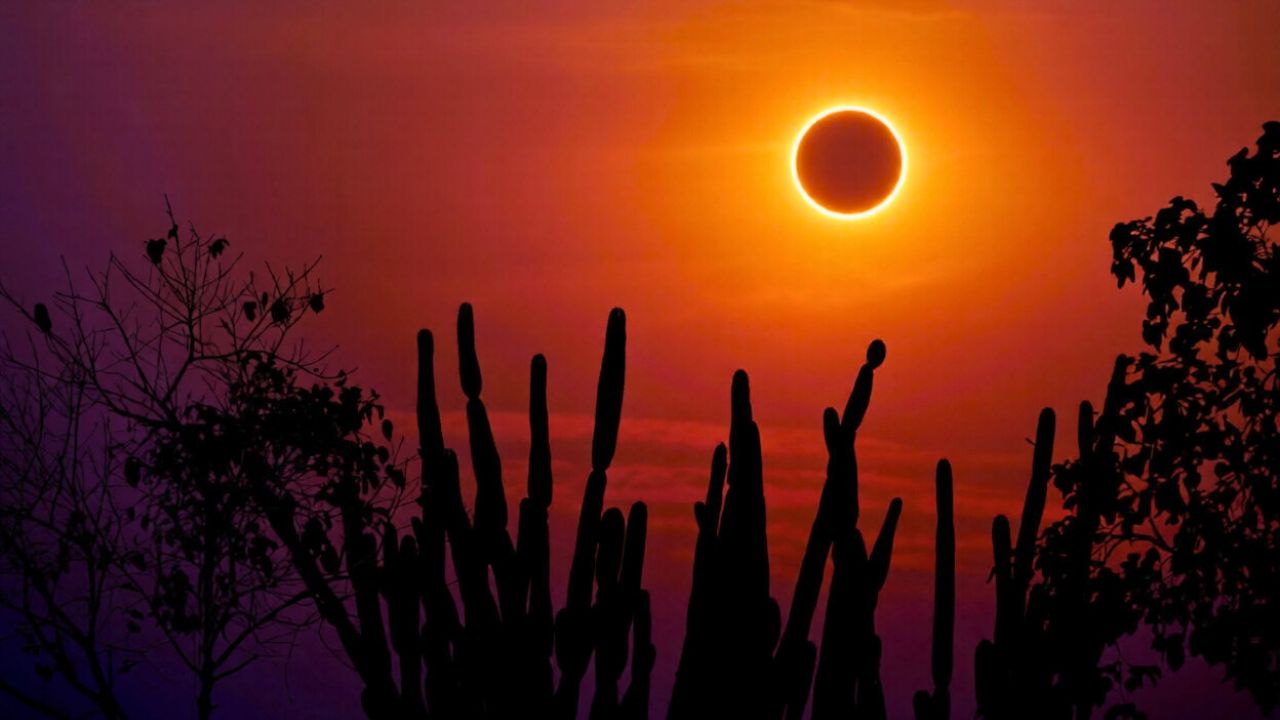
An annular solar eclipse is set for Tuesday, Feb. 17, 2026, when the moon passes between Earth and the sun but appears slightly smaller than the sun in the sky. Instead of turning day briefly to darkness like a total eclipse, an annular eclipse leaves a thin, bright ring of sunlight visible around the moon at maximum.
Where the “ring of fire” will be visible
The path of annularity — the narrow corridor where viewers can see the full ring — will run almost entirely across Antarctica and nearby stretches of the Southern Ocean, making it one of the least accessible annular eclipses for the general public in years.
Eclipse maps show the annular track primarily cutting across western Antarctica, with the full ring view confined to that central band. Outside that band, observers will see only a partial eclipse.
For those who are already in the region — such as crews at Antarctic research stations or people aboard ships in the Southern Ocean — the annular phase will be brief. National Eclipse Project mapping lists a maximum annularity of about 2 minutes and 20 seconds for this eclipse.
Where a partial eclipse may be visible
Even if you’re nowhere near Antarctica, some places can still catch a partial solar eclipse (weather permitting). Timeanddate’s eclipse listing shows partial visibility over southern parts of Africa, the southern portion of South America, and surrounding ocean regions including parts of the Pacific, Atlantic, and Indian oceans, along with Antarctica.
A Space.com visibility breakdown similarly notes partial eclipse viewing across Antarctica and parts of southern Africa and the southern tip of South America, with examples of partial coverage levels in select locations such as parts of Mauritius, Madagascar, and South Africa.
Where it won’t be visible
For most of the world — including North America, most of Europe, and much of Asia — there will be no eclipse view at all on Feb. 17. The alignment will occur below the horizon for those regions, meaning there’s nothing to watch from the ground besides normal daylight.
Safety note for anyone who does see a partial eclipse
Astronomy groups emphasize the same rule every time: never look directly at the sun without proper protection, even when a chunk of it is covered. Partial eclipses still deliver enough sunlight to injure eyes. Use certified eclipse glasses or indirect viewing methods if you’re in a visibility zone.