HGTV’s “budget friendly” upgrade that turns into a maintenance headache
You are constantly told that a “budget friendly” upgrade can transform your home overnight, especially if you follow the formulas you see on HGTV. Yet the projects that look breezy on screen often turn into the very maintenance headaches you work hardest to avoid. If you want the style without the regret, you need to separate camera-ready tricks from changes that actually fit your daily life and cleaning routine.
That gap between television magic and real-world upkeep shows up most clearly in the details: the paint colors that hide or highlight grime, the shelving that collects dust, the surfaces that stain if you look at them the wrong way. Once you understand how those choices behave after the crew leaves, you can keep your budget upgrades from becoming a long-term chore list.
How HGTV sells “affordable” upgrades that follow you for years
You are encouraged to chase quick wins, and HGTV packages those wins into tidy, low-cost projects that promise higher value and instant charm. You are told that Neutral does not have to mean bland, that beiges, greens and other earth tones can feel universally appealing yet stylish, and that small moves like new fixtures and hardware will update a room with minimal effort. Those ideas can absolutely help you, but they also prime you to believe that every low-dollar change is inherently low risk, even when the finish you choose needs constant touchups or special cleaning to stay presentable.
During a reveal, you rarely see what happens after the first week of cooking splatters, shoe scuffs, or pet hair. A walkway that becomes the focal point of your exterior, especially when you Focus on your doorway and trim, has to survive mud, snow, and daily deliveries. The same goes for interior upgrades that look simple and stylish on camera, yet in your home might chip, stain, or warp faster than you expect. The more you understand that gap, the easier it becomes to question whether a “budget” idea is actually a maintenance contract in disguise.
The open shelving trap: cheap to install, costly to live with
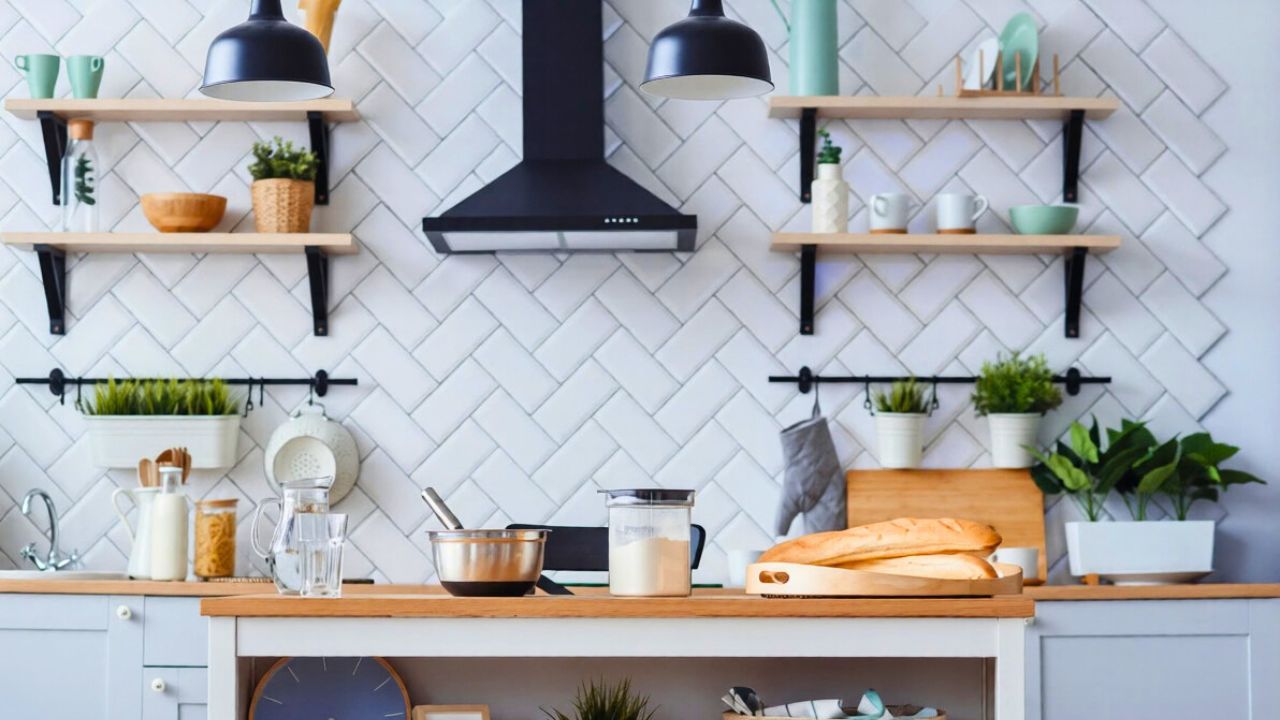
You have probably seen open kitchen shelves framed as the ultimate shortcut to a designer look on a tight budget. Open runs of wood or metal cost less than full upper cabinets, and they instantly make a small kitchen feel airier. In one widely shared clip, Jan from a design account points out that open shelving is definitely more affordable than closed storage and can be styled to look curated, which is exactly why it keeps showing up in budget kitchen makeovers. The problem is that every plate, glass, and bowl you own suddenly becomes part of the decor, and every cooking session leaves a film of grease and dust on those exposed surfaces.
Professionals know this, which is why someone like Hilary Farr can say, “Very often, open shelving will go where a full cabinet would have to extend a good distance,” and still treat it as a solution only in specific spots. In the Kitchen Cabinet Versus context, shelving works best where a full upper cabinet would feel heavy or awkward, not as a blanket replacement. When you treat open shelves as your main storage, you commit yourself to constant editing, styling, and cleaning. That may fit your personality if you love display and routine tidying. If you do not, the “budget friendly” swap quickly becomes a daily reminder that you removed the very doors that used to hide the mess.
When trends turn on you: open shelves and shifting tastes
You also have to live with how a trend ages, not just how it looks the week you install it. Earlier this year, a viral video from Jan at @grillodesigns pointed out that “apparently open shelving is out for 2024,” then walked through pros and cons that many homeowners wish they had weighed sooner. In that clip, open shelves are praised for being more affordable and visually light, but they are also criticized for offering Less Storag and for putting every mismatched mug on display. If you bought all new dishware just to make your shelves camera ready, that “cheap” upgrade may already feel less thrifty than it looked on paper.
Regional style coverage has started to echo the same caution. One Southern design piece framed open shelving as a trick to kitchen design on a budget, then quietly reminded readers that while an open-concept kitchen might be the ideal scenario, you might want to rethink this trend for tighter layouts where you need every inch of concealed storage. Combined with the social media shift away from cluttered displays, you can see how a feature that once screamed “modern farmhouse” can now date your kitchen quickly. You do not have to chase every microtrend, but you do need to ask whether a highly visible, high-maintenance feature is flexible enough to survive the next style swing.
Color, finishes and the cleaning reality behind “neutral” makeovers
You are often told to repaint in neutrals before you sell or refresh a room, and there is solid logic behind that advice. Neutral, Beiges and other earth tones tend to appeal to a broad range of buyers and help your furniture feel more cohesive. When you choose a soft green or greige on the walls, you give yourself a calm backdrop that will not fight with art or rugs. That part of the HGTV playbook holds up. The maintenance twist shows up in how you handle trim, doors, and high-touch areas, which are frequently painted bright white for contrast and then promptly fingerprinted by kids, guests, and delivery people.
You can reduce that headache by treating paint as a performance material, not just a color choice. Satin or semi-gloss finishes on doors and baseboards will let you wipe away scuffs more easily than flat paint, and mid-tone neutrals hide dirt better than stark white. When you pair those choices with other small updates, such as new hardware and fixtures that resist tarnish, you get the visual freshness HGTV promises without creating a constant touch-up routine. The key is to remember that a “universally appealing” palette still has to hold up against your actual lifestyle, pets, and cleaning habits.
Feature walls, fireplaces and surfaces that demand constant care
You may be tempted to add a dramatic feature wall or a reimagined fireplace because they photograph beautifully and signal “custom” on a budget. On an episode recap of a renovation show, Sherrod suggests that homeowners keep the dark hardwood they find elsewhere and merely replace the entryway tile with a new dark wood that ties the spaces together. In the same project, Sherrod also steers clients away from certain “hot” upgrades that are not worth the headache, especially when they would introduce delicate finishes in high-traffic zones. That kind of advice matters, because once a bold surface is in, you are the one who has to baby it.
DIY guides make it look simple to tackle Easy DIY Fireplace Makeover Ideas, such as Paint the Stone, Brick Fireplace or Update the Brick and Stone Using the German Sme technique. Those projects can dramatically change a room for the cost of paint and a weekend. They also change how you clean. Painted brick can chip if you use the wrong brush, and a German smear finish has intentional texture that traps soot and dust. If you already struggle to keep a smooth tile hearth clean, adding extra crevices may not be your friend. Before you follow a makeover tutorial, you need to picture yourself vacuuming and scrubbing that surface in February, not just admiring it in a reveal photo.
Countertops and floors: where “affordable” can mean fragile
You are often encouraged to stretch your budget on finishes that dominate a room, especially countertops and flooring. At the same time, you are shown low-cost substitutes that mimic expensive materials. A recent renovation segment highlighted how Whenever kitchen renovations occur, choosing countertops is an enormously important decision, and how Picking the right surface can save you from the staining and etching you might get with wood or marble. If you select a cheaper laminate that chips easily, or a soft stone that demands constant sealing, your daily maintenance load climbs even if your upfront bill looked modest.
Floors tell a similar story. If you have brick floors, like the floors in a Christina Salway designed sitting room, you are advised to Dust, Really thoroughly before using any liquid cleaners so you do not grind grit into the porous surface. That routine is manageable if you love the look and understand the tradeoff. It is less charming if you installed a textured, trendy floor purely because it appeared on a show and only later discovered that every crumb and pet hair clings to it. Sometimes, spending a bit more on a durable, easy-clean surface is the real budget move because it saves you from early replacement and professional deep cleaning.
Curb appeal, small upgrades and the myth of “set it and forget it”
You are told that you do not need a full HGTV style renovation to get top dollar, and that message is absolutely true. A design center promotion on social media reminded homeowners that Did you know you do not need a full HGTV overhaul to make an impact, and that Sometimes the little things, like updated lighting or a clean entry, create big first impressions. Those tweaks are powerful, but they still come with ongoing tasks. New outdoor sconces attract bugs, fresh porch paint needs touchups, and planters require watering and seasonal replanting.
Exterior project lists often encourage you to Focus on making your walkway and doorway a focal point because that is where you get a high rate of return. That might mean new pavers, a painted front door, or layered pots of greenery. Each of those elements can boost your listing photos and neighborhood pride, yet they also add to your maintenance calendar. Pavers can settle and grow weeds, dark door colors fade faster in direct sun, and lush shrubs need pruning so they do not overwhelm the entrance. When you plan curb appeal upgrades, you should budget time as carefully as money so you do not resent the very improvements that helped your home stand out.
Reality check from real estate TV: not every “hot” upgrade is smart
You might assume that every upgrade featured on a real estate show is a safe bet, but even on camera you can see experts quietly veto certain ideas. In one episode recap, Sherrod walks buyers through three hot upgrades that are not worth the headache and instead proposes targeted changes that respect how the family will actually use the space. Sherrod suggests that they keep the dark hardwood they find elsewhere and simply replace the entryway tile, rather than ripping out solid flooring just to chase a fleeting trend. That kind of restraint is instructive for your own projects.
Look closely and you notice that many of the most effective changes are also the simplest: a fresh coat of paint, a new light fixture, or a thoughtfully styled feature wall that does not rely on fragile materials. In the same project, a modest adjustment to the feature wall made a bigger difference than a full demolition. If you treat those examples as a filter, you can ask yourself whether a planned upgrade will genuinely improve function and resale or whether it is just a dramatic reveal moment waiting to become a repair bill. You are allowed to say no to “hot” if it does not align with how you live.
Smarter ways to get the HGTV look without the long-term hassle
You can still borrow plenty from television design without inheriting the maintenance burden. One way is to lean on flexible, low-commitment upgrades. You might follow a guide to Big and Small Home Upgrades for Any Budget and start with a printed rug that packs personality or new art that adds color, rather than permanent tile or built-ins. When you treat textiles, lamps, and decor as your main style statements, you give yourself the freedom to swap them out when trends shift, all without patching walls or refinishing floors.
Like Fix It Homestead’s content? Be sure to follow us.
Here’s more from us:
- I made Joanna Gaines’s Friendsgiving casserole and here is what I would keep
- Pump Shotguns That Jam the Moment You Actually Need Them
- The First 5 Things Guests Notice About Your Living Room at Christmas
- What Caliber Works Best for Groundhogs, Armadillos, and Other Digging Pests?
- Rifles worth keeping by the back door on any rural property
*This article was developed with AI-powered tools and has been carefully reviewed by our editors.