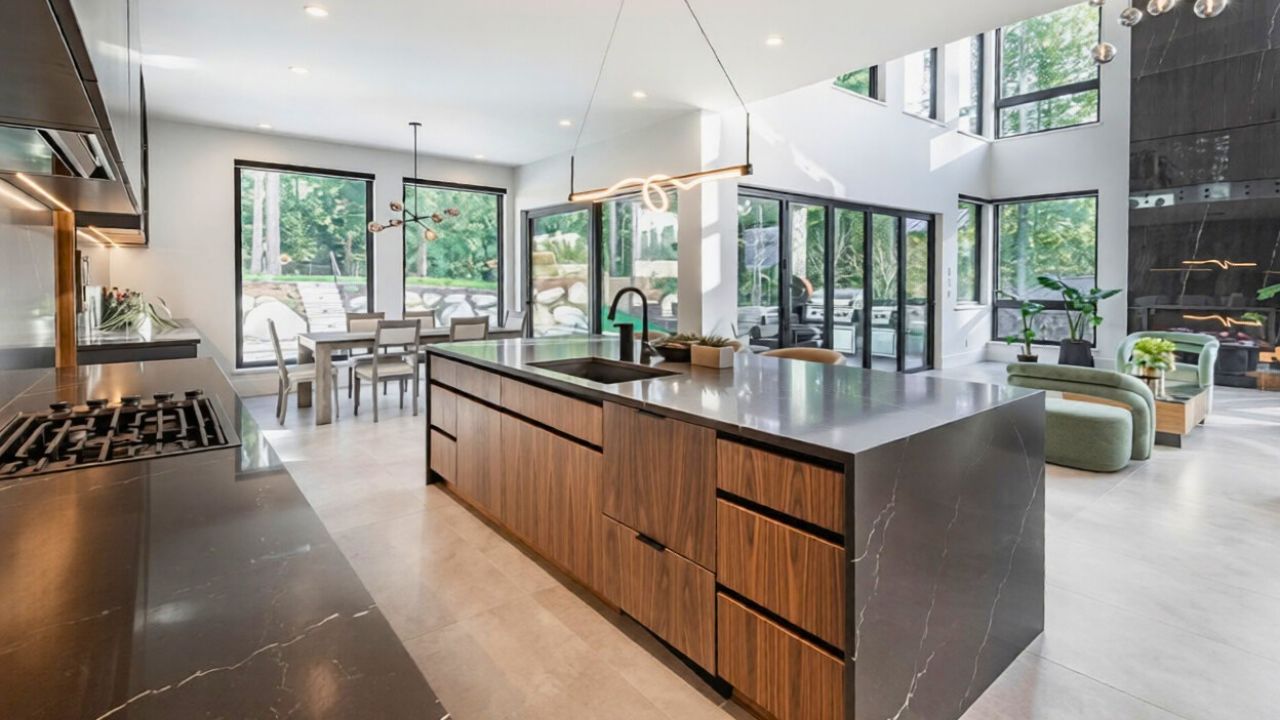
HGTV’s go-to kitchen island size is making real kitchens harder to use
On television, kitchen islands keep stretching longer and wider, turning into stage sets for slow-motion pours and dramatic reveals. In your own home, that same oversized slab can quietly sabotage how you cook, clean, and move. When you chase the HGTV-ready island size, you often trade away the everyday usability that actually makes a kitchen work.
If you want a space that feels as good to live in as it looks in photos, you have to question the default “bigger is better” island. That means treating dimensions, clearances, and layout as non-negotiable, even when glossy reveals push you toward a monolithic block of stone in the center of the room.
How TV kitchens sold you on the mega-island
On design shows, the island is framed as the heart of the kitchen, so you are encouraged to size it like a piece of furniture for entertaining instead of a tool for cooking. Wide shots linger on uninterrupted runs of quartz, rows of bar stools, and pendant lighting, all of which reward a long, continuous surface. You rarely see the awkward squeeze behind a chair, the struggle to reach the middle of the countertop, or the way a dishwasher door collides with a stool, because the camera is set up to hide those frictions.
Even layout guides that showcase the top 6 kitchen layouts often present the island as a generous rectangle floating in a sea of open floor, with no grocery bags, kids, or trash cans in sight. Those pristine diagrams can push you to assume that your own space should accommodate a similar footprint, even if your room is narrower, your walls are fixed, and your circulation paths are busier. The result is a quiet pressure to supersize your island so it matches the aspirational images, not your actual square footage.
What designers and chefs say about “bigger isn’t always better”
When you listen to people who design and work in kitchens every day, you hear a very different message from the one you absorb on TV. Interior designers warn that once an island crosses a certain size, it stops being a help and starts becoming a hindrance, especially if you cannot comfortably walk around it or reach its center. In one widely shared warning, Fiona Ginnett, co-founder of a kitchen design brand, spells it out plainly: “Bigger isn’t always better,” and if you overshoot the dimensions, you lose storage efficiency and create dead zones that are never a beneficial use of space.
Professional cooks echo the same frustration from a performance angle. When chefs are asked which trends they dislike, they single out oversized islands that force them to take extra steps between prep, cooktop, and sink, or that swallow so much floor area that helpers cannot pass behind them without bumping into open drawers. You are told that an enormous island signals luxury, yet the people who care most about speed and ergonomics keep pointing out that too much mass in the middle of the room just slows you down.
The hard numbers HGTV rarely mentions
On camera, island size is treated as a matter of taste, but the planning math behind it is surprisingly strict. A detailed kitchen island planning explains that you should keep the island to no more than 10 percent of your total kitchen area and preserve specific walkways around it. That same resource, under the heading Jan and Kitchen Island Size and Spacing, emphasizes that the distance between counters is not optional decoration; it is the difference between a kitchen that flows and one that traps you every time someone opens a fridge door.
High-end manufacturers repeat those constraints almost verbatim. One luxury brand notes that, as a General guideline, your island should take up no more than 10 percent of the total kitchen area and that Walking space should remain generous on all sides so you can move freely without twisting sideways. When you compare those figures to the dramatic slabs you see in televised remodels, you start to realize how often the camera crops out the reality that those islands would overwhelm a typical suburban or city kitchen.
Why over-wide islands are physically harder to use
Even if you technically have the square footage, an island that is too wide becomes awkward to work on because you cannot comfortably reach the far edge. A detailed Kitchen Style Guide spells this out directly: islands that are too wide will prevent you from reaching the middle, which means you end up leaning, stretching, or dragging heavy items closer just to chop or wipe. When your countertop becomes a stretch zone instead of a touch zone, you naturally stop using the back half, so you effectively shrink your workspace while still paying for extra stone and cabinetry.
The same guide advises you to Assign a specific task or function for your island, such as cooking with a hob, or focusing on prep with drawers and trash below, instead of treating it as a catch-all surface. When you size the island with that task in mind, you tend to keep it narrower, because you only need enough depth for safe cooking or comfortable chopping, not a showpiece expanse that no one can clean in a single reach. HGTV-style mega-islands ignore that ergonomics problem, which is why they often look impressive yet feel oddly distant once you stand beside them.
The clearance trap: when circulation disappears
Clearance around the island is where HGTV-inspired sizing really starts to hurt you. Functional design guidance keeps repeating that you need at least about 36 to 42 inches of space between the island and surrounding counters or appliances so you can open doors and still pass behind someone who is standing there. One experienced PRO on Houzz tells a User bluntly that You do not appear to have proper 36-42″ clearance around your island, and that it will likely feel cramped for you and everyone else if you ignore that standard.
When you enlarge the island to match a television reveal, you usually steal those inches from your aisles. That choice makes it harder to unload the dishwasher, blocks someone from slipping past while you are cooking, and turns simple tasks like taking a sheet pan out of the oven into a sideways shuffle. Over time, that friction changes how you use the room: you stop inviting helpers, you avoid cooking on one side of the kitchen, and you may even find yourself eating out more because the space feels subtly hostile to everyday use.
How layout types shape the island you actually need
Your kitchen layout dictates how large an island can be before it becomes a problem, yet television makeovers often treat every room as if it were a blank, open rectangle. A guide to the top 6 kitchen layouts shows how U-shaped, L-shaped, galley, and open-plan rooms all handle islands differently, and in some cases, not at all. For example, a compact galley may work better with a slim rolling cart, while a wide L-shaped room can accept a modest fixed island that aligns with your main work zones.
In tighter spaces, you are often better served by alternatives that HGTV segments rarely celebrate. The same layout resource notes that a peninsula kitchen is basically a connected island that converts an L-shaped layout into a horseshoe, or turns a horseshoe into a G-shape, which can give you extra counter and storage without choking circulation. When you lean on that kind of peninsula configuration, you get the social and prep benefits of an island while keeping the center of the room open for movement.
When a freestanding or “small” island works harder
If your room is modest, a smaller or movable island will usually serve you better than a built-in monolith. HGTV’s own guidance on small kitchen island ideas encourages you to Try a Freestanding Island, noting that while a center island is number one on many renovators’ wishlists, a large, built-in island does not always fit the room. A freestanding piece can be shifted for parties, moved aside when you need more floor space, or even rolled into another room, which gives you flexibility that a massive fixed slab can never match.
Designers who focus on function also point out that a compact island can still host seating, storage, and a prep zone if you plan it carefully. You might choose a narrow butcher-block table with shelves below, or a custom piece that tucks a microwave and recycling inside. Because you are not trying to mimic the oversized TV look, you can prioritize how you cook, where you like to stand, and how you want people to move through the space, instead of centering everything on a single showpiece surface.
Common island mistakes that start with HGTV sizing
Once you fixate on a big island, a cascade of other design errors tends to follow. Detailed lists of kitchen island mistakes warn that homeowners often ignore electrical and plumbing needs, forget to leave enough space for seating overhangs, or cram in extra cabinets that never open fully. One such guide, under the heading Apr and Ignoring, points out that while it may be tempting to maximize storage and seating, you still have to keep the island in line with standard clearances or you will regret it every time you cook.
Social media has amplified those warnings in more blunt language. A TikTok clip titled Do Not Ruin Your Kitchen Island By Doing This features original sound by Nour and is shared by FORM Kitchens, where the creator reminds viewers that Size matters when it comes to your island size for your kitchen island. The message is simple: if you let aesthetics drive your dimensions, you will end up with doors that collide, stools that block walkways, and a room that looks expensive but feels clumsy.
How to size your island for the way you actually live
If you want your kitchen to work, you have to flip the usual HGTV script and start with function, then let form follow. A design philosophy described as the Golden Rule in kitchens tells you to prioritize function over form so you create balance between visual appeal and the way you actually cook and move. That means deciding whether your island is mainly for prep, cooking, cleanup, storage, or seating, then sizing it only as large as that role requires, instead of stretching it to fill whatever space the camera might see.
From there, you can lean on clear, math-driven rules of thumb. A detailed kitchen island design guide advises that the island should take up no more than 10 percent of the total kitchen area, and that walking space should be generous on all sides. Another resource, under the heading Mar and What Is the Ideal Kitchen Island Size, suggests you Keep your island proportionate so it balances aesthetics and functionality without making your kitchen feel cramped. When you combine those numbers with the 36 to 42 inch clearance standard and your own cooking habits, you end up with an island that might look modest on television, but will feel exactly right every time you start a meal.
Resisting the HGTV effect and trusting the math
Once you recognize how strongly HGTV imagery pulls you toward an oversized island, you can start to push back with data and lived experience. Designers like Fiona Ginnett, social clips from creators such as Nour at FORM Kitchens, and planning guides that spell out Jan and Kitchen Island Size and Spacing all point in the same direction: scale the island to your room, not to a fantasy. When you treat those numbers as guardrails instead of suggestions, you protect yourself from the quiet daily annoyances that never show up in a before-and-after montage.
You can also reframe what feels aspirational. Instead of chasing the longest slab of stone you can afford, you can aim for a kitchen where you can pivot from sink to stove without bumping into anyone, where every drawer opens fully, and where friends can perch at the island without blocking the fridge. If you follow the Golden Rule and let function lead, the island you end up with might be smaller than the one on your favorite show, but your real kitchen will be far easier to use.
Like Fix It Homestead’s content? Be sure to follow us.
Here’s more from us:
- I made Joanna Gaines’s Friendsgiving casserole and here is what I would keep
- Pump Shotguns That Jam the Moment You Actually Need Them
- The First 5 Things Guests Notice About Your Living Room at Christmas
- What Caliber Works Best for Groundhogs, Armadillos, and Other Digging Pests?
- Rifles worth keeping by the back door on any rural property
*This article was developed with AI-powered tools and has been carefully reviewed by our editors.