How I fixed the garden hose setup that kept wasting my time
For many home gardeners, the hose is less a tool than a recurring problem. Leaks at the spigot, tangled lines across the yard and weak pressure at the nozzle can easily turn a ten-minute task into a half-hour chore. The setup that finally works tends to treat the hose as a small system, with each connection and storage choice tuned to save time instead of wasting it.
The experience described here follows that logic: identify the persistent failures, then rebuild the hose run with better connectors, smarter repairs and storage habits that prevent kinks before they start.
Finding the real time wasters
The first fix was simply to name the main problems. At the outdoor spigot, Leaky Connections were sending water down the wall and onto the foundation instead of into the hose, a pattern that common troubleshooting guides identify as one of the most frequent hose headaches when the hose attaches to the spigot or nozzle. Further down the line, a Kinked Hose near a tight corner repeatedly shut off flow and had already left visible flattening in the vinyl.
There was also a constant back-and-forth to switch attachments. A spray nozzle for containers, a sprinkler for the lawn and a short leader hose for a pressure washer all required twisting fittings on and off by hand. Every change introduced another chance for drips or cross-threading.
Once the problems were mapped, the solution stopped being about buying a new hose and instead focused on rebuilding the connections and layout.
Stopping leaks at the source
Fixing the spigot connection started with the threads. Before any new hardware went on, the hose was removed and the metal cleaned so old grit would not cut into washers or prevent a tight seal. On a bare spigot, many plumbers rely on thin thread seal tape, and detailed guidance on Teflon tape explains how wrapping the threads in the correct direction helps the tape tighten rather than unravel as the connector is turned.
At the hose end itself, a worn rubber washer was the real culprit. Repair instructions that address Small Leaks and connector failures point out that a flattened or cracked washer will let water escape even if the threads look fine. Replacing that inexpensive ring and tightening the female fitting by hand, rather than with pliers that can deform the metal, immediately cut the spray around the bib.
Where the hose had developed a pinhole a few meters from the spigot, the fix was more direct. Guides on Repairing a Garden recommend either a short section of hose repair tape for a Minor Puncture or cutting out the damaged section and installing a barbed mender with clamps. In this case, a clean cut on both sides of the split and a simple repair coupling restored full pressure without replacing the entire length.
These small repairs shifted the pattern from constant fiddling to stable connections, which set the stage for a more structural change: quick connectors.
Rebuilding the setup with quick connects
Constantly threading attachments on and off is slow, and it wears both the hose and the user’s patience. Many gardeners now rely on brass or composite quick connectors that snap together with a pull of a collar. One overview of garden hose quick stresses how much time is lost wrestling with stiff threads, especially when hands are wet or cold.
In the rebuilt system, a brass quick connect was installed at the spigot, with a matching plug on the main hose. A second pair linked the hose to a spray gun, and a third set lived on a sprinkler and a short leader hose. This mirrored the approach seen in product-focused walk-throughs, including a video comparison of Garden Hose Quick that traces one gardener’s shift away from the cheapest plastic options after repeated failures.
For the main hose and attachments, the choice tilted toward metal. A set marketed as Morvat Hose Quick uses solid brass, with 2 female and 2 male fittings designed to stay leak free under normal residential pressure. Another option, the Gardena Premium Quick, Provides click on and off, leak free, rust resistant connections and Enables hoses and accessories to be swapped without tools.
At the faucet, the user chose a system based on The Original GARDENA concept, which is described as the basis for garden irrigation with over 50-years of experience. That starter set locked onto the spigot and hose end, with additional plugs added to existing tools so everything could click into place.
For a second hose that fed a backyard bed, a different brass set from Morvat Hose Quick handled the daily duty. The pattern stayed the same: one style of connector across the yard, so every hose and nozzle could interlock without adapters.
Online discussions among lawn care enthusiasts reinforce this approach. One thread titled How to prevent highlights how consistent use of quality quick connects, combined with fresh washers, can nearly eliminate drips when changing tools frequently.
Untangling kinks and improving flow
With the connection puzzle solved, the next time sink was the hose itself. Kinks and loops were throttling pressure, which aligns with technical guidance that lists Avoiding Kinks and Twists in the Hose as a key step to maintaining strong flow. A guide on How to Increase notes that Common Causes of Low Garden Hose Water Pressure often start with the layout, not the municipal supply.
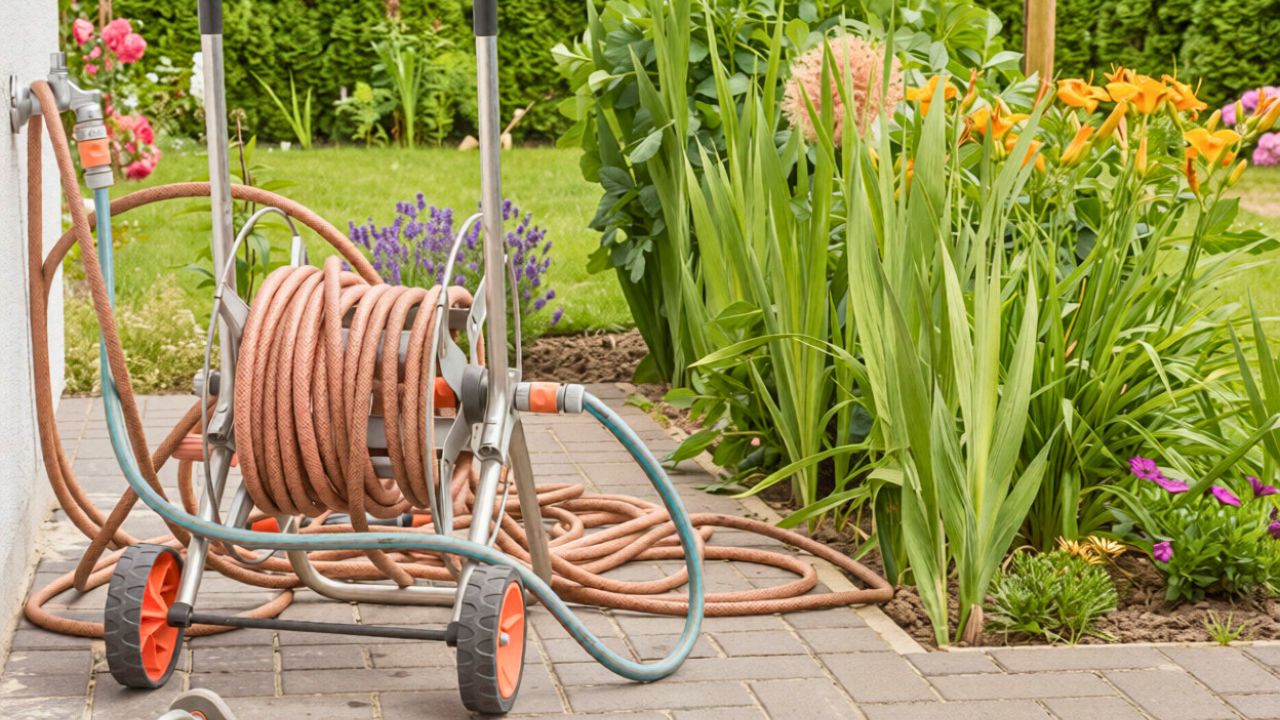
Instead of dragging the hose in loose coils across the lawn, the user installed a simple wall-mounted reel near the spigot. A popular video titled Finally Fixed My shows how adding a hose wheel lets the hose roll out smoothly and rewind without twisting on itself. That same principle guided the new setup: the hose always left the reel in a straight line, then followed a predictable route around the yard.
Storage habits changed as well. A set of Tips to Make emphasizes Use Proper Coiling and Storage Techniques, since a well coiled hose prevents kinks, memory and cracks. Rather than leaving the line under pressure in the sun, the user shut off the spigot, opened the nozzle to relieve pressure, then reeled the hose in with gentle tension.
At tight corners where the hose had been scraping soil and edging, small guides were added. One tutorial on water hose guides explains how stakes or rollers keep the hose off delicate plants and reduce snagging. With the guides in place, the hose followed a repeatable path that did not cut across beds or catch on patio corners.
For existing kinks, the fix was partly mechanical and partly behavioral. Instructions on preventing garden hose recommend stretching the hose out fully to reset its shape and avoiding tight loops that train the material into sharp bends. Another guide on how to prevent notes that Sometimes a jerk will loosen the hose, but most of the time users must walk back, find the kink, straighten it and start over. With the new reel and route, that backtracking nearly disappeared.
Keeping the system reliable
Once the hose run was rebuilt, maintenance became a short seasonal checklist instead of a series of emergency fixes. At the start of the watering season, the user walked the full length looking for damp spots that might signal a new Minor Puncture, following the same logic laid out in Repairing a Garden. Any suspect area was either taped with hose repair tape for a tiny pinhole or cut out and replaced with a mender.
Connectors were checked for drips while the water was running. A short how to video on stopping garden hose shows how even a small spray at the nozzle can waste a surprising amount of water over a summer. In the improved setup, any leak at a quick connect usually meant a worn O ring, which could be swapped in seconds without tools.
Like Fix It Homestead’s content? Be sure to follow us.
Here’s more from us:
- I made Joanna Gaines’s Friendsgiving casserole and here is what I would keep
- Pump Shotguns That Jam the Moment You Actually Need Them
- The First 5 Things Guests Notice About Your Living Room at Christmas
- What Caliber Works Best for Groundhogs, Armadillos, and Other Digging Pests?
- Rifles worth keeping by the back door on any rural property
*This article was developed with AI-powered tools and has been carefully reviewed by our editors.