If your power strip feels warm, what that usually means
When a power strip feels warm under your hand, it is not just a quirk of modern electronics, it is a signal about how hard that strip is working and how close it might be to failure. A slight temperature rise can be normal, but persistent heat, hot plugs, or a strip that seems to grow warmer over time often point to overloading, wear, or wiring problems that can escalate into fire risk. Understanding what that warmth usually means, and how to respond, lets you keep your home or office powered without gambling on safety.
Instead of waiting for a burning smell or a tripped breaker to tell you something is wrong, you can treat a warm power strip as an early warning. By learning how to read that warning, checking what you plug in, and knowing when to unplug and replace equipment, you turn a small moment of concern into a practical safety check that protects your devices, your building, and everyone in it.
1. Why a power strip gets warm in the first place
Every power strip converts electrical energy into a little heat as current flows through its internal conductors and components. A modest temperature rise, especially when several devices are running, is usually just a byproduct of resistance in the wiring and surge protection parts. The trouble starts when that warmth crosses into “hot to the touch,” because that shift often means the strip is carrying more current than it was designed for or that its internal connections are degrading.
Electricians describe a similar pattern with wall outlets, where a receptacle that feels slightly warm under load can be acceptable, but a noticeably hot faceplate or plug points to trouble. Guidance on what to do when an outlet or plug feels hot explains that loose connections and damaged conductors increase resistance, which in turn creates extra heat at the contact points, especially where a plug blade meets the outlet or strip socket. That is why advice on why a plug or outlet feels hot stresses that you should not ignore this change in temperature, because it can be the first sign of a failing connection rather than a harmless quirk.
2. Normal warmth versus a dangerous hot strip
You can think of “normal” warmth as the kind you notice only if you deliberately rest your hand on the strip after it has been powering a few devices for a while. The plastic might feel slightly above room temperature, but you can keep your fingers there comfortably and the temperature does not seem to climb. In that scenario, the strip is likely operating within its rating, especially if the total wattage of your devices is well below the printed limit on the housing or cord label.
By contrast, a strip that feels hot the moment you touch it, or that makes you pull your hand away after a second or two, is behaving more like a hot outlet or switch that experts flag as a warning sign. Guidance on what a warm electrical outlet means notes that heat that persists after you unplug devices, or that returns quickly when you plug them back in, can indicate overloaded circuits, loose terminations, or internal damage that should be checked by a professional rather than treated as normal.
3. Overloading: the most common reason your strip feels hot
In many homes and offices, a warm power strip is simply working too hard. When you plug in more devices than the strip’s amperage and wattage ratings allow, or when you connect several high draw items at once, the internal wiring and protective components are forced to carry more current than they were built to handle. That extra load shows up as heat, especially near the cord entry, the on and off switch, and the sockets feeding the hungriest devices.
Guidance on overloaded power strips explains that an overloaded strip may feel hot to the touch, show discoloration, or even emit a faint burning smell as insulation and plastic begin to break down. You are urged to understand the strip’s power ratings and to match them against the combined draw of your devices, because an overloaded power strip may overheat and create a fire hazard long before a breaker trips. Treating warmth as a sign of overloading, not just a comfort issue, is the first step toward safer use.
4. The hidden danger of “never plug this into a strip” devices
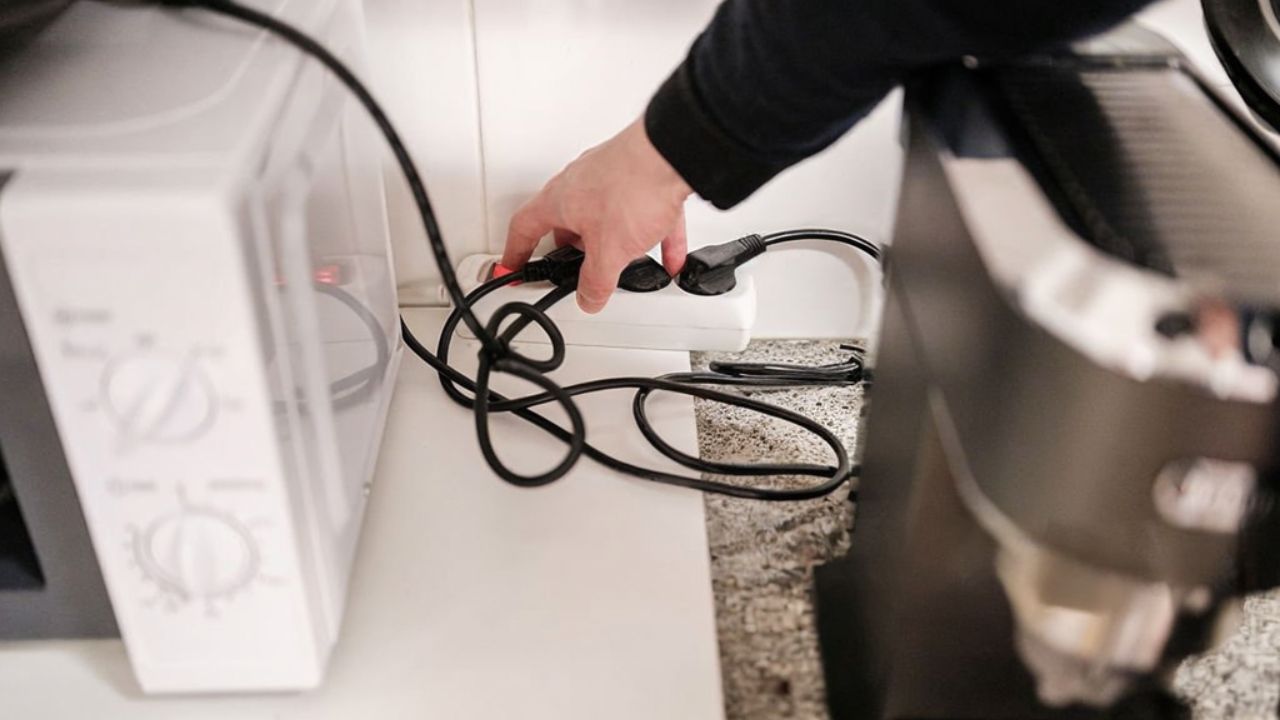
Some appliances are simply the wrong match for a power strip, no matter how many outlets are open. Large kitchen and food prep gear, such as a refrigerator, freezer, microwave, toaster, coffee maker, or blender, can draw heavy current in short bursts or run for long periods, which pushes a strip to its limits. When you stack several of these on one bar, the combined load can quickly exceed what the strip and its cord can safely carry, and the warmth you feel is the hardware telling you it is under strain.
Safety guidance on what you should never plug into a power strip explains that exceeding the strip’s limitations can lead to overheating and potential fire hazards, and it lists kitchen and food prep appliances as prime examples. One advisory notes that overheating and fire risk rise sharply when high wattage devices are run through a strip instead of a dedicated wall outlet, because the strip’s internal components are not designed for that sustained load.
5. When plugs, cords, and outlets feel hot along with the strip
If the warmth you notice is not just on the strip body but also at the plug blades, the cord near the plug, or the wall outlet itself, you are dealing with a broader problem than a tired plastic housing. Heat at the plug or outlet usually points to poor contact, worn receptacle springs, or damaged conductors that are turning part of your wiring into a space heater. In that situation, unplugging the strip is not just smart, it is urgent, because the heat is being generated at a concentrated point that can char insulation and ignite nearby material.
Electricians who answer questions about hot plugs and cords are blunt: no plug is supposed to be hot to the touch, and if an extension cord or strip plug feels that way you should unplug it and let it cool while you investigate the load. One discussion of a hot extension cord plug notes that you should disconnect it, reduce the number of devices, and then test again to see if it stays cold, because no plug is supposed to be hot under normal use. Similar advice on what to do when an outlet feels hot stresses that you should stop using the circuit and have it inspected if the outlet or surrounding wall remains warm after devices are unplugged.
6. How to respond the moment you notice a warm strip
Once you realize your power strip feels warmer than it should, your first move is simple: unplug devices and give the strip time to cool. Start by switching the strip off, then remove the highest draw items such as space heaters, gaming PCs, or multiple monitors, and feel whether the temperature drops over the next few minutes. If the strip cools and stays cooler when you reconnect only low draw items like phone chargers, you have likely been overloading it and need to redistribute your devices.
Professional safety advice for hot outlets and switches follows the same pattern, urging you to stop using the device, let it cool, and call a licensed electrician if the warmth persists. One guide on steps to take when your outlet feels hot recommends checking for discoloration, buzzing, or burning odors, and it warns against treating a hot outlet as a do it yourself project. The same logic applies to a strip that stays warm even when lightly loaded: retire it and have the circuit evaluated rather than trusting hardware that is already signaling distress.
7. Aging surge protectors and worn strips that run hot
Even if you are not overloading your strip, age and wear can make it run hotter than it did when new. Surge protectors in particular contain components that absorb voltage spikes over time, and as those parts degrade, they can generate more heat under normal use. A strip that has lived for years under a desk, kicked by shoes and clogged with dust, may also have loose internal connections that increase resistance and temperature even at modest loads.
Guidance on how long surge protectors last notes that a protector that feels hot can be a sign of internal damage or failure, especially if you also see visible damage, scorch marks, or a non functioning indicator light. You are urged to replace units that show these signs, because a surge protector that feels hot may no longer provide dependable protection even if it still passes power. Another checklist of red flags for aging protectors advises you to look for obvious damage, loose outlets, or intermittent performance and to treat these as signs it is time to make the switch to a new unit.
8. Fire risk, warning signs, and when to throw the strip away
Heat is one of the earliest and most reliable warning signs of an electrical fire risk, and a power strip that feels hot fits squarely into that category. When warmth is joined by other clues, such as a persistent burning smell, discolored plastic, flickering lights on connected devices, or buzzing and crackling sounds, you are no longer dealing with a minor nuisance. At that point, the safest response is to unplug the strip immediately, move it away from combustible material, and stop using it altogether.
Fire safety guidance on power strip use is explicit that if a strip has burn marks, melted plastic, or feels hot, you should unplug and remove it immediately rather than waiting for it to fail. One advisory on power strip safety tips urges you to avoid overloading, to check strips regularly, and to discard any that show damage or overheating. Broader fire prevention advice lists warning signs such as persistent burning smells, discolored or warm outlets, flickering lights, and buzzing or crackling sounds, and it recommends calling a licensed electrician immediately for inspection if you notice these warning signs of an electrical fire anywhere in your system.
9. Smarter habits to keep your power strips cool and safe
The most effective way to keep your power strips from running hot is to treat them as temporary convenience tools, not permanent wiring or all purpose outlets for every appliance in the room. That means plugging large appliances like space heaters, refrigerators, and window air conditioners directly into wall outlets, spreading high draw electronics across different circuits, and avoiding daisy chaining strips or plugging one strip into another. It also means choosing strips with built in overload protection and surge suppression for sensitive electronics, then replacing them when they show signs of age or damage.
Safety guidance on surge protectors and power strips emphasizes that they are not a substitute for permanent wiring and that when a unit is not in use, you should unplug it. One set of safety tips surge protectors and power strips advises you to throw away any strip that is hot, damaged, or shows signs of overload. Other fire prevention checklists on how to keep your power strips from catching fire and on power strip safety echo the same core habits: avoid overloading, do not use strips as permanent extensions, inspect them regularly, and replace them at the first sign of overheating so that a warm housing never has the chance to turn into a serious emergency.
Supporting sources: Do Surge Protectors Go Bad? 3 Red Flags to Be Aware Of.
Like Fix It Homestead’s content? Be sure to follow us.
Here’s more from us:
- I made Joanna Gaines’s Friendsgiving casserole and here is what I would keep
- Pump Shotguns That Jam the Moment You Actually Need Them
- The First 5 Things Guests Notice About Your Living Room at Christmas
- What Caliber Works Best for Groundhogs, Armadillos, and Other Digging Pests?
- Rifles worth keeping by the back door on any rural property
*This article was developed with AI-powered tools and has been carefully reviewed by our editors.