Inside Villa de Verano at 3000 Ralston Ave the Bay Area estate with an amphitheater and giant aquarium
Perched in the hills south of San Francisco, Villa de Verano at 3000 Ralston Ave invites you into a version of Bay Area living that feels closer to a private resort than a single residence. You step into a world where an amphitheater, a giant aquarium, and manicured grounds turn a Silicon Valley address into a stage for spectacle.
Across its sprawling footprint, the estate layers Italianate architecture, high‑spec amenities, and theatrical design choices that are meant to impress you from the driveway to the far edge of the gardens. What you find is less a house and more a self‑contained environment, calibrated for an owner who expects privacy, scale, and a level of customization that rarely reaches the open market.
Where Villa de Verano Sits in the Bay Area Landscape
You first understand Villa de Verano by understanding where it sits. The property anchors 3000 Ralston Avenue in Hillsborough, California, a town that has long functioned as a quiet counterpoint to the more frenetic tech corridors nearby. From this perch, you look out over the Peninsula while still feeling buffered from the traffic and office parks that define so much of Silicon Valley life.
The listing frames the address as part of a rarefied pocket of the Bay Area, noting that 3000 Ralston Avenue, Hillsborough, California, 94010, United States is offered at $88,000,000 USD, a figure that places it among the most expensive residential properties currently available in Northern California. You are not just buying into Hillsborough, you are buying into a micro‑market where large parcels, mature trees, and long driveways are part of the baseline expectation rather than a luxury add‑on.
A Price Tag Built for Silicon Valley Wealth
At a list price of $88,000,000, the estate is calibrated for a buyer who moves in the same financial orbit as late‑stage founders, public‑company executives, or global investors. You are expected to see that number not as a shock but as a shorthand for a certain level of privacy, acreage, and customization that would be difficult to replicate elsewhere in the Bay Area without years of permitting and construction.
Marketing materials lean into that positioning, describing how, in the hills of Silicon Valley, one of Northern California’s most extravagant private estates has returned to the market with a price that reflects its ambition. When you consider that the property delivers six Bedrooms, along with extensive formal and informal spaces, the valuation is pitched as a premium but rational expression of what it costs to secure a turnkey compound at this scale in the United States.
The Main Residence: Scale, Elevation, and Everyday Flow
Once you pass the gates, the main residence sets the tone. The core house spans a 12,404-square-foot footprint, arranged across three levels that are all serviced by an elevator. You move vertically as easily as you move horizontally, which matters when a single floor can feel as large as a boutique hotel wing.
From the upper stories, the architecture is oriented to overlook an elegant pool and reflection pond, so your daily circulation is always tied back to the water and the gardens. The six Bedrooms are supported by a suite of Bathrooms, including 7 Full and 10 Partial, that turn the private quarters into self‑contained retreats rather than simple sleeping spaces, a layout that lets you host extended family or staff without sacrificing your own sense of separation.
Design Language: Lake Como Inspiration in Hillsborough
Stylistically, Villa de Verano asks you to imagine that a lakeside palazzo has been lifted from Italy and set down in the Peninsula hills. The architecture leans into Mediterranean references, with stucco walls, arches, and terraces that are meant to evoke the villas that line Lake Como, even as you remain firmly rooted in California light and climate.
Reporting on the property highlights how the estate was inspired by Italy’s Lake Como, with the design team using that reference point to justify a series of grand gestures, from formal loggias to water features that frame long views. You feel that influence most strongly in the way indoor salons open directly to outdoor terraces, a pattern that lets you move from a formal reception room to a sunset‑facing balcony in a single step, blurring the line between interior and exterior in a way that suits both European precedent and Bay Area weather.
The Amphitheater: Entertainment as Infrastructure
One of the most striking choices at 3000 Ralston Ave is the decision to treat entertainment not as an add‑on but as infrastructure. The estate includes an amphitheater, a feature that turns the grounds into a venue for performances, talks, or screenings that you can stage without ever leaving home. Instead of renting out a club or hotel ballroom, you invite your guests down a path and seat them under the open sky.
In practical terms, that amphitheater gives you a flexible platform for everything from live music to product launches, a particularly pointed asset if your professional life is tied to the tech ecosystem that surrounds Silicon Valley. When paired with the rest of the outdoor program, including the pool and reflection pond that the main residence overlooks, the amphitheater helps the property function as a private campus where work, leisure, and spectacle can all share the same address.
The Giant Aquarium and Other Custom Highlights
Inside, the estate’s most talked‑about flourish is a giant aquarium that anchors one of the primary gathering spaces. Rather than a modest built‑in, you are looking at a 2,100-gallon saltwater installation, a volume more commonly associated with public exhibits or destination resorts. The effect is to turn marine life into a living artwork that animates the room day and night.
Other customized highlights include six bedrooms and seven bathrooms, plus another 10 powder rooms, a count that underscores how the house is designed to absorb large numbers of guests without strain. The aquarium is part of a broader pattern in which the owners have borrowed cues from high‑end hospitality, including references to the kind of spectacle you might associate with a major Las Vegas property, then translated those ideas into a residential scale that still feels personal when you are walking the halls alone.
Gardens, Water, and the Outdoor Experience
Step outside and the estate’s landscaping strategy becomes clear. The pool and reflection pond that sit below the main residence are not isolated amenities, they are anchors in a larger composition of lawns, paths, and planted areas that encourage you to treat the grounds as an extension of the living space. You are meant to wander, not just glance out a window.
Descriptions of the property point to curated elements such as a grove and an English spiral mound, details that signal a deliberate layering of formal and informal garden traditions. In practice, that means you can host a structured event on a flat lawn one evening, then retreat to a more contemplative corner of the property the next morning, all without losing the sense that every part of the landscape has been thought through as carefully as the interiors.
How You Might Actually Live Here
For all its spectacle, Villa de Verano is ultimately pitched as a place you could inhabit day to day rather than a set piece you visit a few weekends a year. The three‑level layout, the elevator, and the distribution of Bedrooms and Bathrooms are all meant to support a rhythm in which you work from home, host colleagues, and still find quiet corners for family life. You might take a video call from a study that looks out over the hills, then walk downstairs to join guests by the pool without ever feeling like you have left your own domain.
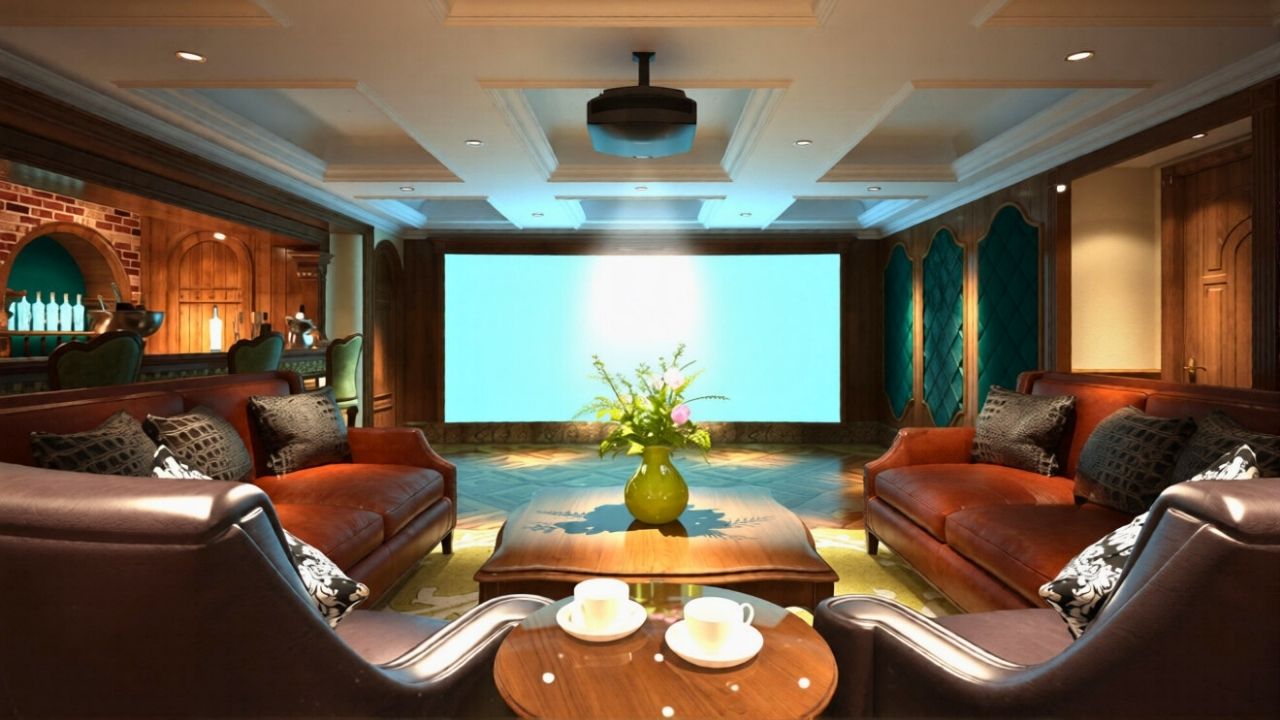
The scale of the amenities, from the amphitheater to the 2,100-gallon aquarium, means you can toggle between intimacy and spectacle depending on the occasion. On a weekday, you might be the only person in the screening area, watching a film with the aquarium glowing beside you. On a weekend, the same infrastructure can absorb a crowd, with the amphitheater filled, the powder rooms in constant use, and the gardens lit for an event that feels closer to a private festival than a typical house party.
Villa de Verano as a Bay Area Status Symbol
Viewed from a distance, 3000 Ralston Ave functions as a status symbol in a region where real estate has long been a proxy for success. The combination of a Hillsborough, California address, a price of $88,000,000, and a design vocabulary borrowed from Lake Como sends a clear signal about the level at which you are operating if you call this property home. It is a statement that you have not only accumulated wealth but chosen to convert it into a physical environment that reflects a particular vision of comfort and prestige.
At the same time, the estate’s more idiosyncratic choices, from the amphitheater to the giant aquarium, suggest that you are not content with a generic mansion. You are aligning yourself with a version of Bay Area culture that prizes customization, experience, and the ability to host others on your own terms. In that sense, Villa de Verano is less about owning a large house and more about curating a private world, one that sits just far enough above the Silicon Valley floor to let you look out over the hills and decide how you want to use the stage you have built.
Like Fix It Homestead’s content? Be sure to follow us.
Here’s more from us:
- I made Joanna Gaines’s Friendsgiving casserole and here is what I would keep
- Pump Shotguns That Jam the Moment You Actually Need Them
- The First 5 Things Guests Notice About Your Living Room at Christmas
- What Caliber Works Best for Groundhogs, Armadillos, and Other Digging Pests?
- Rifles worth keeping by the back door on any rural property
*This article was developed with AI-powered tools and has been carefully reviewed by our editors.