Lawmakers push war powers debate after U.S. strikes on Iran
After intensive United States airstrikes on Iran, a long-simmering constitutional fight in Washington has burst into the open, with lawmakers in both parties demanding a say over how far the conflict goes. The clash over war powers is no longer an abstract law school debate but a live question of who decides when the country is effectively at war.
In rapid succession, the Senate and then the House have weighed resolutions that would limit President Trump’s ability to expand the campaign, even as the bombing continues and American troops remain in harm’s way.
Strikes first, permission later
The current confrontation began when the United States launched a major assault on Iran, targeting military infrastructure and senior Iranian officials in what some experts describe as an extended bombing campaign rather than a one-off reprisal.
Analysts who examined the early days of the fighting described a conflict that erupted suddenly, with little public articulation of long-term diplomatic goals and with Iranian officials killed alongside destroyed facilities.
In a televised address, President Trump told the Iranian people that the United States sought to put the confrontation behind it decisively and argued that overwhelming force could restore deterrence.
Critics in Congress countered that the strikes were launched without approval from Congress, even though the scale of the operation and the risk of escalation meant the country was effectively at war.
Congress scrambles to catch up
As images of flames erupting over Tehran and reports of joint United States and Israeli operations spread, lawmakers acknowledged that they were reacting after the fact to decisions already taken by the commander in chief.
That month quickly became a turning point, as leaders on Capitol Hill prepared the first formal votes on whether to constrain the White House.
Key members of Congress demanded a swift vote on a war powers resolution that would restrain President Dona Trump from taking further military action against Iran without explicit authorization.
Supporters argued that the Constitution gives Congress the power to declare war and that decades of open-ended authorizations had allowed presidents of both parties to stretch that authority far beyond what lawmakers intended.
Senators framed the debate not only as a question of policy in the Middle East but as a test of whether the legislative branch would reassert itself after years of ceding ground to the executive.
Some legal scholars, writing about the War Powers Resolution, said the Iran conflict gave new urgency to long-running questions about whether the existing framework is adequate and whether the current campaign in Iran is illegal and unconstitutional without specific congressional approval.
First votes on the Iran conflict
Congress took its first concrete step when the Senate held what one account described as Congress’ First Vote on the Conflict, a measure that would have ordered a halt to further escalation.
In that vote, Senate Republicans Vote Down Legislation to Halt Iran War, siding with the president and rejecting an attempt to cut off authorization for continued large-scale hostilities.
The tally, which opponents framed as a choice between reining in presidential power or granting a blank check, reflected deep partisan divides even as some Republicans expressed unease about being drawn into a wider regional war.
Backers of the failed measure said they were already planning additional attempts to force the issue back onto the floor and to tie future funding to clearer limits on the use of force.
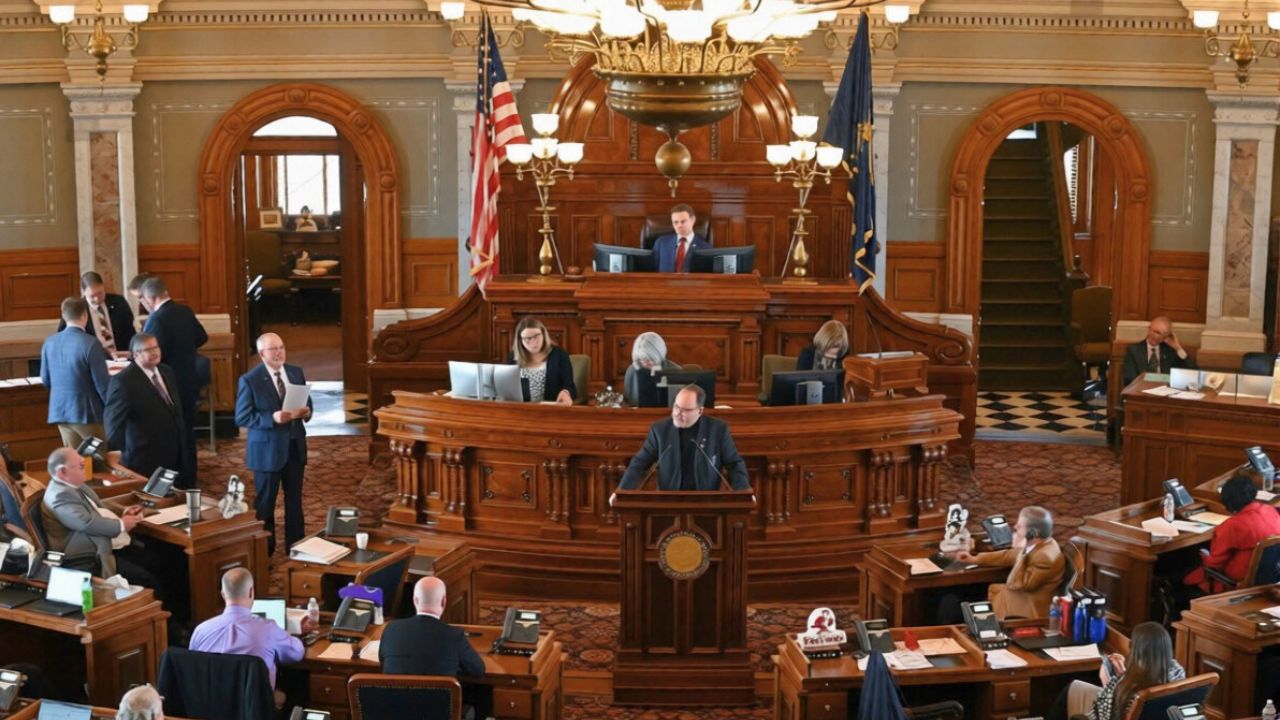
Attention then shifted to the House, where leaders scheduled their own vote on a resolution that would prohibit President Trump from taking further military action against Iran without congressional approval.
Breaking alerts described Congress preparing to open a war powers debate over President Trump as the conflict widened and questions mounted about long-term strategy.
When the House finally voted, the chamber narrowly rejected the Iran war powers resolution, mirroring the Senate’s refusal to bind the president.
Coverage of the vote emphasized how close the margin was and highlighted that 56 was a key figure in the debate over how many lawmakers were willing to break with the White House.
Unusual alliances and sharp divides
The votes have scrambled traditional partisan lines, producing unusual coalitions that cut across party and ideological boundaries.
On the Democratic side, figures such as Sen Tim Kaine have long argued that Congress must reclaim its war-making authority and have used the Iran campaign to press for tighter limits on any president, including one they oppose politically.
Progressive lawmakers like Ro Khanna have joined more centrist colleagues in insisting that no president should be able to launch a major operation against Iran without a full debate and recorded vote.
On the Republican side, libertarian-leaning conservatives have broken with their leadership to question the wisdom of another open-ended conflict in the Middle East.
Rep Thomas Massie, R Ky, has been one of the most vocal critics, arguing that the Constitution does not allow a single person to decide when the country is at war and warning that Congress is ducking its responsibility.
In the Senate, figures such as Rand Paul have echoed that view, pressing for votes that would force colleagues to go on record about the scope of the president’s authority.
Another entry for Rand Paul underscores how central he has become to the Republican side of the war powers debate, even as many in his party back the president’s approach.
Some Democrats who often support muscular foreign policy, including John Fetterman, have taken more hawkish positions, arguing that Iran’s actions required a strong response while still voicing concern about the lack of clear authorization.
Leadership figures have also shaped the contours of the fight.
Speaker of the House Mike Johnson, R La, spoke to reporters in the Capitol after the House vote and defended the president’s authority, while also facing questions about whether Congress had effectively endorsed what some describe as a bombing campaign as a war.
In the Senate, senior Republicans like John Thune have balanced support for the president’s strategy with warnings that the administration must provide more clarity about its objectives and exit plans.
Public stakes and constitutional questions
Behind the procedural votes lies a deeper argument about how the United States should enter and conduct wars in an era of rapid escalation and long-range strikes.
Analysts who study the War Powers Resolution say the Iran conflict has exposed how presidents can initiate large-scale hostilities within the law’s 60-day window and then rely on political pressure to keep operations going.
Some legal experts argue that the existing framework is outdated for conflicts that can shift from limited strikes to full-scale war in a matter of days, especially when allied forces such as Israeli units are operating alongside American forces.
They point to the evaluation of past conflicts, where Congress often debated authorizations only after troops were already deployed and casualties had occurred, as a warning that reactive oversight is not enough.
Supporters of stronger war powers limits say the votes in both chambers, even when unsuccessful, can still influence the president and force the public to pay attention to the debate over separation of powers.
They argue that recorded votes, floor speeches and proposed amendments create a political record that future presidents and courts cannot ignore.
Opponents counter that in a fast-moving crisis, the commander in chief must have flexibility to act quickly to protect American forces and deter adversaries, and that lengthy congressional debates can send mixed signals to allies and enemies.
The debate has also spilled into presidential rhetoric.
In recent remarks, President Trump has portrayed the strikes as a necessary show of strength and has suggested that decisive action has already put the Iran challenge behind the United States.
Lawmakers who disagree say that claim glosses over the risk of miscalculation, the possibility of Iranian retaliation and the long-term regional consequences if the conflict widens.
For now, the practical effect of the war powers push is limited.
The Senate has blocked one effort to Halt Iran War, the House has rejected its own resolution, and the bombing continues under existing authorities.
Like Fix It Homestead’s content? Be sure to follow us.
Here’s more from us:
- I made Joanna Gaines’s Friendsgiving casserole and here is what I would keep
- Pump Shotguns That Jam the Moment You Actually Need Them
- The First 5 Things Guests Notice About Your Living Room at Christmas
- What Caliber Works Best for Groundhogs, Armadillos, and Other Digging Pests?
- Rifles worth keeping by the back door on any rural property
*This article was developed with AI-powered tools and has been carefully reviewed by our editors.