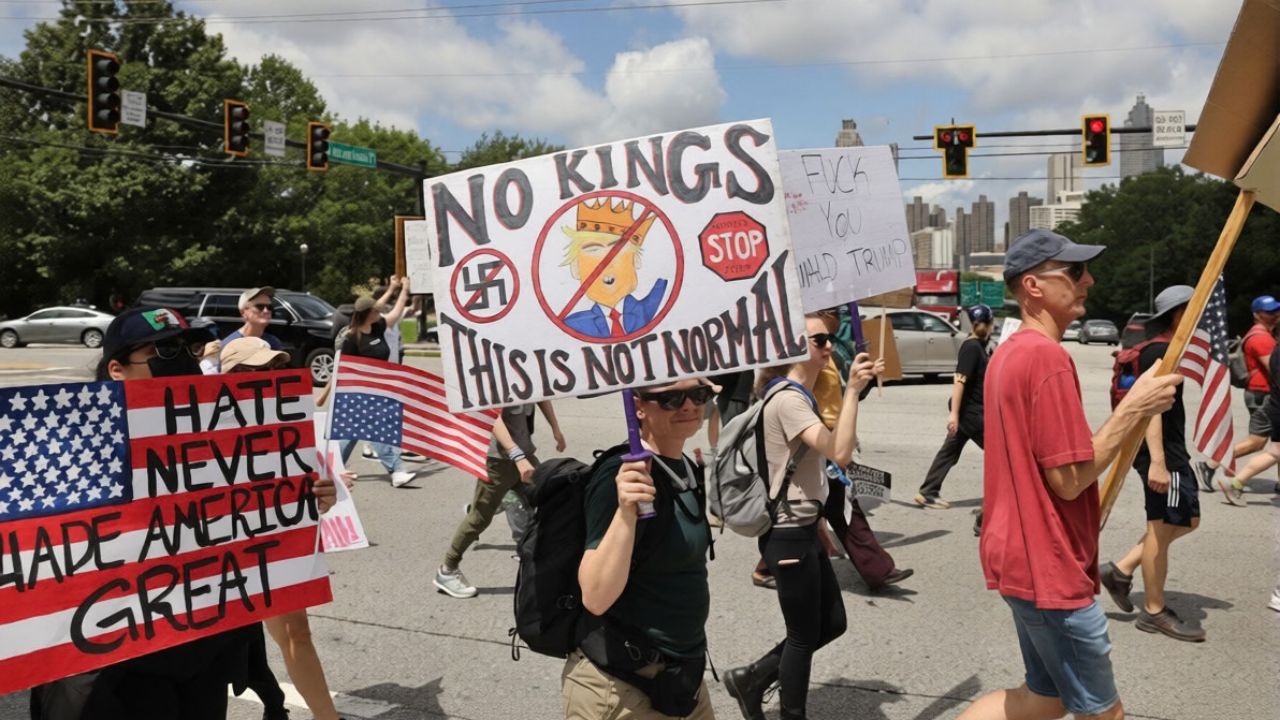
Nationwide ‘No Kings’ demonstrations planned as activists challenge federal immigration actions
Organizers of the No Kings movement are preparing a nationwide day of protest that they say will test the limits of public resistance to the Trump administration’s immigration crackdown. The coalition behind the effort is casting the March 28 actions as a direct challenge to what it calls “king-like” executive power over raids, detentions, and the use of federal agents in local communities.
Demonstrations, vigils, and trainings are planned in cities and small towns across the United States. Activists argue that federal immigration policy has crossed a line from enforcement into systemic brutality, and that only mass, coordinated pressure can force a course correction.
Escalating raids, deadly encounters, and a rallying cry
The March mobilization follows a series of high-profile shootings by immigration agents, including the killings of Renée Good, Keith Porter, and Alex Pretti, which have become central rallying points for organizers who describe the pattern as a crisis of unchecked power. A detailed account of the March 2026 No Kings protests links the upcoming actions to those deaths and to a broader history of raids that critics say target immigrant communities with little transparency or accountability.
Advocates point to an official statement from the No Kings Coalition that accuses the Trump Administration of escalating its tactics, including the killing of Keith Porter Jr., Renée Good, Alex Pretti, and at least six people in ICE custody so far in 2026, and argues that communities are being forced to respond to this “regime in real time.” The same statement describes a climate in which immigration enforcement is not only more aggressive but also more insulated from public scrutiny, especially when raids unfold in homes, workplaces, and transit hubs.
The coalition’s public-facing hub, which lays out its demands and logistics, presents the March 28 mobilization as part of a longer campaign to curb executive overreach on immigration and to assert that “no president is a king.” The site also highlights the breadth of partner organizations, from faith groups to labor unions, that have signed on to support the protests, legal observation, and community defense work.
From Minnesota flashpoint to nationwide wave
The immediate spark for the third round of No Kings protests is a deadly incident in Minnesota in which federal immigration agents killed two residents during an operation that quickly drew local outrage. An explainer on the upcoming protests describes the Minnesota shootings as a flagship example of what organizers see as a pattern: aggressive enforcement actions that leave families shattered and raise questions about whether agents are acting with impunity.
In response, the March 28 actions are planned as a coordinated series of protests, vigils, and other events in all regions of the country, with Minnesota expected to host one of the largest gatherings. A detailed overview of the March 2026 No Kings protests traces how the movement has grown from localized marches into a national infrastructure that can rapidly mobilize around flashpoint incidents, while still centering the stories of those directly affected by raids and detention.
Organizers emphasize that the protests are designed as peaceful, highly visible challenges to the Trump administration’s approach to immigration, with a focus on reclaiming public space in cities where federal agents have become a frequent and feared presence.
Scaling up: maps, trainings, and turnout expectations
To coordinate what they describe as a “nationwide day of peaceful action,” organizers have released an interactive map that helps supporters find their nearest No Kings protest on March 28. That guide notes that the most recent No Kings mobilization on Oct. 18, 2025 drew crowds of 7 million, with more than 2,700 events in all 50 states, and frames the upcoming day as an even larger test of public resolve.
Other reporting on the movement’s growth describes how, on that October weekend, an estimated 5 million Americans participated in approximately 2,000 No Kings events just four months after an earlier wave, suggesting that turnout has been climbing as the administration doubles down on its enforcement agenda. A social media update from September 2025 noted that thousands of events were registered across all 50 states, signaling that the infrastructure for rapid, decentralized organizing was already in place before the current escalation.
For March 28, the No Kings Coalition has activated what it calls an immediate mass mobilization and is urging supporters to either find an event near them or sign up to host one. A separate overview of the coalition’s plans reminds potential participants that in 2025, millions of Americans came together in nonviolent protest to oppose what organizers describe as growing authoritarianism, and sets a similar tone for the 2026 actions.
Training has become a central pillar of that strategy. Ahead of the March 28 event, about 200,000 people signed up for online sessions designed to teach residents how to respond when and if immigration enforcement arrives in their neighborhoods. Another account of those trainings describes them as a way to prepare Americans for encounters with ICE, offering practical guidance on legal rights, documentation, and how to safely observe and record enforcement operations.
Movement roots in earlier No Kings protests
The March mobilization builds directly on earlier No Kings actions that targeted the Trump administration’s raids and deportations. In Florida, organizers framed a previous wave of protests as a response to a program of raids that the administration said it would continue despite public outcry, with ICE officials insisting that operations would move forward as planned. A separate account of those same actions quoted organizers who described No Kings as “the largest single-day mobilization since President Trump returned to office,” characterizing it as a mass, nationwide protest against what they saw as a hardening deportation regime.
By Oct. 18, 2025, demonstrators were speaking out not only against migration enforcement operations but also against the discussion about deploying federal troops in cities, which they saw as part of a broader pattern of militarized responses to dissent. Another report on that October weekend noted that protests were planned for more than 2,500 locations nationwide, from the country’s largest city, New York, to small unincorporated communities, and cast the movement as a direct answer to what participants described as Trump’s growing authoritarian overreach.
In messaging materials circulated to supporters, organizers framed the events as “Nationwide No Kings Protests Target Trump,” urging people across the United States to march against executive overreach and authoritarianism under President Donald Trump. A separate preview of a Miami rally, written by Anthony Cruz, described another nationwide No Kings rally planned for Oct. 18 to protest what organizers called the administration’s deportation policy, and underscored how local events were being woven into a national narrative about constitutional limits on presidential power.
The movement’s visual identity and messaging have been standardized through shared design assets that partners can download and adapt, while a partners page lists organizations that have formally aligned themselves with the No Kings banner. That infrastructure has helped transform what began as a set of protests into a more durable coalition that can coordinate rapid responses to new enforcement actions.
Legal framing and the “No Kings” message
Civil liberties groups have amplified the coalition’s message by framing the protests as a defense of constitutional checks and balances. A press release from allied organizations describes how the Trump Administration has escalated its use of federal power in immigration enforcement, including deadly encounters and deaths in ICE custody, and argues that the No Kings Coalition is documenting and resisting that escalation in real time.
The movement’s legal framing is also visible in educational materials that connect immigration raids to broader community harms, including trauma in classrooms where children live with the constant fear that parents might be detained. One explainer aimed at educators details how immigration raids leave classrooms grappling with anxiety, absenteeism, and sudden changes in family stability, and encourages teachers to recognize the signs of trauma and connect students with support.
What March 28 could signal
Like Fix It Homestead’s content? Be sure to follow us.
Here’s more from us:
- I made Joanna Gaines’s Friendsgiving casserole and here is what I would keep
- Pump Shotguns That Jam the Moment You Actually Need Them
- The First 5 Things Guests Notice About Your Living Room at Christmas
- What Caliber Works Best for Groundhogs, Armadillos, and Other Digging Pests?
- Rifles worth keeping by the back door on any rural property
*This article was developed with AI-powered tools and has been carefully reviewed by our editors.